Get Full Government Meeting Transcripts, Videos, & Alerts Forever!
Get email alerts on the Infrastructure Wildfire topic
No spam. Unsubscribe anytime.
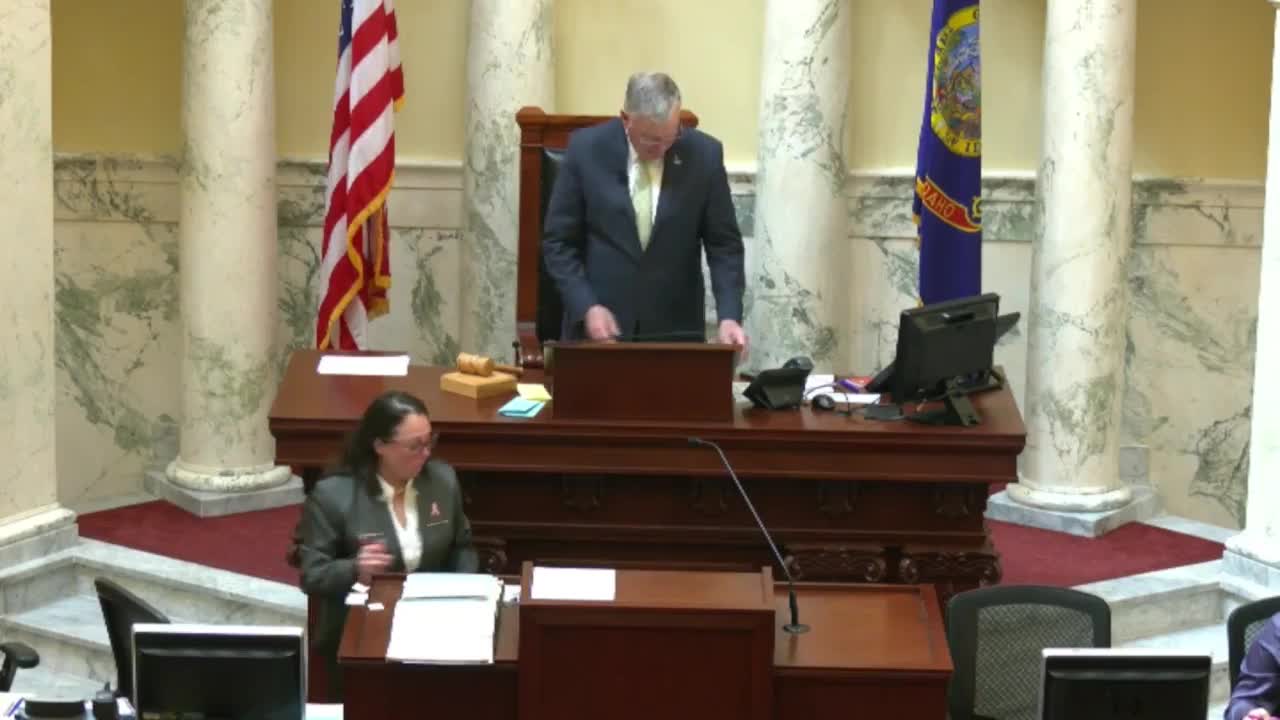
Senate passes wildfire mitigation 'standard of care' bill after contentious debate over damages and liability
Summary
Senate Bill 11‑83 requires utilities to file wildfire mitigation plans with the Public Utilities Commission and ties liability to compliance with approved plans; opponents argued the bill limits recovery for medical and wrongful‑death damages.
The Idaho Senate passed Senate Bill 11‑83, the Wildfire Mitigation Standard of Care Act, on a 24‑11 vote after extended floor debate over liability, damages and whether the measure protects utilities at the expense of individual claimants.
Senator Woodward, the bill sponsor, said the proposal aims to "preserve our safe, reliable, and affordable power" by defining a standard of care and requiring utilities — investor‑owned, municipal and cooperative — to submit wildfire mitigation plans to the Idaho Public Utilities Commission (PUC) for review. Woodward described changes made since earlier drafts: greater collaboration with the State Forester, notice to counties and fire districts within five business days of a plan filing, and simplification of the liability section from "substantial compliance" to a "rebuttable presumption."
Opponents raised a detailed objection to the bill’s damages and exclusive‑remedy language. Senator Askins (floor debate record) walked the chamber through the code citations referenced in debate and argued that the bill’s exclusive remedy clause limits recoverable damages to those enumerated — primarily property damage and certain economic costs — while excluding other remedies commonly sought after a wildfire, such as medical expenses and wrongful‑death claims, unless those remedies are explicitly preserved. He recommended adding specific code cross‑references (for example, sections addressing medical expenses and wrongful‑death damages) to ensure injured Idahoans could recover the full range of damages they might incur.
Senators from rural districts and members with ties to forestry and utility interests pressed for the bill, arguing it balances the need for wildfire risk management with avoiding destabilizing liability that could drive up rates or disrupt service. Senator Guthrie, who supported the bill after negotiation among stakeholders, said the language struck a balance between utilities’ need for a clear standard and protections for local interests.
Other opponents raised concerns about speed of consideration and the fast‑track nature of negotiations. Several senators also asked whether the bill covers all utility infrastructure — including battery storage pads associated with wind and solar projects — and Woodward said utility components within service territories would be included and that local fire districts will receive plan notice and can participate in the public review process.
The bill contains several key procedural and liability features: a PUC‑reviewed mitigation plan, involvement of the State Forester on vegetation management and a rebuttable presumption in favor of utilities that comply with an approved plan, while also referencing Idaho statutes that prescribe types and caps on damages in particular contexts. The PUC retains authority to approve or deny submitted plans.
Senate Bill 11‑83 passed 24‑11 and will move to the House of Representatives. Floor debate highlighted an outstanding difference of view about whether the measure adequately preserves medical and wrongful‑death damages and whether more explicit statutory cross‑references should be added to protect victims’ recovery.