Get Full Government Meeting Transcripts, Videos, & Alerts Forever!
Get email alerts on the Zoning topic
No spam. Unsubscribe anytime.
Detroit BZA director: appeals processed faster once docketed; council agrees to probe court-reporter consolidation
Summary
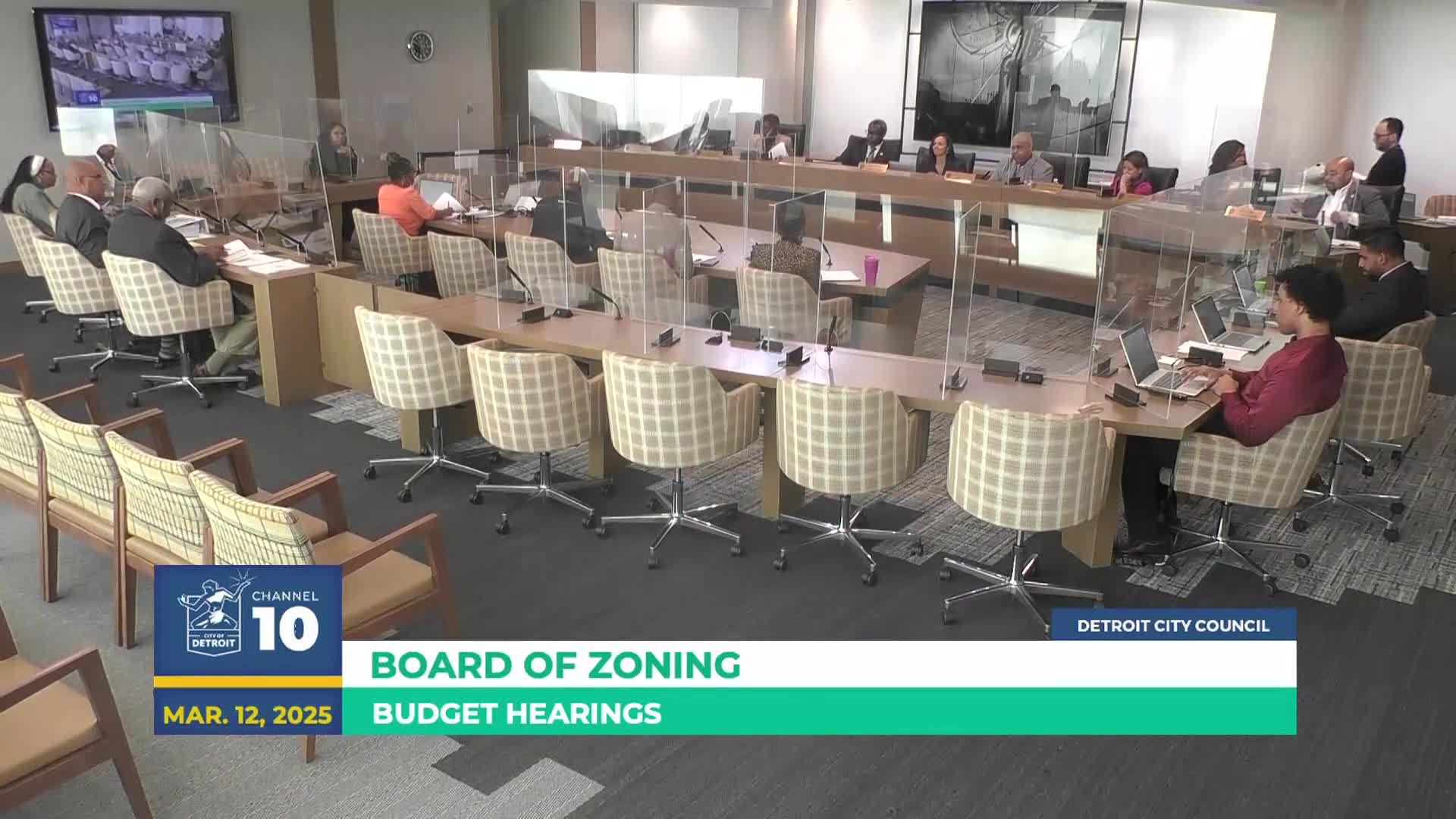
Director James Ribbron, director of Detroit’s Board of Zoning Appeals, told the City Council on March 12 that the BZA can hear cases within 30 days of receipt and issue decisions quickly, but many applications take three to six months to reach the board because of earlier permitting steps.
Director James Ribbron, director of Detroit’s Board of Zoning Appeals, told the City Council on March 12 that the BZA can schedule and decide appeals quickly once cases arrive but that many applications take three to six months to reach the board.
"Once it gets to us, we can hear it in 30 days," Ribbron said, and added that applicants typically receive a decision within about a week after the hearing. He said the BZA has nine appointed seats filled, is using Accela technology to streamline application review, and counted 48 cases processed so far in 2025 with an expected caseload near 100 this year.
Why it matters: Zoning appeals affect project timetables for businesses and residents. Faster decisions at the BZA alone do not shorten the overall development timeline if planning, building-safety and other pre-hearing steps are slow. Council members said clearer outreach and searchable records could reduce repeat appeals and help small developers and neighbors follow cases.
Ribbron described the BZA’s responsibilities and operations: it conducts public hearings on variances and appeals from decisions of the Buildings, Safety, Engineering and Environmental Department; issues variance, exception or modification determinations; maintains records; and is having its rules reviewed by the Law Department. He said the board had no recent remands from circuit court and has two cases currently before the circuit court.
Council members pressed Ribbron on capacity, timelines and public access to records. Council Member Young asked whether the board had sufficient staffing and technology to handle the projected caseload; Ribbron said staffing was adequate and that technology, notably Accela, was the key to speeding processing. "Not an issue of manpower," Ribbron said when asked directly about staff levels.
Multiple council members asked about public notice and community outreach. Ribbron said the BZA complies with the ordinance’s 300-foot mailing radius, requires petitioners to post an orange sign at project sites, posts notices in the Detroit Legal News and on a court board in city hall, and maintains a growing mailing list as community interest rises. He said staff can provide lists of cases by district and that the board encourages petitioners to contact neighborhood groups even when not required by ordinance.
Recordings and transcripts drew sustained attention. Ribbron said the BZA records hearings (including Zoom recordings) and keeps them as part of the public record; recordings are available at the BZA office computer and other materials are public on request. He also described a recently completed court-reporter contract. When questioned about transcript fees, Ribbron pointed to the board’s current vendor rate in the packet: "$6.75 per page" for court-reporter transcripts, and said recordings and ordinary copies are provided without charge.
Public callers and advocates challenged that practice during the meeting’s comment period. A caller referencing Detroit City Code §50-6-66 said the BZA "is supposed to cause and prepare transcripts for every proceeding," and argued charging $6.75 per page imposes a barrier. Another caller, Tyson Gersh, framed the matter as an administrative duty: "The BZA has an independent duty to secure transcripts for all proceedings," he said, adding that production costs historically have been covered through the board’s administrative budget.
Budget questions included a proposed administrative assistant position supported by the mayor and a modest reduction in contractual services (about $12,600–$13,000) and in stipends after all seats were filled. Ribbron said the staffing proposal would support the caseload and that the contractual reduction reflected a transition from month-to-month arrangements to a standing contract for court-reporting services.
Council members and staff also discussed a possible citywide consolidation of court-reporting contracts to reduce cost and duplication. Council staff suggested raising the issue for the closing resolution; a motion to add an item directing the administration to explore consolidating court-reporter services across departments was made and, by voice, approved without objections. The committee then moved to adjourn and continued budget hearings the following day.
What they did not decide today: councilmembers did not vote on any zoning changes or on the BZA’s fee schedule during this session; the BZA fee schedule entry in the packet shows it was approved on Feb. 8, 2024. Ribbron said the Law Department will circulate draft rules and that additional public-comment opportunities are expected once those drafts are ready.
Looking ahead: councilmembers asked the BZA to provide a detailed breakdown of case types and timelines, and several said they would follow up with the Buildings, Safety, Engineering and Environmental Department to reduce pre-BZA delays. Ribbron said he is meeting with human resources to fill the budgeted administrative position and that the board is exploring searchable, address-based access to case files in Accela.
Ending note: the BZA presentation highlighted a procedural gap the council and administration plan to examine further—how to make records more accessible and whether consolidating court-reporting contracts across city departments could reduce costs for residents and the city.