Get Full Government Meeting Transcripts, Videos, & Alerts Forever!
Get email alerts on the Public Defense topic
No spam. Unsubscribe anytime.
Senate approves bill revising state public defense code, clarifying facilities, contracts and transition plan
Summary
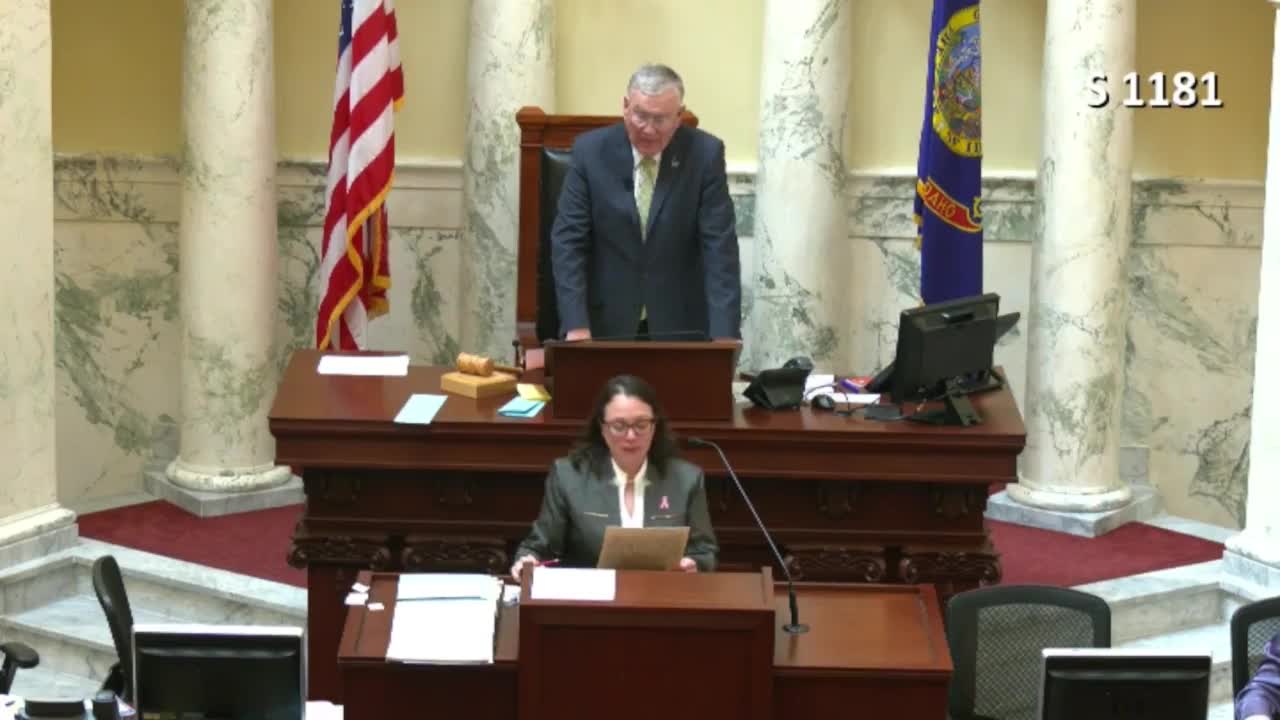
Senate Bill 11‑81, revising Idaho's public defense code after the state takeover of indigent defense, passed the Senate March 24 after sponsors said the bill reflects a multi‑party compromise.
Senate Bill 11‑81, a revision of the state's public defense code, passed the Idaho Senate on March 24 after sponsors described it as the product of a collaborative process among the governor's office, state public defenders, counties and legislative stakeholders.
What it does: Sponsor Sen. Grant Leahy (Senator Grant Leahy) said the bill requires the state public defender office to provide a transition plan in the 2027 budget year for facilities currently provided by counties, to report on contracts and expenditures, and to pay for transcripts in covered cases. The bill clarifies the types of cases covered by the state public defender (typically Sixth Amendment matters with incarceration risk), preserves district public defender roles for judicial districts, and incorporates standards for independence, workload weighting and market‑based contractor rates.
Why it matters: The state took over public defense from counties in recent years; floor discussion cited a court case and practical tensions where counties continue to provide office space. The new requirement for a phased plan through 2029 aims to reduce friction by setting expectations for relocating offices and clarifying reimbursement of operating costs.
Debate and support: Sponsors and colleagues described a long negotiation and incorporated input from defense attorneys, counties and the governor’s office. Sen. Leahy noted that the bill reflects a compromise: "When you have a collaborative process, you don't get everything you want ... but I think we have a good bill that has support." The Senate adopted the bill by recorded vote 34‑1 with one absent.
Implementation notes: The bill directs the state to prepare a facility transition plan in the 2027 budget and formalizes payment responsibilities (transcripts and some operating costs) while leaving some building‑maintenance costs with counties. The measure will be transmitted to the House.