Get Full Government Meeting Transcripts, Videos, & Alerts Forever!
Get email alerts on the Parks And Recreation topic
No spam. Unsubscribe anytime.
Council sends Detroit Zoo funding requests and senior program to executive session
Summary
City Council heard a Detroit Zoological Society presentation and approved adding requests for security and insurance ($2.6 million), a $500,000 facilities assessment and a $34,000 senior-program allocation to executive session; members also moved to add Belle Isle Nature Center capital work to executive session.
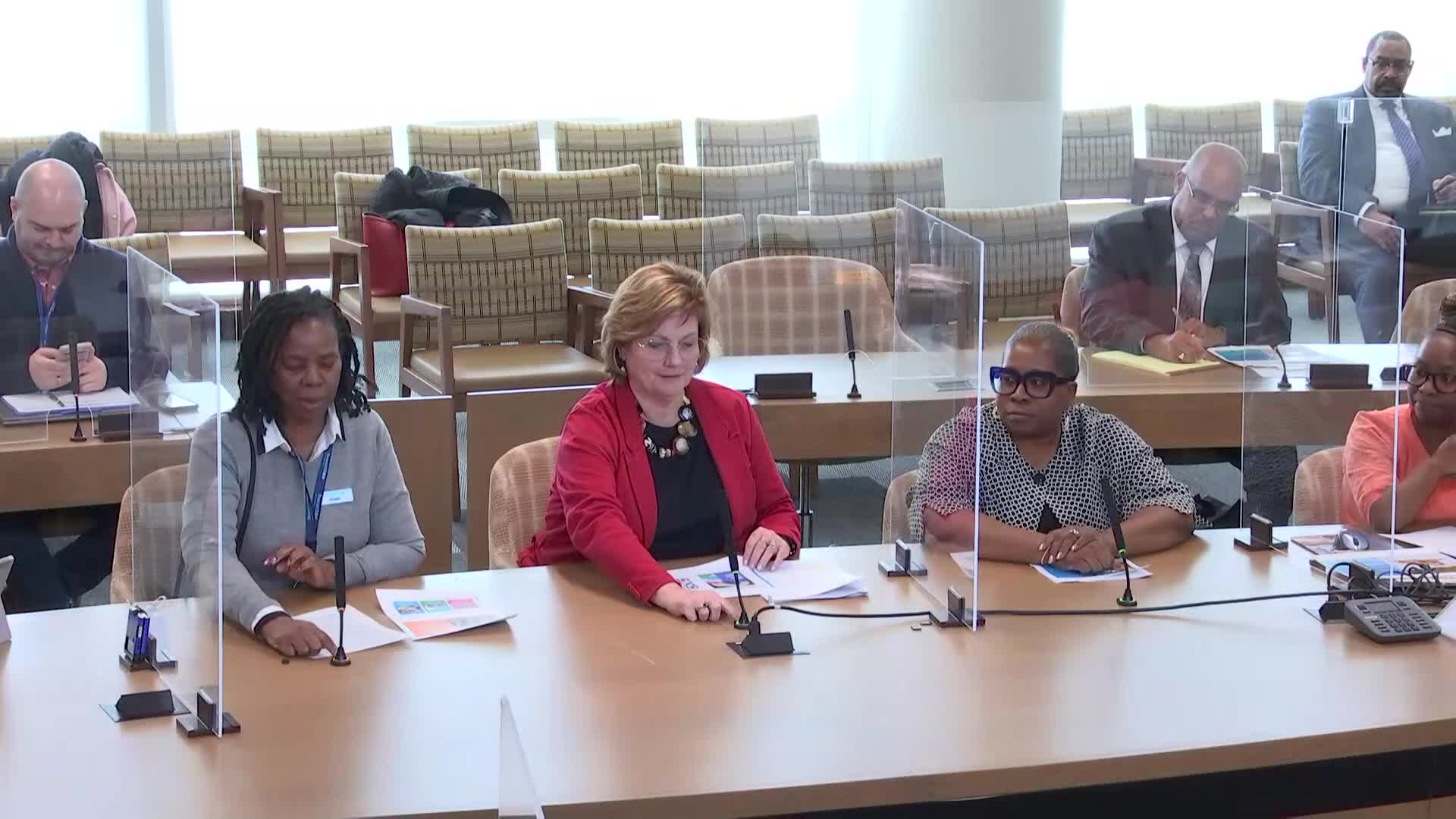
The Detroit City Council on Oct. 12 heard a budget presentation from the Detroit Zoological Society and voted without objection to send several funding requests to executive session, including $2.6 million for security and insurance, $500,000 for a facilities assessment and a $34,000 allocation for a Detroit Seniors pilot program.
The Zoo’s chief executive, Dr. Haley Murphy, summarized the society’s 2024 operations and capital needs during a roughly 10-minute presentation. “We had a little over 1,200,000 visitors last year,” Murphy said, and the society reported “a little over $54,000,000 in revenue” in 2024 with 51% earned revenue and 34% public support. She described an $18,000,000 water-infrastructure project addressing failing lines and a recently opened sinkhole under a seven-acre site that will be part of the Discovery Trails habitat planned for 2026.
Why it matters: council members said the requests are intended to protect a city asset and prevent higher long-term costs from deferred maintenance. President Pro Tem James Tate moved to send the security and insurance and facilities-assessment requests to executive session and the motion was approved without objection. Tate framed the combined request as a $3,100,000 ask, specifying $2,600,000 for security and insurance and $500,000 for a facilities assessment.
Council members emphasized community and accessibility programming described by zoo staff. Diane Miller, vice president of education for the Detroit Zoological Society, outlined school and youth programs including a Cultural Passport program that brings Detroit Public Schools Community District first and sixth graders to the zoo, scholarships for paid programs, a four-year conservation science internship for students starting at age 14, and free Day at the Zoo field trips for Title I schools. Murphy said the society operates outreach at the Belle Isle Nature Center and that “everything on Belle Isle is free.” Council members noted the Detroit Seniors pilot’s popularity and moved to add a $34,000 allocation for that pilot to executive session; the motion was approved on a voice vote.
Board members and councilmembers also discussed vendor and procurement outreach. Murphy said the society held a diverse vendor fair in December with 66 vendors and 30 Detroit-based businesses; a staff member added that participants became approved vendors in the zoo’s procurement system.
On capital needs, Murphy described plans for Discovery Trails, a seven-acre habitat that will include 10 species and a Michigan farm-yard element, and said the city’s previous investment helped leverage additional county and state support for water infrastructure repairs. Council members asked about the scope of remaining infrastructure vulnerabilities; Murphy said a facilities-assessment and asset-tagging system would allow the zoo to map assets, prioritize preventive maintenance and reduce future emergency costs.
Belle Isle was discussed separately: the Belle Isle Nature Center saw attendance of more than 100,000 in the last year after a prior $2.5 million renovation, and staff estimated about $1,000,000 would be needed to renovate an outdoor barn structure to support new urban-wildlife programming. Council member Mary Waters moved to add the Belle Isle Nature Center item to executive session; the motion was approved without objection.
Several councilmembers praised the zoo’s accessibility efforts — including an electronic adult changing table, ReBoca vision technologies, a Sunflower Hidden Disability Program and sensory-friendly hours — and asked about staffing and volunteer support. Murphy said the society runs large seasonal staffing operations, conducts compensation studies and is expanding paid internships and housing to reduce barriers for students pursuing environmental careers.
Next steps: the council added the listed items to executive session for further discussion. No formal votes on appropriations were made in open session; councilmembers said they intended to continue the conversation in executive session and to follow up on budget details and staffing needs.