Get Full Government Meeting Transcripts, Videos, & Alerts Forever!
Get email alerts on the Public Safety topic
No spam. Unsubscribe anytime.
Senate passes update to indecent exposure law after debate over scope and enforcement
Summary
The Idaho Senate on March 24 passed House Bill 2‑70, updating indecent exposure law after prosecutors and police told legislators they lacked a clear, enforceable statute for certain public exposure incidents.
The Idaho Senate on March 24 passed House Bill 2-70, an update to the state's indecent exposure statute aimed at making certain public exposure and lewd conduct crimes enforceable where, supporters say, existing law left a gap.
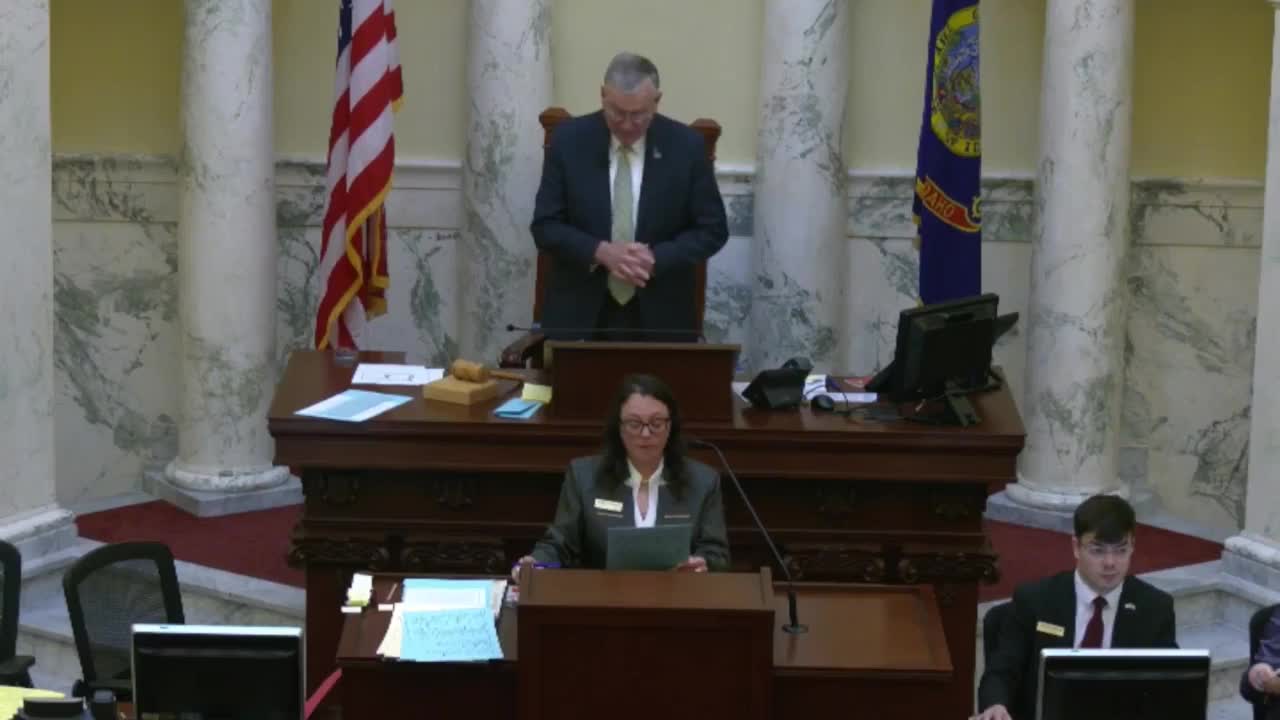
Sponsor Sen. Jim Taves (Senator Jim Taves, sponsor) told colleagues the bill is a response to requests from local law enforcement and prosecutors after reported incidents at a Pride event in Nampa. "Our local law enforcement asked us for this," Taves said on the floor, adding they told him, "There is nothing enforceable here. Will you please give us something we can use?" The Senate approved the measure 28‑6 with one absent.
Why it matters: Supporters said the change closes a legal loophole prosecutors cited after community complaints that current law did not clearly prohibit some forms of public exposure. Opponents warned the language could be used to target particular groups, could be interpreted to reach businesses or items like novelty displays, and would put discretion in the hands of individual prosecutors and officers.
What the bill does: According to opening remarks on the floor, the bill updates the indecent exposure statute to make it a misdemeanor to willfully and lewdly expose certain body parts in public and to prohibit willful public display or use of sex toys in a lewd manner. Sponsor Taves said it also clarifies intent and gives prosecutors discretion.
Debate highlights: Sen. Aaron Saralini (Senator Aaron Saralini), who spoke in the opening debate, said the measure "says it's not okay for adults who have had some work done up here ... to walk around in public and expose yourself to people." Opponents including Sen. James Rudkey (Senator James Rudkey) and Sen. Melissa Wintrow (Senator Melissa Wintrow) expressed concerns the bill turns vague community standards into criminal law and could be applied to items such as novelty truck decorations or consensual activity at adult venues.
Vote and next steps: The Senate vote was recorded as 28 in favor, 6 against and 1 absent; the bill passed and will be returned to the House. The Senate debate record shows sponsors requested and secured unanimous consent to dispense with third‑reading formality before final passage.
Implementation notes: Supporters said local police and prosecutors requested the statutory change and that it is intended to give them a clear enforcement tool; opponents urged caution about the potential for overcriminalization and urged narrower drafting.