Get Full Government Meeting Transcripts, Videos, & Alerts Forever!
Get email alerts on the Manufactured Modular Housing topic
No spam. Unsubscribe anytime.
Experts cite modular and manufactured housing, ADUs as speed and cost tools to expand supply
Summary
Economists and city officials at the Senate hearing pointed to modular/manufactured housing and accessory dwelling units as practical ways to accelerate production and lower costs, and said federal policy and zoning changes could help scale those solutions.
WASHINGTON — Economists, local officials and housing advocates told the Senate committee that modular and manufactured housing, together with accessory dwelling units (ADUs), offer practical pathways to add units quickly and affordably if local zoning and HUD rules allow.
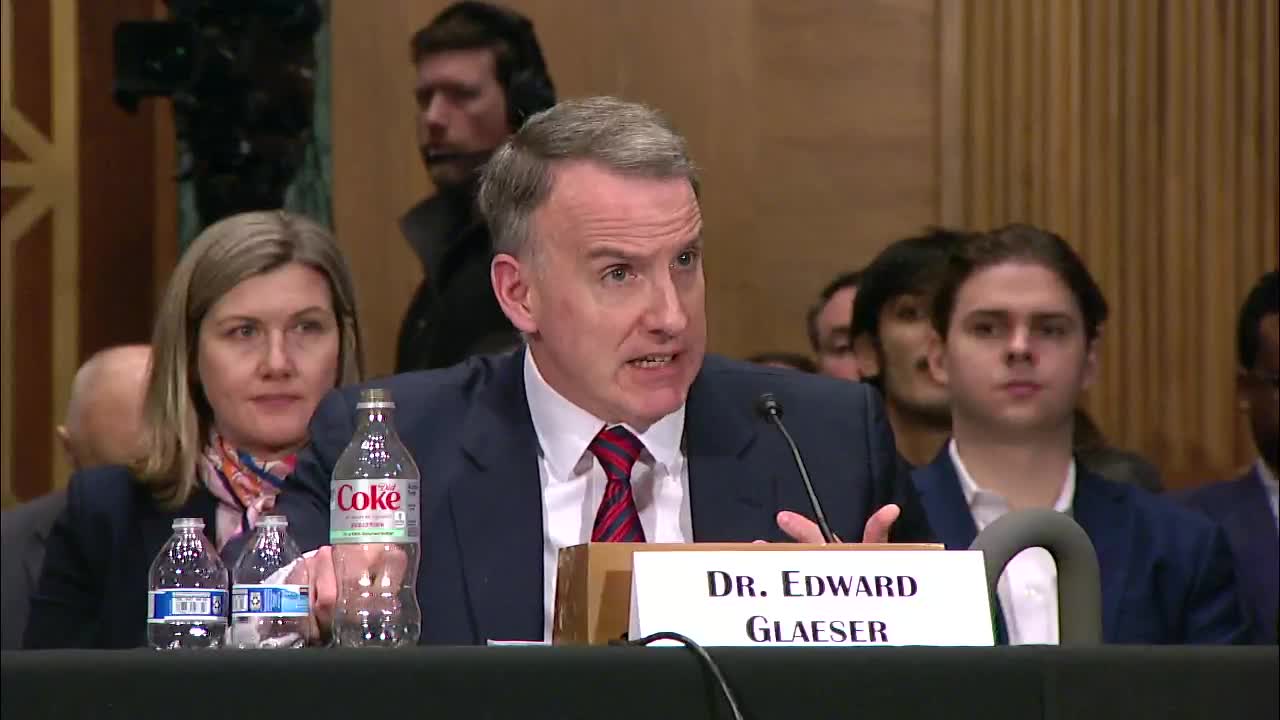
Edward Glaeser recommended policies that enable statewide permissive zoning for preapproved modular models and cited examples where modular construction reduces build time and costs. “Modular housing provides an amazingly good way of providing starter homes,” Glaeser said.
Senator Tina Smith and others discussed ADUs as a policy tool to densify without large projects; Glaeser added that ADUs can be built quickly and are often an effective way to increase supply in politically constrained communities.
Mayor Eric Johnson and witnesses said permitting and building codes must be adapted to enable these construction methods; Glaser and other panelists urged removing regulatory impediments at both the local zoning and HUD rule levels to allow modular and manufactured housing deployment at scale.
Why it matters: Faster, lower‑cost production methods can blunt price pressures if regulations and financing permit their widespread use. Witnesses urged Congress to review HUD and local rules that impede modular/manufactured adoption and to consider incentives for municipalities that allow ADUs and modular prototypes.
Looking ahead: Committee members asked for examples of state and local permitting adjustments and signaled interest in pairing zoning incentives with federal financing or pilot programs to scale modular and manufactured housing.