Get Full Government Meeting Transcripts, Videos, & Alerts Forever!
Get email alerts on the Homelessness Public Health topic
No spam. Unsubscribe anytime.
Mayors and advocates urge viewing chronic homelessness as public‑health challenge; Dallas credits rapid rehousing for veterans
Summary
The mayor of Dallas told senators chronic homelessness is driven largely by untreated mental illness and addiction and described a local program that houses veterans within 90 days; advocates said homelessness and affordability require both supply‑side action and safety‑net supports.
WASHINGTON — At a Senate hearing on the state of affordable housing, the mayor of Dallas and witnesses urged policymakers to treat chronic homelessness primarily as a public‑health problem and to pair housing production with targeted social services.
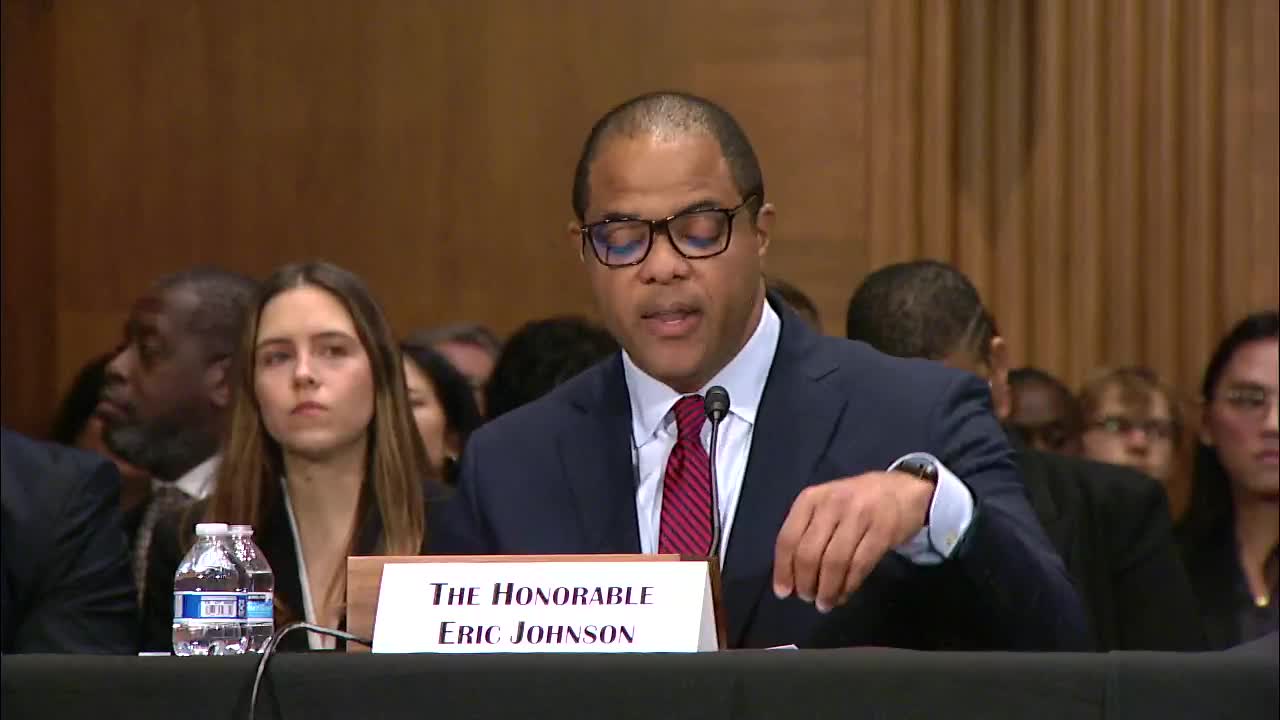
Eric Johnson, mayor of Dallas, said his city “effectively ended veteran homelessness by ensuring that any veteran who falls into homelessness is housed within 90 days,” and argued that many people experience chronic homelessness because of serious mental illness, addiction and behavioral health disorders rather than only because of housing costs.
“If we don't correct these misconceptions, we will never move the needle on chronic homelessness,” Johnson told the committee. He recommended viewing chronic homelessness as a public‑health issue and expanding services that address untreated behavioral health needs.
Renee Willis of the National Low Income Housing Coalition testified that a record number of people are experiencing homelessness and that most extremely low‑income renters spend more than half their income on rent. She urged Congress to expand rental assistance, preserve affordable units and stabilize households to prevent eviction — steps she said are necessary alongside supply increases.
Why it matters: Witnesses argued that addressing homelessness requires a two‑track approach: increase housing supply to improve affordability broadly, and expand targeted services and subsidies (including rental assistance and supports for behavioral health) for people experiencing or at risk of chronic homelessness.
Looking ahead: Senators discussed combining supply‑side reforms with funding and incentives for localities to scale coordinated entry, rapid rehousing and service‑based solutions to reduce chronic homelessness, and signaled interest in legislation that ties federal support to measurable local outcomes.