Get Full Government Meeting Transcripts, Videos, & Alerts Forever!
Get email alerts on the Norwood Inn Condemnation topic
No spam. Unsubscribe anytime.
Roseville upholds condemnation of Norwood Inn and denies hotel license after staff inspection finds fire-safety breaches
Summary
The Roseville City Council upheld a staff condemnation of the Norwood Inn at 2401 Prior Avenue and denied the hotel’s lodging license after inspectors found breaches in fire‑rated assemblies and other unresolved code violations that, staff said, made the building unsafe for occupancy.
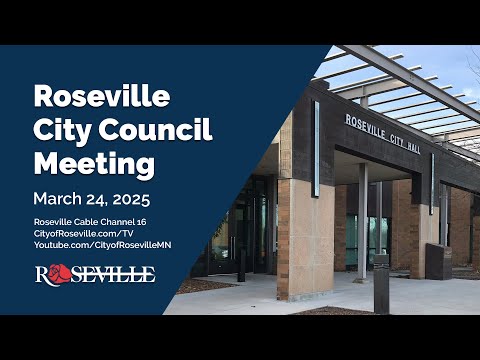
The Roseville City Council, acting as the Board of Adjustments and Appeals, upheld a March 18 staff condemnation of the Norwood Inn at 2401 Prior Avenue and later denied the hotel’s application for a city lodging license after city inspectors found multiple unresolved life‑safety violations, including breaches that allow fire and smoke to move from guest rooms into attic space.
City Community Development Director Janice Gunlock told council members that an initial licensing inspection on Oct. 15, 2024, identified numerous violations and that a March 3, 2025, follow‑up found those issues largely uncorrected. "Staff did note that no corrections at that time had been made to the numerous violations," Gunlock said. Building official David England highlighted what he told the council were the most serious hazards: breaches in the fire‑rated assemblies that run from floor to floor and into the attic, a condition he said would allow rapid spread of fire and would likely prevent early detection.
The council discussed whether the property owner had made sufficient repairs or submitted credible plans. Owner Percy Poonawala told the council he had been traveling and ill last year, said contractors and permit applications are now underway and that "we have done more than 450" of the roughly 480 items listed on the city's inspection report. Attorney Matt Berner, representing the applicant, asked the council either to delay action or to grant conditional approval while repairs and permitting continue.
Gunlock and England told the council that staff observed active work but also work performed without permits and that the most urgent issues — the breaches in the fire‑rated room assemblies and the extent of repairs into the attic — had not been verified by inspection. England said a certified design professional must document and certify any repairs restoring the original fire‑rated assemblies. The city also noted other failures in the inspection report: missing carbon monoxide detectors in guest rooms (a state requirement adopted in 2024), inoperative or nonlocking guest room doors, missing or damaged window screens, rusty sprinkler heads and plumbing work completed without final inspections.
Council members weighing safety and economic impact repeatedly noted the financial harm a closure would cause the owner and employees. Mr. Poonawala said the hotel accounts for roughly $25,000–$35,000 in weekly receipts and employs about 14 people. But the council majority said the unresolved life‑safety issues presented too high a risk to allow continued occupancy.
On a motion to adopt a resolution upholding the building official’s condemnation order, the council voted to deny the appeal and affirm the post‑ing of the property as “not approved for occupancy.” Later in the meeting, when the City Council considered the hotel license application, members voted to deny the license application for the Norwood Inn. Both actions were adopted by unanimous vote.
The council and staff outlined how the condemnation could be lifted: the owner must complete repairs that fully restore the fire‑rated assemblies, submit plans and obtain required permits, and have the work inspected and certified by the building official (and, where applicable, a licensed design professional). If the building official later determines the repairs meet the required standard, the occupancy revocation can be lifted administratively; the council’s actions were an appeal of the building official’s posting, not a permanent bar to future compliance.
The City noted a history of enforcement: staff said the building had been posted at least twice in the previous five years (including a January 10, 2024 action) and that earlier issues had required only limited repairs to lift postings. The March 2025 inspection, staff said, documented a larger and more serious set of breaches and code violations. Police and city records cited by staff showed a high volume of calls for service at the Norwood Inn; staff reported 296 calls for service between Jan. 1 and Feb. 19, 2025, and four overdose deaths at the property during the prior period.
The council’s decision leaves the Norwood Inn closed pending approved, inspected and certified repairs. City staff told the council they will work with the owner and contractors to review plans, inspect work and lift the posting once the critical life‑safety items are corrected. "The work has to be completed and inspected and certified as done per the plan," Building Official David England said when council members asked what would be required to reinstate occupancy.
The denial of the license triggers the municipal ordinance’s reapplication limitation: under the lodging‑establishment rules cited during the meeting, an applicant denied a license cannot reapply for 12 months from the date of denial unless council directs otherwise. The owner’s attorney asked council to delay or to condition any denial so the owner would not be barred from reapplying; the council declined and adopted the staff resolution denying the license.
The council emphasized its primary statutory responsibility: protecting public safety. "Fires going up through the roof and into the attic will burn the whole building down," Councilmember Graff said during debate on the condemnation resolution.
What’s next: the owner and contractors may complete permitted repairs, seek plan approval and, once inspected and certified by city staff, request that the building official lift the posting. If the building official does so, the owner may then file for a lodging license; the denial adopted by council today starts the municipal 12‑month waiting period for reapplication unless council grants an exception.