Get Full Government Meeting Transcripts, Videos, & Alerts Forever!
Get email alerts on the Higher Education Policy topic
No spam. Unsubscribe anytime.
Senate committee advances broad higher‑education bill after contentious debate over 'underrepresented' language
Summary
CS/SB 1624, an omnibus higher‑education bill with tuition, workforce and program changes plus multiple amendments, passed the committee after debate focused on replacing enumerated protected categories with the term 'underrepresented'; the committee adopted several sponsor and late amendments and reported the bill favorably with recorded votes.
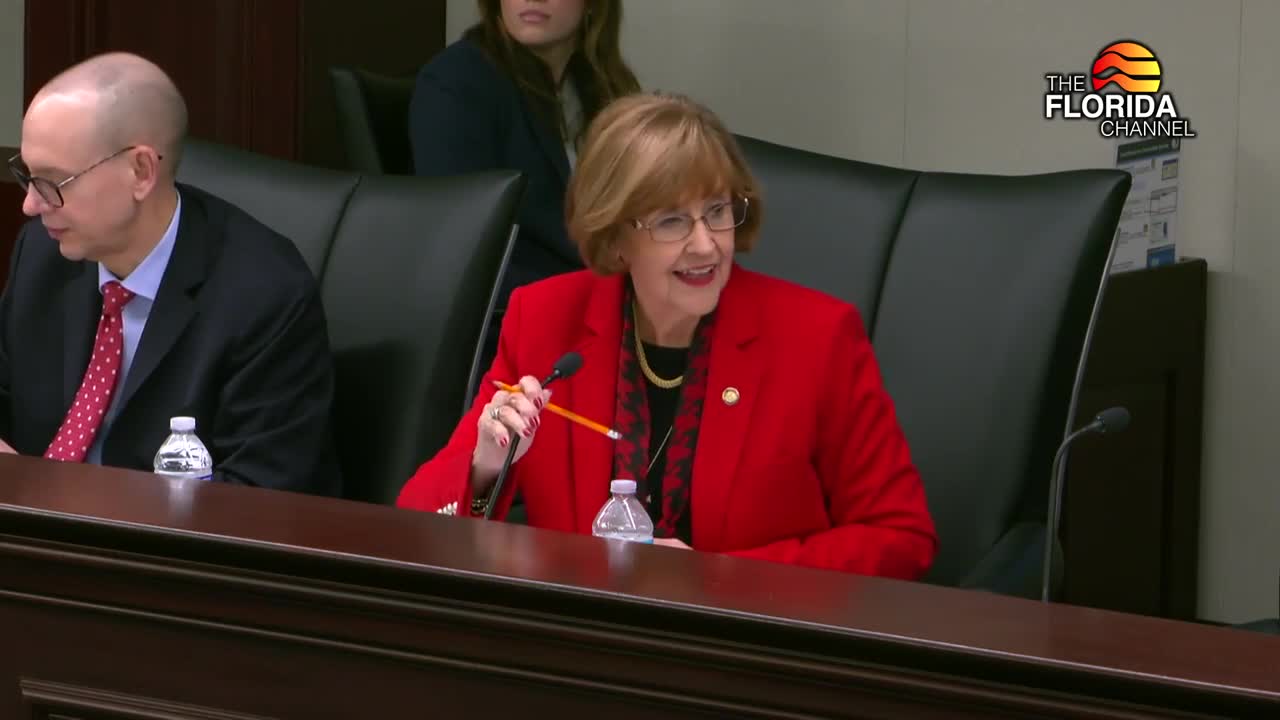
CS for Senate Bill 1624, a comprehensive higher‑education bill sponsored by Senator Kalatiud, was reported favorably by the Senate Higher Education Appropriations Committee on March 1 after several amendments and extended debate over language that replaces enumerated protected categories with a single reference to "underrepresented" students.
The bill addresses numerous topics: new market‑rate out‑of‑state fees for nonresident online students; allocation and flexibility for financial aid and support programs aimed at low‑income and underrepresented students; tuition waivers for members of the Florida State Guard (up to six credit hours per semester); expansion of the GATE alternative‑education program with updated age and enrollment rules and greater marketing support for rural areas; renaming Hillsborough Community College to Hillsborough College; renaming the Florida Educational Equity Act to the Florida Educational Equality Act; and administrative changes such as longer terms for the Assistive Technology Council and new appointment authority for a UF advisory council on brain tumor research. Sponsor amendments also changed the interval for state university master plan updates from every five to every 10 years and removed an existing out‑of‑state fee waiver tied to a Florida resident grandparent.
During the hearing the sponsor described the policy rationale for replacing enumerated categories (for example race, color, national origin, sex, disability) with the broader term "underrepresented," framing the change around access and economic mobility: "When I view education...I view it mostly through the lens of access for low income people," Senator Kalatiud said. Several senators pressed for detail about how agencies and institutions would identify which groups are "underrepresented" for the purposes of program targeting and whether specific populations — for example people with disabilities — could be overlooked if statutory language no longer lists them explicitly.
Senator Smith said she would vote against the bill, arguing that removing enumerated categories risks obscuring historic disparities and makes it harder to design targeted interventions: "If black students in Florida are struggling with access to our higher education institutions, we need to say that. We need to say black students are struggling with access." Senator Kalatiud replied that the intent is to give implementers flexibility to focus on the populations that most need assistance in their specific service areas.
The committee considered and accepted five amendments on the record, including changes to allow rural community colleges to form regional consortiums (amended to clarify the name "State College Regional Consortium Service Organizations"); an amendment removing the out‑of‑state grandparent waiver (sponsor noted 631 students used that waiver in 23/24 and an estimated $11.5 million system revenue impact); an amendment extending master plan update intervals from five to 10 years at universities; and a Hillsborough College name change as requested by local representatives. The committee received a waiver card in support from Laura Bomer of Hillsborough Community College for that name change.
After final debate the clerk called the roll. The committee reported CS for SB 1624 favorably; the roll call shows affirmative votes from Senators Rojas, Collado (Collodiode in transcript), Leake, Trumbull, Vice Chair Bradley and Chair Harrell, and negative votes recorded from Senators Davis and Smith. The bill will proceed to the next stage in the Senate process.