Get AI Briefings, Transcripts & Alerts on Local & National Government Meetings — Forever.
Senate panel backs bill limiting irrigation district assessments after Chandler dispute
Loading...
Summary
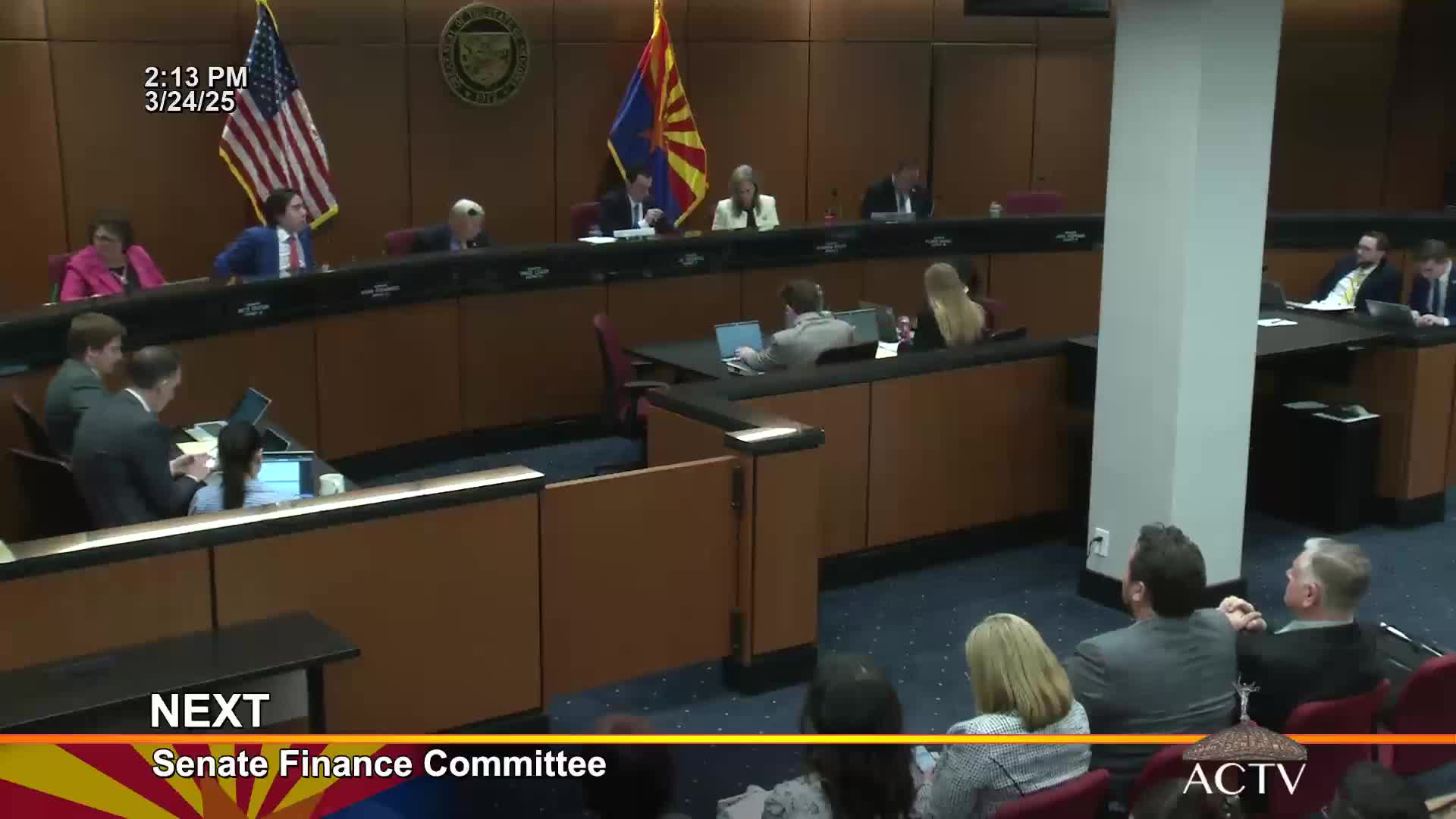
The Senate Finance Committee on March 21 advanced legislation that would prevent irrigation districts from taxing acres that have not received water deliveries in the previous five years, a move that supporters said would protect Chandler homeowners and opponents said would destabilize long‑standing district financing.
The Senate Finance Committee on March 21 advanced House Bill 21-25 as amended, adopting a “strike everything” amendment that bars an irrigation and water conservation district from levying an assessment on — or treating as taxable land — acres that have not received water deliveries within the immediately preceding five years and are not capable of being served by the district’s irrigation system or by contracted water providers.
Why it matters: The bill grew out of a long-running dispute between the City of Chandler and the Roosevelt Water Conservation District (RWCD) over whether property owners who no longer receive irrigation deliveries should remain subject to district assessments. Chandler officials said thousands of residents in city service areas continue paying roughly $1.7 million a year in RWCD property taxes without receiving water deliveries; RWCD and allied district representatives said the proposal would upend longstanding financing authorities for irrigation districts across Arizona.
Testimony and debate: Mayor Kevin Hartke, mayor of the City of Chandler, testified in favor of the amendment, telling the committee, “I’m Mayor Kevin Hartke … and I’m here to speak in favor of strike everything amendment HB 21 25,” and describing an agreement he said Chandler relied on to receive water for city residents when development severed direct irrigation access. Hartke said roughly 26,000 Chandler households in the RWCD service area no longer receive water deliveries and that Chandler has purchased and delivered treated drinking water to many such properties under a long-running intergovernmental agreement.
Stan Barnes, representing Roosevelt Water Conservation District and other irrigation districts, opposed legislative action and described the matter as an active contract dispute pending before Arizona’s courts. Barnes said the bill is “ill timed” while litigation is pending and argued the bill could be read as giving Chandler leverage to compel RWCD to resume sales on Chandler’s terms.
Other witnesses included Stephanie Knight DuBain, executive director of the Agribusiness and Water Council of Arizona, who warned the amendment would “upend that long standing revenue generating authority” of irrigation districts and materially threaten district operations; and Russell Smolden, who pointed out that many irrigation assessments are longstanding, non-ad valorem assessments created when districts were formed and that a statewide change could affect numerous districts.
Amendments and outcome: The committee adopted a chair’s “strike-everything” amendment and a 19-line amendment (Senator Mesnard’s) that clarified an exception for municipal water providers with long-term contracts and included transitional timing language and a refile provision for certain time‑barred claims. The committee then voted to return House Bill 21-25 with a due‑pass recommendation as amended. The roll call recorded in committee was: Bullock — Aye; Bravo — No; Epstein — Aye (explained vote); Hernandez — No; Hoffman — No; Beach — Aye; Mezeman — Aye. Tally: 4 ayes, 3 noes. The motion passed.
What the bill does not do: The legislation does not itself decide the contract dispute pending in the courts. Committee supporters framed the measure as giving taxpayers relief from assessments when they receive no service; opponents warned it could be used as leverage in disputes between political subdivisions and could have broad consequences for districts that rely on assessments to finance infrastructure.
Next steps: The bill was returned with a due‑pass recommendation and will proceed according to the legislative calendar. Committee members and witnesses said stakeholders would continue discussions as the bill moves through the process.