Get Full Government Meeting Transcripts, Videos, & Alerts Forever!
Get email alerts on the Mental Health Suicide Prevention topic
No spam. Unsubscribe anytime.
El Paso County coalition urges council to adopt suicide-safe language and trainings
Summary
Members of the El Paso County Suicide Prevention Collaborative asked Colorado Springs City Council to use person-first, nonjudgmental language about suicide, offered free training resources and invited council to QPR training on April 11.
El Paso County suicide-prevention advocates briefed the Colorado Springs City Council on April 1, urging the council to adopt safer, stigma-reducing language and to take up brief trainings aimed at preventing suicide.
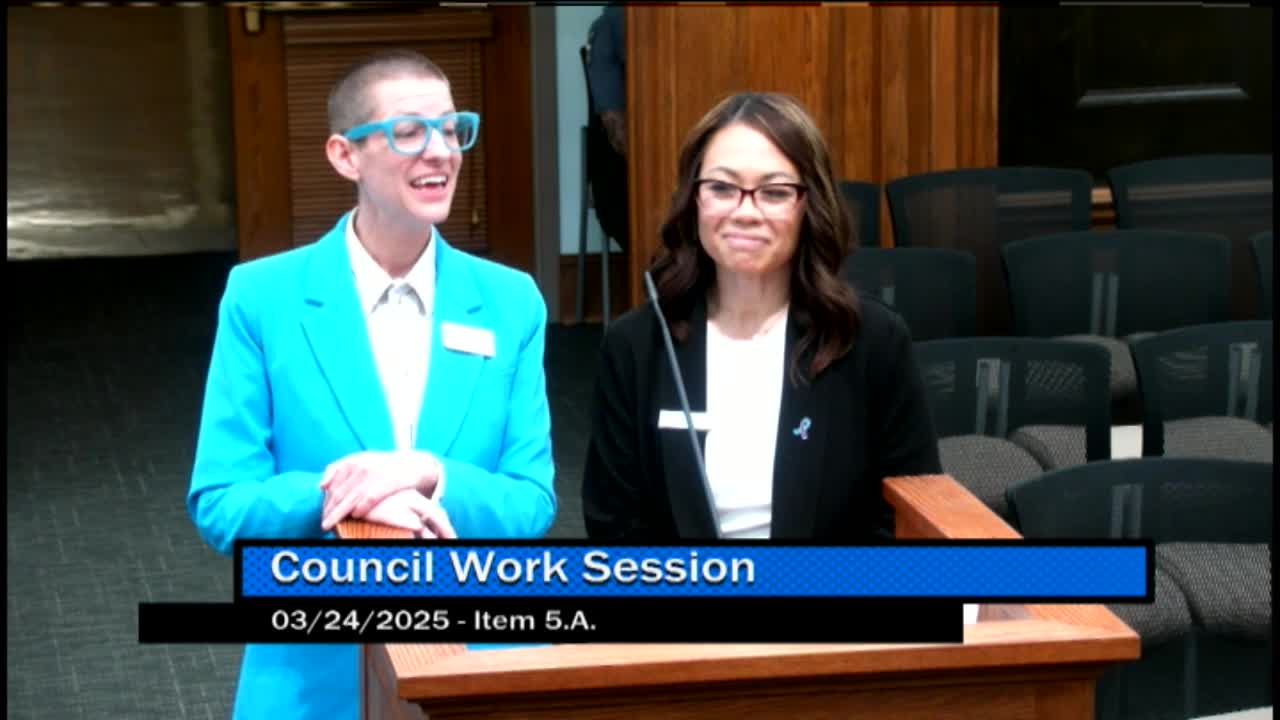
The request came during the meeting’s presentations slot from members of the El Paso County Suicide Prevention Collaborative. Ollie, communications and advocacy director at Inside Out Youth Services, and Cass Walton, executive director of Suicide Prevention Partnership, described specific wording changes and training resources the council and its speakers can use to reduce harm and encourage help-seeking.
The presenters said language matters because certain terms can increase stigma and reduce help seeking. Walton and Ollie recommended avoiding phrases such as “committed suicide” and “failed suicide attempt,” and instead using “died by suicide,” “took their own life,” “survived an attempt,” or “attempt survivor.” They also urged use of person-first phrasing for people with mental-health or substance-use conditions, and use of chosen names and pronouns for transgender and gender-expansive residents.
Why it matters: the presenters cited research that using a transgender person’s chosen name and pronouns can halve their risk of suicide, and they said 90% of people who seek help for suicidal thoughts will go on to live. They framed language change as a no-cost, low-effort public-health strategy that local leaders can model in meetings and media appearances.
Details and resources: speakers left handouts and a QR code linking to an eight-minute online training about safer messaging. They also invited council members to a QPR (Question, Persuade, Refer) training scheduled for April 11 from 7 to 9:30 a.m., and reminded the public that people in crisis can call the 988 suicide-crisis hotline.
Council response: Council members across the dais welcomed the presentation. Council President Helms and several members said they already try to avoid escalatory language during public comment. Council member Henjem, a clinical social worker, and others reiterated the long-standing use of person-first language in clinical and advocacy communities. Council member Lineweber noted the potential for elected officials to model help-seeking norms for groups at high risk, including white males, veterans and first responders.
Next steps: presenters asked the council to adopt simple meeting norms (for example, limits on hate speech and excessive profanity at the podium), to take the short training, and to attend the offered QPR session. The council did not take a formal vote or adopt a policy during this meeting.
Ending: Presenters thanked the council for the time and for prioritizing mental-health work in public meetings.