
Danvers ZBA allows broader list of commercial uses at 141 Pine Street
Get AI-powered insights, summaries, and transcripts
Sign Up Free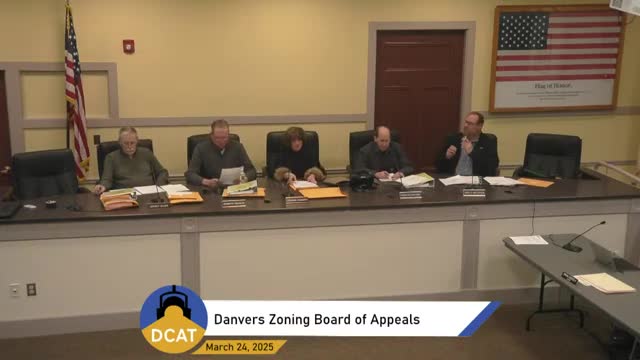
Summary
The Zoning Board of Appeals approved a finding under Section 3.1 to expand permitted nonconforming commercial uses at 141 Pine Street, legalizing existing personal services and clearing the way for additional small businesses while rejecting unlimited outdoor seasonal sales.
The Town of Danvers Zoning Board of Appeals on March 24 voted to issue a finding under Section 3.1 of the Town of Danvers zoning bylaw allowing the commercial building at 141 Pine Street to expand its list of permitted nonconforming uses to include personal retail services, takeout restaurants, retail art galleries and yoga/fitness studios.
The decision legalizes uses already operating at the site and aims to provide flexibility for small commercial tenants while reaffirming that the change must not be substantially more detrimental to the neighborhood than existing uses.
The property at 141 Pine Street has been used for nonconforming industrial and commercial purposes since before Danvers adopted zoning in the 1940s, counsel for the applicant said. "My name is Nancy McCann. I'm here on behalf of the applicant, 141 Pine Street Holdings LLC," attorney Nancy McCann told the board, noting a 2004 finding that allowed specific professional and retail uses on the site but listed them so narrowly that similar businesses were sometimes excluded.
The building is about 2,000 square feet divided into five roughly 400-square-foot tenant spaces, McCann said. Brookwood Landscaping, of which Jason Mori is a principal and the property owner/manager, occupies two tenant spaces; two hair salons also occupy space there and have town business certificates. "The planning office has advised Mr. Mori that those uses are not permitted on the property because they're personal service uses," McCann said, adding that the requested finding would confirm those activities as allowable.
Planning staff explained the petition grew out of a review of the property's docket history and prior findings. Planning Director Brian Zakeli said the department flagged repeated, piecemeal findings and recommended a clearer, broader list so the existing small businesses and prospective tenants would know what is permitted. Zakeli said the department, not the owner, initiated the consolidation of permitted uses to reduce repeated hearings.
Board members and public speakers discussed limits. One board member said he would not support "unlimited outdoor seasonal merchandise." McCann and other board members clarified that the legal advertisement — the official list the board would act on — read: personal retail service, takeout restaurant, retail art gallery, or yoga/fitness studio, and that the board could be more restrictive but should not expand beyond the legal ad.
Residents and local officials spoke at the hearing. Joanne Maguchi, a Town Meeting member, said the proposal would not infringe on neighbors if it sticks to the advertised list and noted concerns residents had raised previously about rezoning the parcel to Tapleyville, which would have allowed residential development. Neighbor Phil Bridal expressed confusion about the roster of allowed uses and asked the board to be explicit in the decision; he also raised concerns about lighting and nuisance effects. Property manager Jason Mori described past uses including a garden center called Sweet Williams and confirmed outdoor sales associated with landscaping operations had been permitted previously.
After deliberation the board voted to issue the requested finding under Section 3.1, concluding the proposed extension of uses is not substantially more detrimental to the neighborhood than existing uses. The board indicated the written decision will list the authorized uses and any conditions so owners and neighbors have a clear, enforceable record.
The board did not adopt a blanket authorization for outdoor seasonal sales beyond the uses referenced in the approved legal ad; members emphasized the finding will reflect the official advertised list and that prior, more-limited findings and conditions remain part of the property's regulatory history.