Get Full Government Meeting Transcripts, Videos, & Alerts Forever!
Get email alerts on the School Policies Ocr topic
No spam. Unsubscribe anytime.
Delaware Valley SD schedules April forum after hours of public comment on 2016 OCR agreement
Summary
Board members agreed to add discussion of the district's 2016 Office for Civil Rights resolution to the agenda and scheduled a special April 16 public meeting after more than an hour of public comment that sharply divided speakers over protections for transgender students and possible federal funding risks.
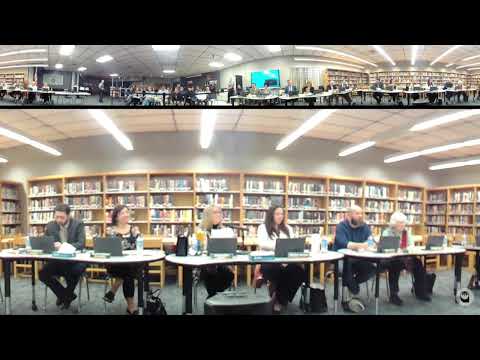
The Delaware Valley School District Board of School Directors voted 8-1 on March 20 to add a general discussion of the district's 2016 Office for Civil Rights (OCR) resolution to the agenda and announced a special public forum for 6 p.m. on April 16 in the high school learning commons to review the agreement and take public comment.
The move followed extended public comment during which dozens of residents, students and alumni urged opposite outcomes: some told the board that rescinding the OCR would jeopardize federal funding and student safety, while others called for removing the agreement to protect girls' privacy and sports opportunities. The board did not take any vote to rescind or amend the OCR during the meeting; the item was added only for discussion.
Why it matters: the OCR agreement governs how the district interprets federal civil-rights protections for students. Speakers at the meeting tied the issue to Title IX, federal guidance and recent executive orders, and several asked the board to weigh legal and financial risks before deciding whether to rescind the 2016 resolution.
During public comment, Taylor James, identified as a resident of Belfort, said the district's policies "have hurt nobody and have quietly protected countless students for nearly a decade," and urged the board to keep protections in place. Elijah Robles, a sophomore at Delaware Valley High School who identified as transgender, told the board that "without protections, there will be further harm," describing the personal cost of losing nondiscrimination safeguards.
Other speakers highlighted funding concerns and legal uncertainty. John Tavine of Dingman Township told the board the OCR could threaten roughly $700,000 a year in federal impact aid and urged the board to confirm whether rescinding the agreement would put those funds at risk. Several speakers and board members noted recent federal executive actions and court decisions and said they needed clarity on how those developments would affect the district.
Board members framed the decision as one requiring more information rather than an immediate policy change. A number of directors said the April 16 forum and the April 10 work session would give the public and the board additional time to gather legal guidance, solicitors' advice and community input. Board members also noted that public comment rules differ by portion of the meeting: at the special April 16 meeting members of the public who pre-register will be allowed up to five minutes to speak; at regular meetings the board said speakers at the start of the meeting receive three minutes and those at the end receive two minutes.
The board's solicitor and administration were asked to gather answers on funding exposure, state and federal guidance (including Title IX and recent executive orders), and the practical effects of any rescission. No formal directive to rescind the agreement was made and no administrative policy was changed at the March meeting.
Public reaction was sharply divided. Speakers for keeping the OCR pointed to national data about higher rates of violence, poor mental health and suicidal behavior among transgender and questioning youth; Janine Sessa, citing a Centers for Disease Control report, summarized those statistics and urged protections. Speakers favoring rescission focused on competitive fairness in girls' sports and privacy in bathrooms and locker rooms; some asked whether neutral (single-occupancy) restrooms or other accommodations could reduce conflict.
Next steps: the board will hold a special meeting at 6 p.m. April 16 in the Learning Commons specifically to review the 2016 OCR resolution and to take longer public comments on that topic. The board indicated it will seek legal guidance, consult the solicitor, and collect information about funding implications before any formal action is considered.
The March meeting record shows the board added the OCR discussion to tonight's agenda after an initial failed attempt to add it earlier in the meeting; the successful motion passed 8-1. No vote to rescind or to change district policy was taken on March 20.