Get Full Government Meeting Transcripts, Videos, & Alerts Forever!
Get email alerts on the Student Technology Policy topic
No spam. Unsubscribe anytime.
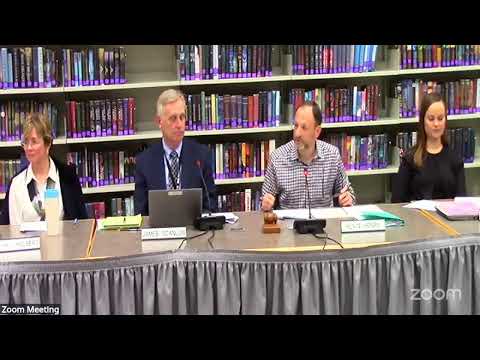
Wallingford-Swarthmore board approves first reading of updated student cell-phone policy after committee debate
Summary
The Wallingford-Swarthmore School Board voted 9-0 to approve policies for first reading that update district rules on student cell-phone use. Board members said the policy will return for a second reading after additional committee work; public commenters asked how enforcement would work and whether staff were surveyed.
The Wallingford-Swarthmore School Board voted 9-0 on March 24 to approve a set of policy changes, including updates to the district's student cell-phone policy, on first reading after a lengthy policy-committee review.
Board members said the first-reading vote keeps the proposal moving through the district's established policy process while leaving room for further edits at the committee level. "When we're looking at district policies, they get a first read in a committee meeting," a board member said during the meeting, noting the policy will return to committee for a required second read and final vote.
The policy discussion has generated sustained public interest and lengthy committee deliberations. Superintendent Dr. Scanlon presented survey results at the policy committee meeting, according to board members, and trustees said they would revisit additional data and administrative regulations before a final vote.
At the meeting a resident, Jana Garland of Harvard Avenue, asked how the policy would treat parental contact during school hours and whether staff had been surveyed. Garland said, "Are parents aware of this policy change?" and asked, "If [the staff survey] was posed to the teachers, could we please see the data?" Garland also raised the question presented to parents and students about schools that require phones to be secured in pouches, lockers or kept out of sight all day.
Board members emphasized that the vote on March 24 approved the policy text for first reading, not final adoption. One trustee said the policy and administrative regulations had already prompted "a robust conversation" in committee and that specifics about enforceability and equity will be returned to the committee for further refinement. "We still have that opportunity . . . to continue some of the dialogue to follow-up to some of the requests that we had received," the board member said.
The board took the vote after a motion to approve the policies for first reading. The motion passed in a roll-call vote recorded as 9-0. Administrative regulations that accompany the policy were noted as informational; those regulations are not a separate board voting item and can be revised through the committee process.
What's next: The policy will return to the policy committee for a second read and additional public conversation before the board takes a final vote. Board members asked administration to compile outstanding questions, including enforcement mechanisms and whether staff were surveyed, and to provide updated data and proposed regulatory language at the next committee meeting.
Votes at a glance: Policies for first reading — motion to approve policies for first reading (includes updated student cell-phone language and accompanying administrative regulations); outcome: approved on first reading (9-0).