Get Full Government Meeting Transcripts, Videos, & Alerts Forever!
Get email alerts on the Public Health topic
No spam. Unsubscribe anytime.
Committee debates expansion of Good Samaritan protections and distribution of harm-reduction supplies
Summary
Engrossed House Bill 1574 would broaden Good Samaritan protections for people who seek medical assistance during a drug-related overdose and allow certain health facilities to distribute public-health supplies under specified programs.
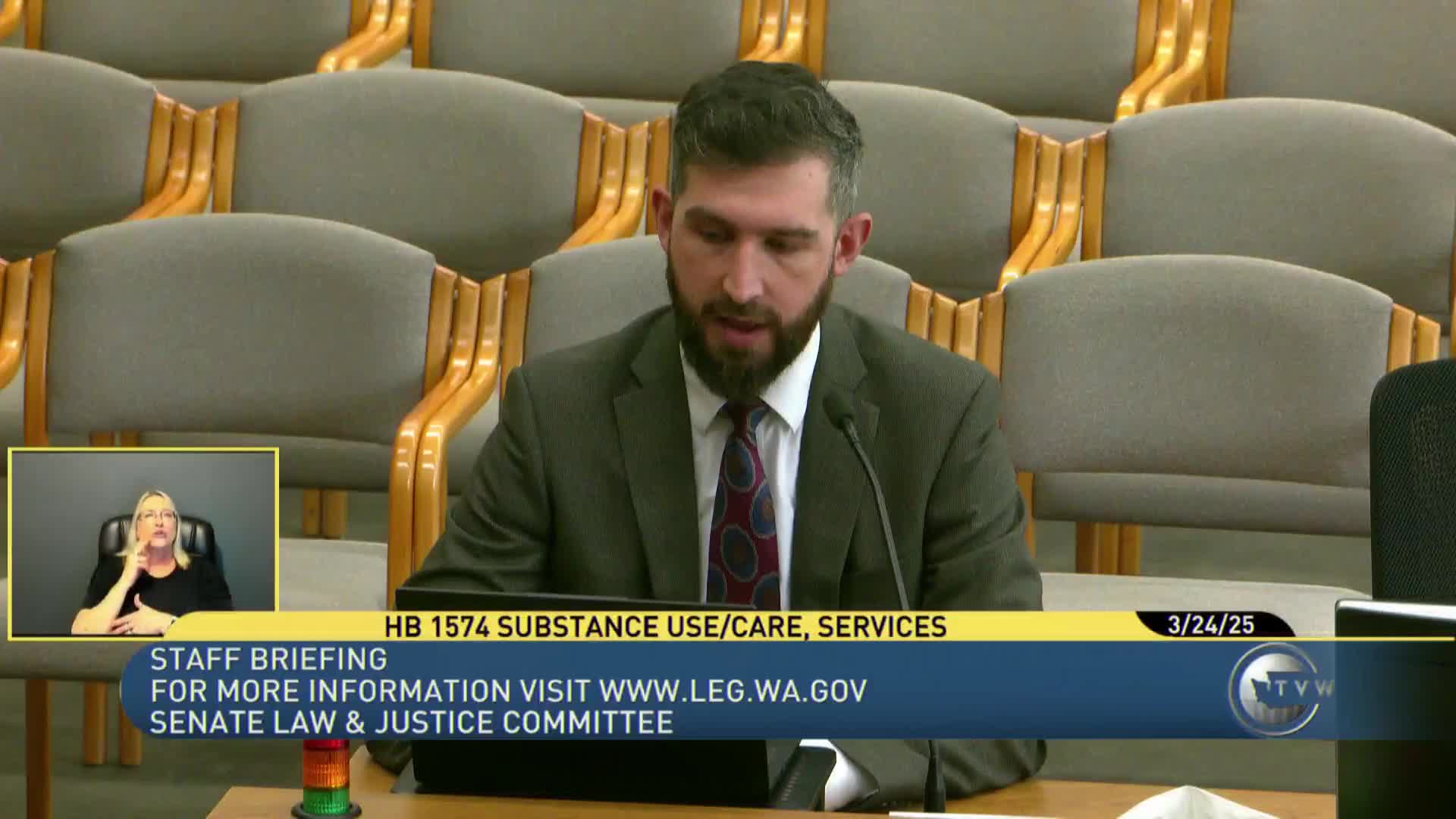
The Law & Justice Committee on March 24 considered Engrossed House Bill 1574, which would expand Washington’s Good Samaritan protections for people who in good faith seek medical assistance for a drug-related overdose and clarify that certain healthcare facilities may provide public-health supplies such as syringes, smoking or drug-testing equipment as part of established public-health programs.
Staff counsel summarized the bill: under current law evidence showing a person sought medical attention in good faith during an overdose prevents prosecution for possession; the bill would extend that protection to make a person who seeks help immune from arrest, charge, prosecution or conviction for possession in those circumstances and protect them from penalties for some probation violations and certain protection-order violations tied to drug-overdose response. The draft also restricts civil forfeiture of property seized in those circumstances unless items were in plain sight.
Researchers and public-health witnesses supported the expansion. Caleb Banta-Green, research professor at the University of Washington’s Addiction, Drug and Alcohol Institute, told the committee the law saves lives and that fentanyl-era overdoses require quick intervention. He and other proponents urged clear, expanded protections so bystanders are not deterred from calling 911.
Opponents and neutral witnesses expressed concerns about breadth and unintended consequences. Russell Brown of the Washington Association of Prosecuting Attorneys and James McMahon of the Association of Sheriffs and Police Chiefs asked for narrower drafting. Brown recommended limiting probation/parole protections to violations tied to simple possession or use and removing protection-order language; he argued that broad immunity could be misread to shield individuals from arrest on unrelated serious charges. McMahon expressed operational concerns about asking officers to make on-the-spot determinations about whether a person acted in good faith when summoning help and cautioned the bill’s detention/immunity provisions could be read too broadly.
A neutral witness from VOCA Washington recommended restoring language from an earlier draft that permitted outreach organizations to distribute harm-reduction supplies in more settings to avoid a patchwork of rules across the state. She also asked that the committee remove language allowing police to detain without arrest people who experienced or witnessed an overdose and urged removing civil-forfeiture language that would allow seizure of items in plain sight.
Committee members did not vote after the hearing. Supporters urged clearer, narrowly tailored language to protect overdose bystanders without creating unintended legal loopholes; opponents urged further drafting to limit scope to cases of simple possession and to protect victims of coercive or violent behavior from misuse of the immunity provisions.