Get Full Government Meeting Transcripts, Videos, & Alerts Forever!
Get email alerts on the Public Works topic
No spam. Unsubscribe anytime.
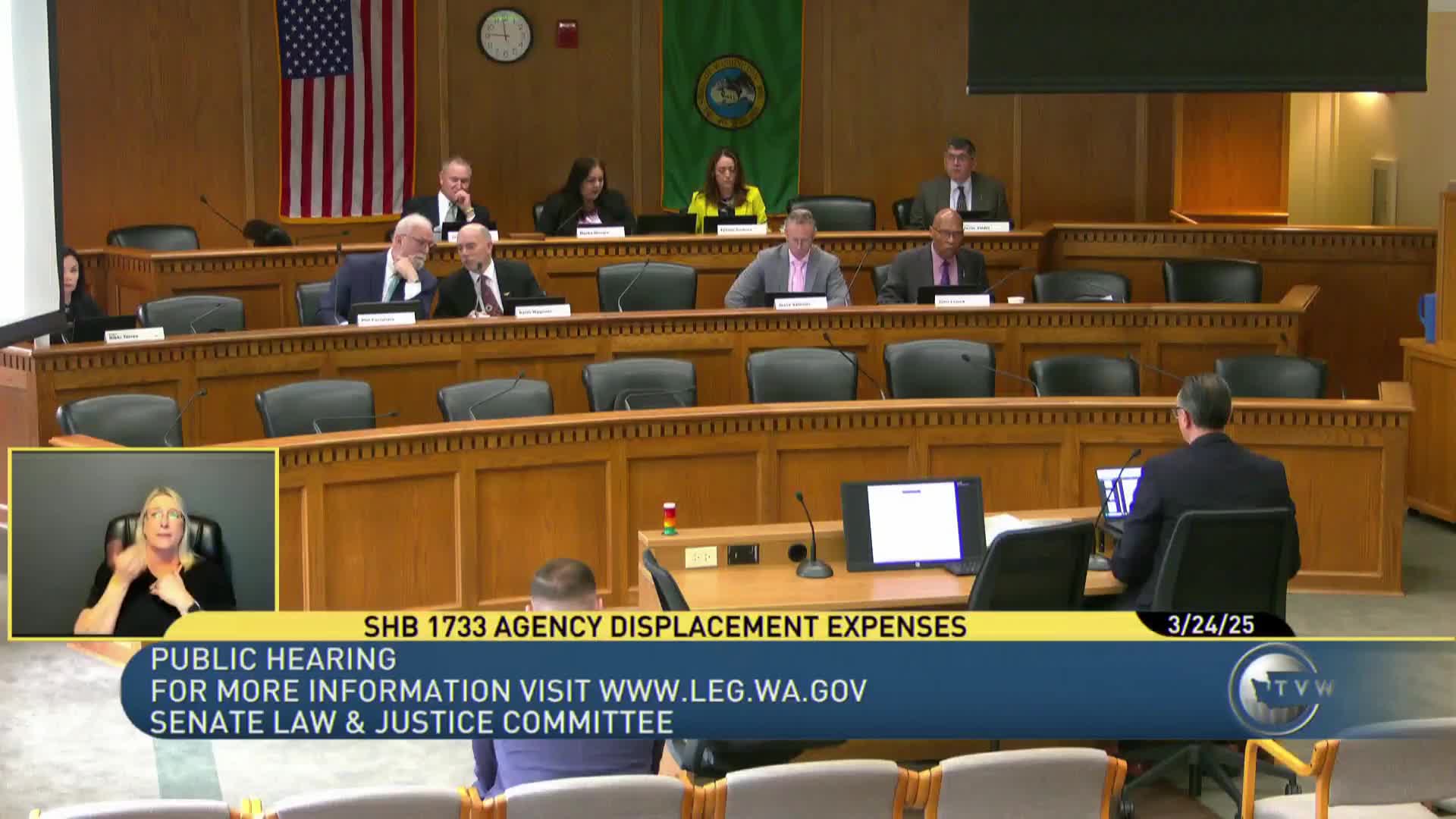
Committee hears bill to raise relocation reestablishment cap from $50,000 to $200,000 for displaced businesses and nonprofits
Summary
Substitute House Bill 1733 would raise the statutory cap on reestablishment reimbursements for businesses and nonprofits displaced by public projects from $50,000 to $200,000 and require annual inflation adjustments.
The Law & Justice Committee on March 24 held a public hearing on Substitute House Bill 1733, which would raise the cap on reestablishment reimbursements for people and organizations displaced by government acquisition from the current $50,000 to $200,000 and require the Washington State Department of Transportation to adjust the cap annually for inflation.
Mac Nicholson, representing the King County Council, testified that the existing $50,000 cap for reestablishment expenses (expenses such as property repairs, required improvements at a new site, signage, advertising and two years of certain utility/lease differentials) has not been updated in 22 years and is inadequate in dense urban markets. Nicholson said the acquiring agency should bear the cost of reestablishing a displaced business.
Jordan Crowley, owner of Alki Beach Academy, a West Seattle childcare center scheduled for displacement by a Sound Transit project, said the increased cap would better reflect replocation costs and help preserve community services such as childcare, arts education and groceries. Keith Edwards, owner of a chiropractic clinic in West Seattle, said his relocation estimate is approximately $500,000 and warned that insufficient reimbursement would push some businesses to bankruptcy.
Supporters argued the measure balances necessary public infrastructure development and equitable treatment for displaced businesses and nonprofits; opponents were not recorded in the hearing. The committee concluded the hearing with no immediate action.