Get Full Government Meeting Transcripts, Videos, & Alerts Forever!
Get email alerts on the Council Rules topic
No spam. Unsubscribe anytime.
Hilliard council reviews rules; approves earlier meeting time, adds member comment period and delays finishing edits
Summary
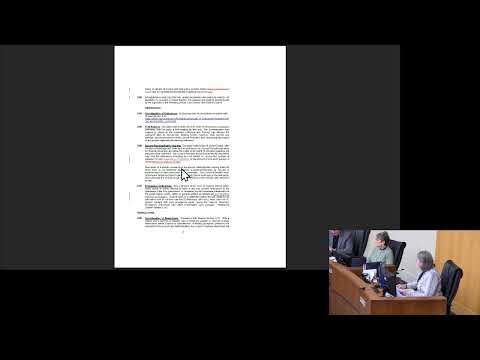
HILLIARD — The Hilliard City Council’s Committee of the Whole reviewed a red‑lined draft of the council rules on March 24 and took three formal steps: it voted to change the regular meeting start time from 7 p.m. to 6 p.m. (with implementation deferred until after the summer break), adopted a new rule giving each council member a timed opportunity to speak on items for council discussion, and postponed completion of the remaining rule edits.
HILLIARD — The Hilliard City Council’s Committee of the Whole reviewed a red‑lined draft of the council rules on March 24 and took three formal steps: it voted to change the regular meeting start time from 7 p.m. to 6 p.m. (with implementation deferred until after the summer break), adopted a new rule giving each council member a timed opportunity to speak on items for council discussion, and postponed completion of the remaining rule edits.
The changes are intended to clarify procedural gaps identified by council members and to codify several practices the council follows informally. Miss Warrick, the staff member who presented the draft, told the council she preferred the marked‑up version so members could see what was proposed to change. The discussion repeatedly returned to transparency, drafting authority, and the role of the law director when member‑proposed legislation is not approved “as to form.”
Why it matters: the rules govern how residents and council members interact with the legislative process, how and when public comment occurs, how special meetings are called and noticed, and how member‑initiated legislation moves from proposal to the agenda. Changes to meeting time and to the rules for member‑proposed legislation affect public access and the internal process the council uses to introduce ordinances and resolutions.
Key votes and outcomes: the council held a roll call on a proposal to change Section 2.01 (regular meeting time) to 6 p.m.; the chair recorded a 5‑to‑2 result in favor of changing the stated meeting time. Council members subsequently agreed, by consensus in discussion, that the new 6 p.m. start would not go into effect until after the city’s summer break to allow for public notice. The council also approved a new provision (5.05) establishing a timed speaking period for each council member during “items for council discussion” by roll call vote with all members present voting yes. Finally, the council voted to postpone finishing the remaining rule revisions beginning at section 6.08 until an indefinite later date.
On transparency and drafting: several council members pressed for clearer attribution of proposed edits and for a record showing who proposed each change. One member said the elective body should know “who wants to change it and why,” and others raised concerns about potential Sunshine Law implications if edits were coordinated outside public meetings. The presenter and other council members said the proposed edits were compiled from input solicited from each member since May 2024. Council asked that when a draft ordinance or resolution is not approved “as to form” the law director provide written feedback and assistance so the sponsoring member(s) can get the proposal into a form suitable for council consideration without the drafting process permanently blocking it from the agenda.
Other clarifications and housekeeping: the draft adjusted language for committee of the whole procedures (2.02), special meetings (2.04), and the order of business (removing the invocation per the council’s May 13, 2024 vote). The council discussed whether the public should speak at the time a resolution is read or continue to speak during the public comment portion; the law director noted some resolutions (for example, PUD text amendments) require a public hearing by code. The council did not finalize that specific change and postponed further edits.
Votes at a glance: - Change regular meeting time (Section 2.01) to 6:00 p.m.: Passed 5–2 (Mr. Betts: No; Mr. Carrier: Yes; Miss Cole: Yes; Miss Hale: Yes; Vice President Teeter: Yes; Miss Vermillion: No; President Catone: Yes). Council members agreed implementation will be delayed until after the summer break (effective date not specified). No mover/second recorded in the minutes. - New rule (5.05) — timed member comment during “items for council discussion” (five minutes per member, with a brief additional allotment as written): Passed (unanimous roll call). No mover/second recorded in the minutes. - Postpone completion of remaining rule changes beginning at Section 6.08: Passed (unanimous roll call). Motion to postpone to indefinite time recorded; the council will resume consideration at a later, unspecified meeting.
What was not decided: the council did not finalize every proposed edit. Members left unresolved language about who may call a committee of the whole (clarity added to reflect practice that the city manager may request one with approval by the council president), the precise timing and signage for allowing public comments on resolutions, and whether members can yield their speaker time to another member (the council discussed removing the “yield” restriction but did not adopt a finalized text beyond the general five‑minute rule).
Looking ahead: the council postponed the remaining edits and will return to the rules at a later meeting. Council direction asks the law director to provide clearer written guidance when member‑drafted legislation is not approved “as to form,” so sponsors can revise drafts and allow substantive debate by the full council.
Speakers quoted or cited in this report are identified in the record of the March 24 Committee of the Whole meeting.