Get Full Government Meeting Transcripts, Videos, & Alerts Forever!
Get email alerts on the Civil Commitment topic
No spam. Unsubscribe anytime.
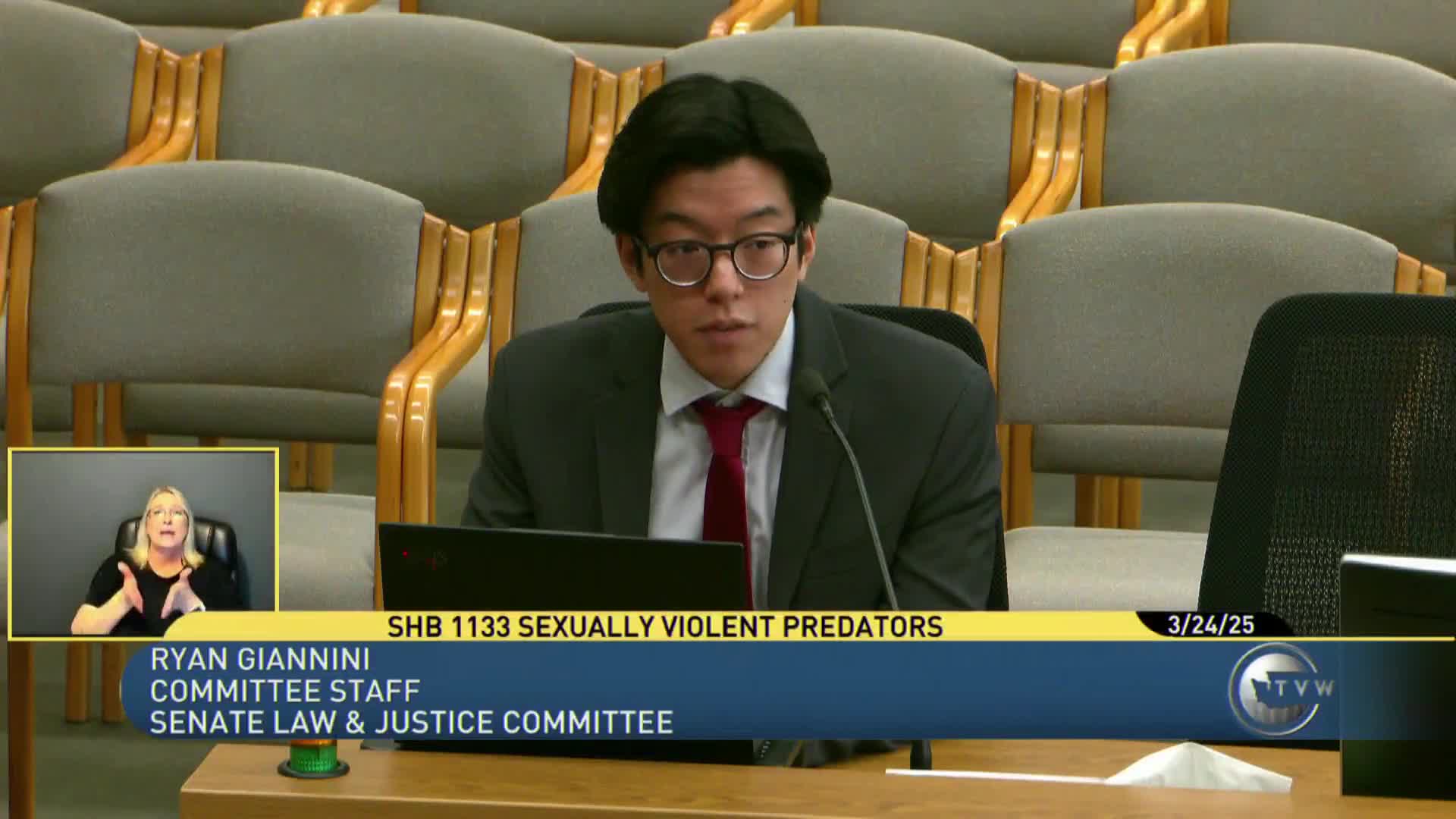
Committee hears bill expanding use of inquiry procedures in special-commitment (SVP) decisions
Summary
The Law & Justice Committee received a staff briefing and public testimony on Substitute House Bill 1133, a request of the Attorney General that would permit use of inquiry-judge procedures and civil investigative demands when prosecutors or the attorney general consider petitions for civil commitment as sexually violent predators (SVP).
The Law & Justice Committee on March 24 received a staff briefing and public testimony on Substitute House Bill 1133, an Attorney General request bill that would change how counties and the state evaluate whether to petition for civil commitment of individuals as sexually violent predators (SVPs).
Staff counsel described the existing SVP framework: a person found to be an SVP is committed to the Department of Social and Health Services’ Special Commitment Center on McNeil Island for control, care and treatment, and conditional releases require court findings and Department of Corrections supervision. Substitute House Bill 1133 would allow county prosecutors and the Attorney General to use inquiry-judge procedures to compel production of records and to serve civil investigative demands on public agencies when gathering materials relevant to an SVP petition. The bill also would prevent persons from earning supervision compliance credit on any term served concurrently with a less-restrictive alternative subject to DOC supervision.
Representative Marie Levitt, sponsor of the bill and a member of the 28th Legislative District, said the measure reflects stakeholder work and is intended to give prosecutors and the Attorney General reliable documentary tools to make sound filing decisions. She framed the bill as a partnership with stakeholders and said it seeks to improve public-safety decision-making while making interagency records production easier.
Witnesses who spoke in support included the Attorney General’s legislative director, who told the committee the office believes the measure will aid public safety, and local elected officials who urged more robust tools for community notification and decision-making following conditional placements. Representatives of public defense offices praised the sponsor’s outreach and stakeholder process and said the revised draft balanced differing views.
Law-enforcement policy staff who participated in the stakeholder working group called the bill a needed step to make last year’s Tribal Warrants Act and related work implementable and workable across jurisdictions; they noted training, funding for tribal public defenders and logistical arrangements for housing and transport as outstanding operational matters the Legislature could address later.
The public hearing concluded with no committee action. Support and opposition sign-in numbers provided by the clerk showed substantial pro and con sign-ins across multiple bills on the agenda that day; the committee proceeded to subsequent measures.