Get Full Government Meeting Transcripts, Videos, & Alerts Forever!
Get email alerts on the College Affordability topic
No spam. Unsubscribe anytime.
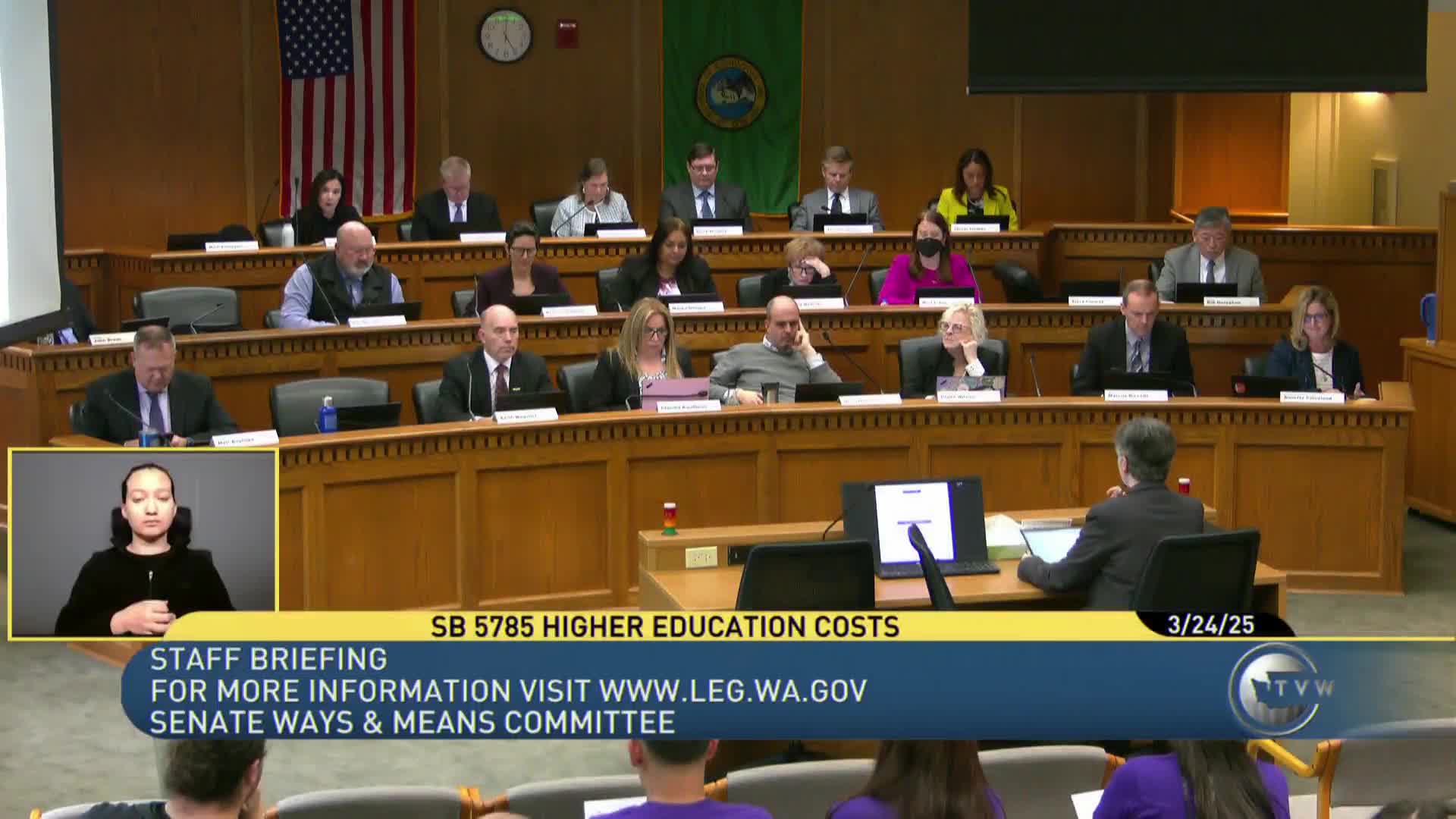
Broad opposition at Ways & Means hearing to bill that would let institutions raise tuition and reduce Washington College Grant awards
Summary
Students, faculty and college leaders told the Senate Ways & Means Committee on March 24 that Senate Bill 5785's authority for higher tuition combined with proposed cuts or proration of the Washington College Grant would reduce access and harm enrollment and completion.
Senate Bill 5785 and a proposed substitute drew sustained, largely negative public comment at a March 24 Ways & Means Committee hearing as students, faculty, campus leaders and higher-education advocates warned the measure would reduce access and damage enrollment.
Michelle Alishahi, committee staff, outlined the proposed substitute: for the 2026-27 academic year, resident undergraduate tuition operating fees at public institutions may increase by up to 5% above the existing tuition growth factor; community and technical colleges may raise tuition to operate within state appropriations while public four-year institutions may increase tuition to support employee compensation and operate within appropriations. The substitute would also change Washington College Grant eligibility and create prorated maximum awards by median family income ranges (for example, under the substitute 0-55% MFI would receive the maximum award while higher bands receive reduced percentages), with apprenticeships treated differently. Staff materials and the chair's budget reflected estimated net state savings tied to these changes: roughly $46 million in 2025-27 and $164 million over the four-year outlook (staff emphasized the estimates and requested fiscal notes for the substitute).
More than 4,700 people signed in opposed according to witnesses and advocates; dozens of students, faculty leaders and campus representatives spoke at the hearing. Testimony opposing the bill included:
- Students and student leaders from multiple campuses (University of Washington, WSU, UW Tacoma, Central Washington University, Columbia Basin College, Yakima Valley College and many community colleges) said reductions to the Washington College Grant and tuition increases would force some students to drop out, defer, or switch institutions. "Any reduction in that aid offered is the state not only breaking its promise, but students' trust," said Colin Barrister, Washington Student Association president.
- Faculty and union representatives (United Faculty of Washington State, AFT Washington, WEA, campus faculty unions) warned the bill would undermine recruitment and retention. Bill Lyon, United Faculty of Washington State, said the proposal would reverse a decade of bipartisan progress in higher education affordability and could cause program cuts and enrollment declines.
- University and college administrators noted the projected savings on paper may not be fully realized because tuition increases often yield enrollment declines; Western Washington University estimated $3 million in annual enrollment-related revenue loss tied to the proposal.
Institutional representatives said protecting the Washington College Grant for the lowest income students is critical; many urged the committee to pursue progressive revenue options instead of shifting costs to students and families.
The hearing included a large number of student testimonies describing first-generation and low-income circumstances and urging lawmakers to preserve current eligibility and award levels. A number of campus leaders and student government officers said the committee should not balance the state budget on the backs of students.
Committee staff took the testimony and did not take immediate action during the hearing.