Get Full Government Meeting Transcripts, Videos, & Alerts Forever!
Get email alerts on the Childcare Facilities topic
No spam. Unsubscribe anytime.
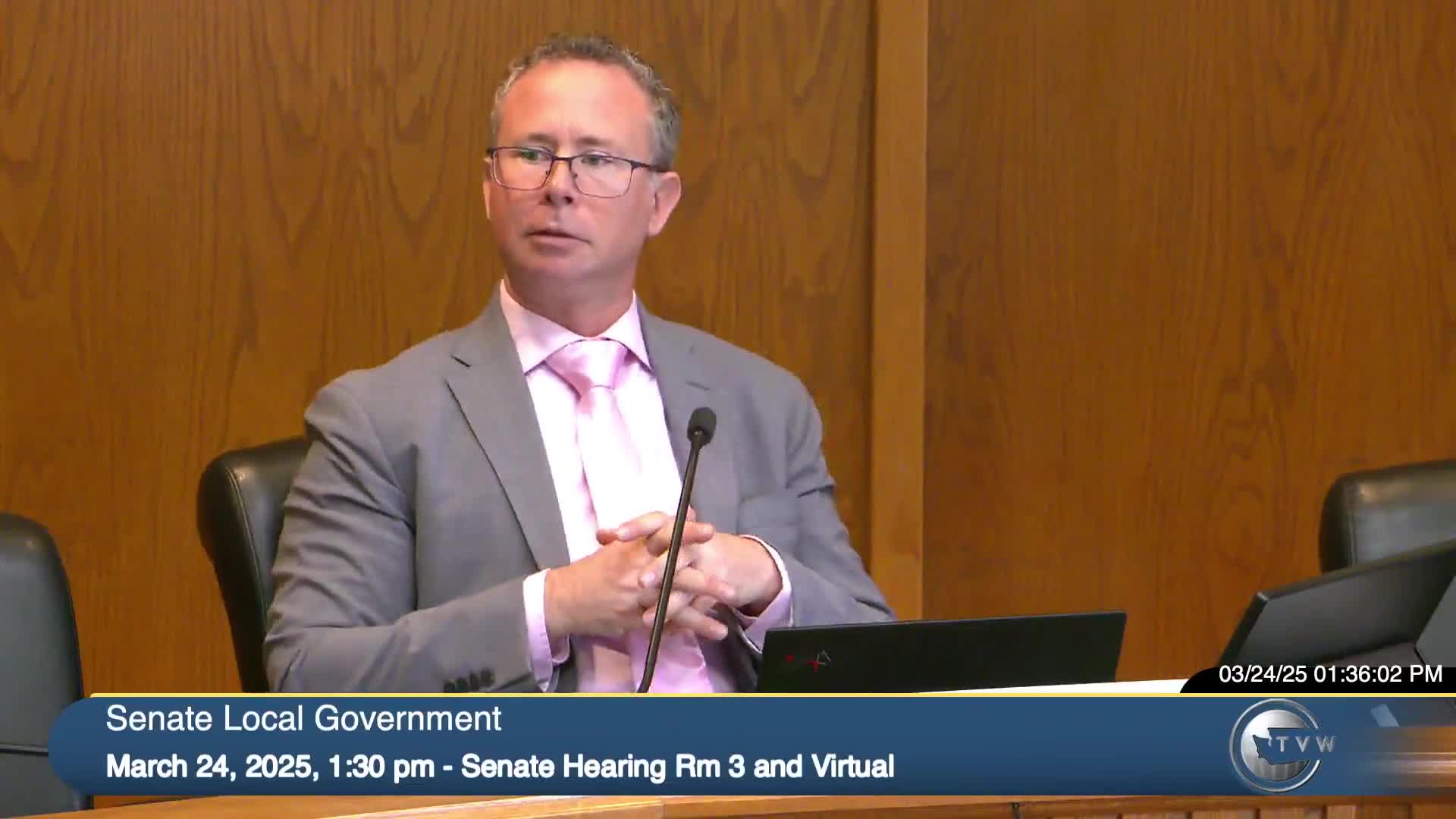
Committee hears bill to require diaper-changing stations in public buildings
Summary
The Senate Local Government Committee on an unspecified date heard House Bill 1562, sponsored by Representative Victoria Hunt, which would require baby diaper changing stations in public buildings covered by the state building code or local regulations.
The Senate Local Government Committee on an unspecified date heard House Bill 1562, sponsored in the House by Representative Victoria Hunt, a bill that would require baby diaper changing stations in public buildings where a public restroom is required by the state building code or local regulations.
Committee staff summarized the bill’s basics: it would require at least one baby diaper changing station in a restroom accessible to women and one in a restroom accessible to men, or in one gender-neutral restroom; if multiple restrooms exist, any restroom without a changing station must display clear signage pointing to a restroom that does. John Kim, committee staff, said the bill follows a federal requirement that applies to federally owned public buildings and noted the House passed the measure 67-28.
Why it matters: supporters said the requirement would expand safe, sanitary options for caregivers (including fathers and grandparents) and reduce health risks from delayed changes; business groups said the bill balances caregiver access with installation costs and criminal-activity concerns. Representative Victoria Hunt, the bill’s sponsor, said the measure was developed with business stakeholders and has been revised across sessions to address their concerns: "This bill has been developed in collaboration with the business community… this bill would not affect existing businesses. It's for new buildings and for when there's a major renovation," she said.
Key provisions and exceptions: the requirement would apply to public buildings constructed after the bill’s effective date and to existing public buildings when a permit is issued for a restroom remodel with an estimated cost of at least $15,000. The bill includes exceptions where a local government or building inspector finds installation infeasible or would conflict with standards for persons with disabilities, and it exempts certain restrooms and specified health-care facilities. The bill also establishes penalties for noncompliance and carries a fiscal note; the Department of Commerce reported an indeterminate impact on local government expenditures related to ordinance adoption and enforcement.
Stakeholder views and details: Samantha Louderback of the Washington Hospitality Association said industry stakeholders have worked on the measure for several years and supported the current version while asking for one clarifying amendment to allow removal of a station if it is being misused in a way that threatens staff or customers. Louderback said the purchase price for a fold-out plastic changing table is about $150 on average, and installation complexity depends on the restroom surface (tile vs. drywall).
Katie Beeson of the Washington Food Industry Association, representing independent grocers and convenience stores, said members back the bill as drafted but also seek the clarifying language allowing removal when changing stations invite criminal or unsafe activity: "We support the request, to make the clarifying amendment for changing stations that are being used for nefarious activity, being able to be removed, from our stores." She and other industry witnesses emphasized the $15,000 remodel threshold as the trigger for the requirement, saying that threshold was chosen to avoid imposing retrofit costs on small businesses doing minor repairs.
Public testimony: Alexandra Johnson, a public-health nurse and parent, said requiring more changing stations would support shared caregiving and reduce health risks for infants and toddlers, adding, "My husband has performed way too many diaper changes in the trunk of our car… the passage of this bill, I believe, would also increase the patronage of businesses from single dads… grandparents…" Johnson also noted clinical concerns about infections when diaper changes are delayed.
Unresolved items and next steps: proponents noted one remaining clarifying change requested by industry to address misuse; the bill has no Senate companion and has not yet been scheduled for a committee vote in the Senate. The committee closed the hearing and moved on to other bills.
Ending note: The House passed the measure 67-28; the bill as presented would affect new construction and major restroom remodels (permits with an estimated cost of $15,000 or more) and contains ADA and feasibility exceptions.