Get Full Government Meeting Transcripts, Videos, & Alerts Forever!
Get email alerts on the Pfas Biosolids Testing topic
No spam. Unsubscribe anytime.
Committee advances bill to require PFAS testing in municipal biosolids
Summary
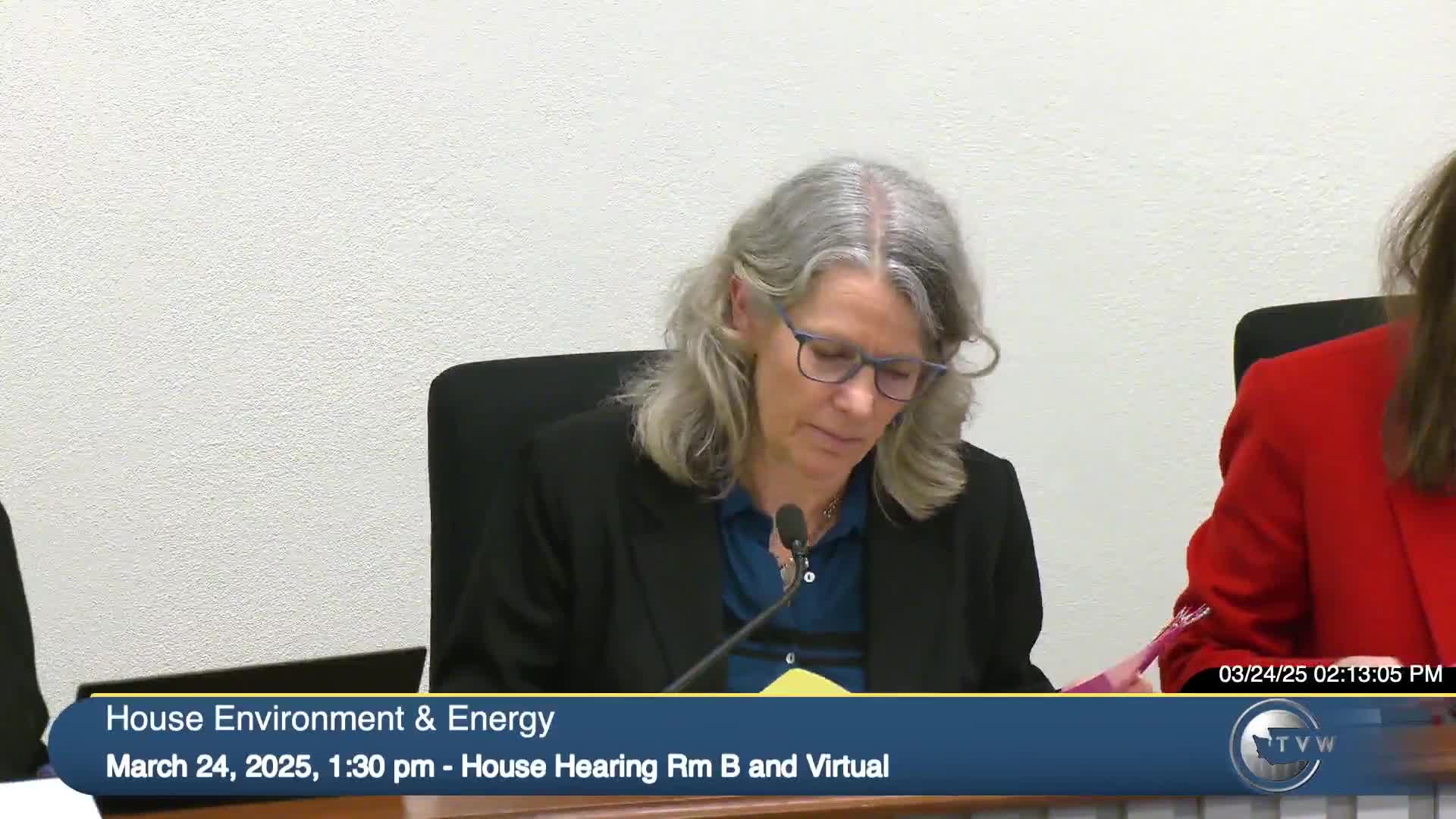
Substitute Senate Bill 5,033 was reported out of committee with a due-pass recommendation after members debated requiring testing of biosolids for PFAS. Supporters called for data on so-called "forever chemicals," while at least one member raised questions about potential liability once testing is performed.
Substitute Senate Bill 5,033, which would require testing of municipal biosolids for per- and polyfluoroalkyl substances (PFAS), was reported out of committee Wednesday with a due-pass recommendation after members debated the measure’s scope and potential liability.
Representative Dye, who spoke in favor, summarized the purpose of the bill: “This just simply asks that we test for a forever chemical in the biosolids, PFAS, to assure that we are not putting an accumulation of a forever chemical that could have inadvertent, negative impacts.”
Representative Funt also urged approval, saying, “PFAS is a forever chemical. We know that it is detected, in water, and in many different places. And we really need to learn more.” Representative Grama flagged the broader technical challenge, noting that PFAS enters wastewater through household items and that gathering testing data is an early step toward longer-term solutions: “PFAS gets into our wastewater through cookware that's in the dishwasher, it's in clothing that ends up in the washing machine, and that all ends up downstream at the wastewater treatment plant.”
Representative Mendoza said she would vote no, citing unanswered questions about liability: “I will be asking for a no vote on this, Senate Bill 5,033. I think there's a lot of questions that I still have as to, who will be liable once the testing is done.” Despite that objection, the committee advanced the substitute bill; a staff member announced the recorded tally as “19 ayes, 1 nay, and 1 excused.” Representative Fitzgibbon was recorded as excused.
Committee members said the measure is intended to create baseline data about PFAS presence in biosolids and to inform future policymaking. Several members suggested solving the problem ultimately requires upstream solutions that reduce PFAS entering wastewater streams, a point raised by Representative Grama during discussion. The committee did not specify funding sources, testing protocols, or liability provisions during the hearing.
By advancing the substitute bill with a due-pass recommendation, the committee moved the measure to the next stage of the legislative process; no final policy or implementation details were set at the committee level.