Get Full Government Meeting Transcripts, Videos, & Alerts Forever!
Get email alerts on the Parents Rights topic
No spam. Unsubscribe anytime.
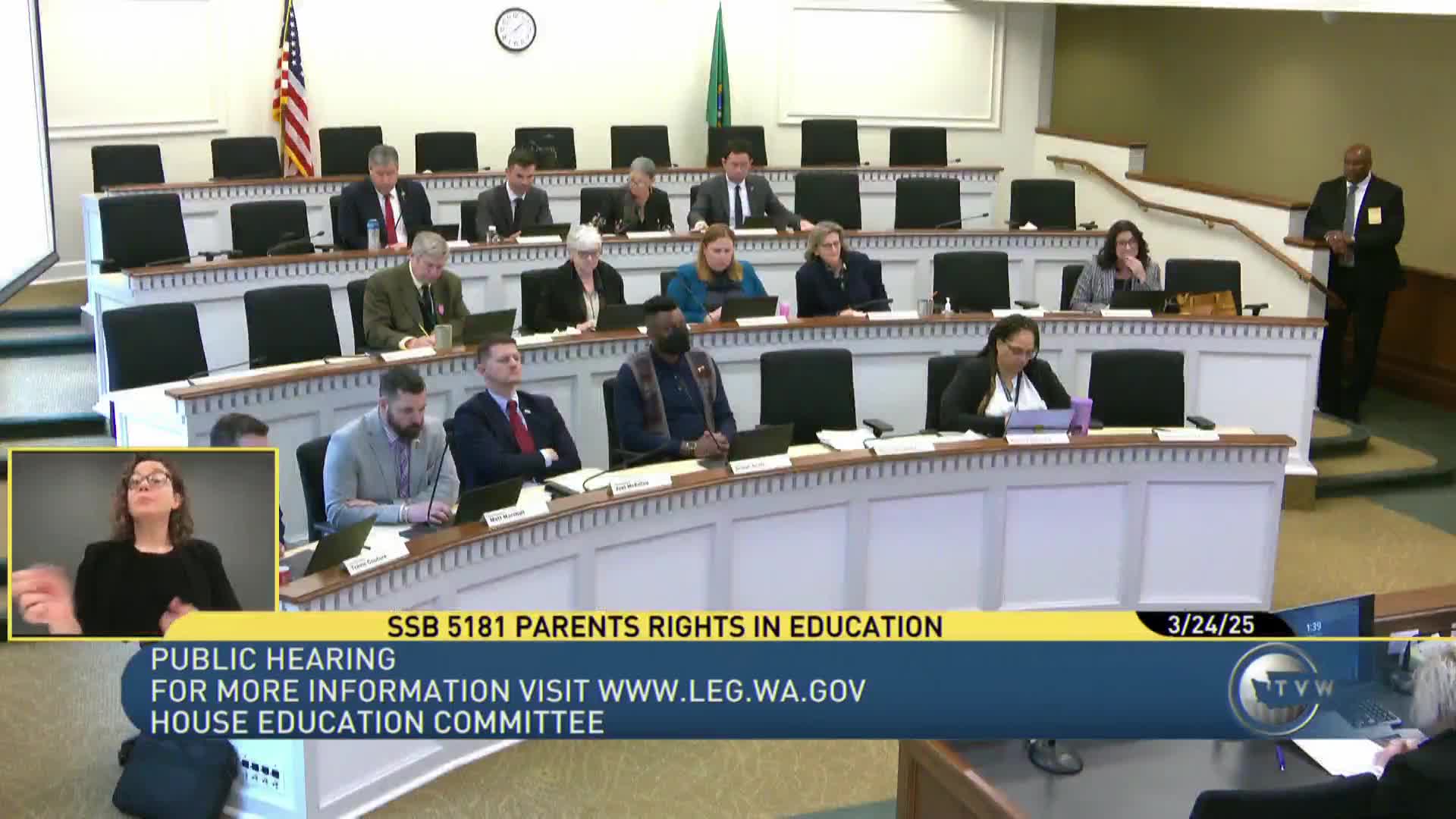
Committee hears changes to parents’ rights initiative; supporters and opponents split sharply
Summary
Engrossed Substitute Senate Bill 5,181, which the House Education Committee continued to hear, would amend language enacted by Initiative 2081 to align certain parental‑rights provisions with existing state and federal law and to clarify what information schools must notify parents about.
Engrossed Substitute Senate Bill 5,181, which the House Education Committee continued to hear, would amend language enacted by Initiative 2081 to align certain parental‑rights provisions with existing state and federal law and to clarify what information schools must notify parents about.
Supporters say the bill narrows misunderstandings created by the initiative and protects student privacy and safety; opponents say the bill weakens the initiative’s protections and infringes on parental authority.
The bill preserves core parental‑rights language while changing specific notification requirements and record definitions. Committee staff summarized that 5,181 removes some notification provisions related to criminal actions and law‑enforcement questioning, excludes certain charter‑enrollment rights that were in a previous House bill, and contains a minor technical citation change. It also specifies that delineated parental rights do not create a private right of action and clarifies distinctions between medical records and education records.
Nicole Curran of Planned Parenthood Alliance Advocates said the bill "helps kids to have the freedom to learn, to be themselves, and to grow up healthy and safe," arguing the change prevents misleading parental expectations about routine school medical care. "Without this bill, language from the initiative clearly misleads parents to believe that their child frequently receives medical treatment in schools without their permission," Curran said.
Several education and child‑advocacy organizations, including the Washington Education Association, testified in support, saying the bill helps clarify access to educational records, ties existing parental rights to other statutes such as harassment and special education complaint procedures, and protects students who are victims of crime or face family‑based abuse. Elizabeth Hendren, an attorney with a statewide victims’ legal services organization, said the bill protects sensitive records when a parent is an alleged perpetrator and preserves student safety.
Opponents — including multiple parents, school board members and religious leaders — argued the bill removes rights that voters approved in Initiative 2081 and raised constitutional concerns. Testimony also addressed the bill’s emergency clause and whether it would impede a referendum or citizen challenge to legislative changes to an initiative.
Witnesses raised questions about whether the bill creates conflicts with federal law, notably Title IX and federal privacy standards (FERPA and HIPAA). OSPI staff and other witnesses said the agency has not historically withheld basic education apportionment for similar compliance issues and that the bill’s withholding authority would be narrowly applied if used.
Committee members postponed further action and kept the hearing record open; members asked staff for legal analyses about the interplay between state enactments and federal obligations and about the implications of the bill’s emergency clause and its effect on the referendum process.