Get Full Government Meeting Transcripts, Videos, & Alerts Forever!
Get email alerts on the Education Accountability topic
No spam. Unsubscribe anytime.
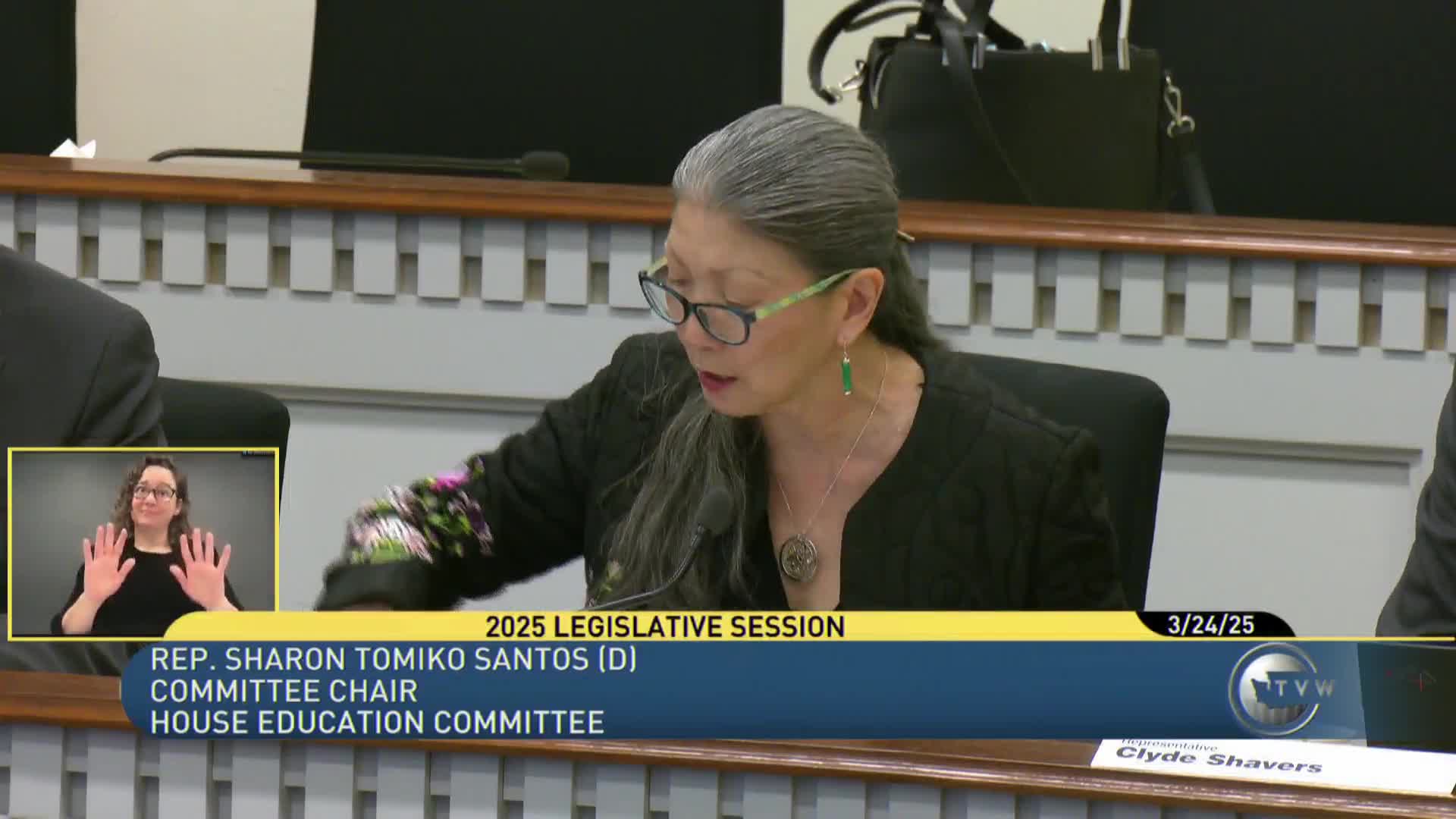
House committee hears bill to create state complaint process for willful school law violations
Summary
A bill before the House Education Committee would require the Office of the Superintendent of Public Instruction to investigate alleged willful noncompliance by school districts, authorize corrective plans and, in some cases, allow withholding or redirection of state basic education funds.
The House Education Committee took public testimony on Second Substitute Senate Bill 5,179, which would require the Office of the Superintendent of Public Instruction (OSPI) to establish a complaint and investigation process for alleged willful noncompliance with specified state education laws.
Proponents say the bill gives families a clear enforcement path when local districts ignore state law; opponents say it risks federal conflicts and weakens local control.
Under the bill, OSPI must implement by July 1, 2026, a process to investigate two complaint types: limited complaints affecting individual students and broad complaints affecting a school or district. If OSPI finds noncompliance, local superintendents and boards must adopt a compliance action plan developed with OSPI, school staff, parents, students and community representatives. If OSPI finds willful noncompliance, the agency may require policy changes, refer certified superintendents for professional discipline, and — as a last resort — withhold up to 20% of basic education allocations and redirect those funds to support the compliance plan. The bill also creates recurring public hearings every six months while a district remains in willful noncompliance and extends the complaint process to charter and tribal compact schools.
"When school districts willfully did not comply with certain educational requirements in state law, it becomes problematic for many children and families in our K‑12 system," said Senator Claire Wilson, the prime sponsor, during her testimony. She argued the measure protects students' civil rights and ensures safe learning environments.
Jenny Plaja, an OSPI representative who testified in support, told the committee the agency welcomes clearer authority to enforce local policies and does not intend to ‘‘get overly involved in local decision making’’ but to provide transparency and targeted corrective action. "This bill really intentionally keeps the process very involved and transparent at the local level," Plaja said.
Opponents including district leaders warned of costs and legal conflicts. Jason Perrin, superintendent of Chula School District, said the bill "divides the state, OSPI and the communities we serve by granting OSPI a punitive authority over school districts" and questioned whether it would increase legal fees and administrative burdens.
Other testimony highlighted differing views on federal preemption and whether withholding basic education funds could run afoul of the state constitution’s funding duties. OSPI staff said the agency has not historically withheld basic education allocations under similar circumstances and that any withholding would be rare and targeted.
The bill includes administrative requirements: if OSPI finds willful noncompliance, it may require additional public hearings and a district board member could be subject to recall or discharge for willful or negligent noncompliance. The bill also directs OSPI to provide model student handbook language by Oct. 1, 2025, and revises the school board oath to require that directors support the laws of Washington in addition to state and federal constitutions.
Committee members and witnesses asked about safeguards, how OSPI would exercise the withholding authority, and historical practice. OSPI witnesses said their normal work is collaborative and preventative but that the bill would add clarity to enforcement options. Testimony included broad public comment from dozens of stakeholders representing parents, districts, advocacy groups and legal aid organizations.
The committee kept the public hearing open during the meeting to allow all registered testifiers time to speak; members noted the bill is scheduled to be considered later and requested follow‑up information on historical OSPI compliance letters and legal analysis of withholding funds.
If enacted, the bill would create a statewide administrative complaint route in addition to existing local and federal enforcement options, and would impose specified timelines and remedy steps when OSPI finds willful noncompliance.