Get Full Government Meeting Transcripts, Videos, & Alerts Forever!
Get email alerts on the Workforce Development topic
No spam. Unsubscribe anytime.
Savannah-Chatham logistics pathway links students to Georgia Ports jobs, offers eight certifications
Summary
Savannah-Chatham County Public School System’s CTAE logistics pathway prepares students for logistics and port jobs through industry partnerships, field experiences and multiple certifications; program leaders say it was created about 15 years ago and continues to adapt.
Savannah-Chatham County Public School System’s Career, Technical and Agricultural Education (CTAE) logistics pathway prepares high school students for port and equipment-operator jobs through hands-on training, industry partnerships and multiple industry certifications, presenters said.
Program leaders said the pathway, developed about 15 years ago, continues to adapt to changing industry standards and emphasizes student exposure to workplaces through field trips and employer visits. “We survey the industry. We survey students to make sure that there was an interest there,” a program presenter said.
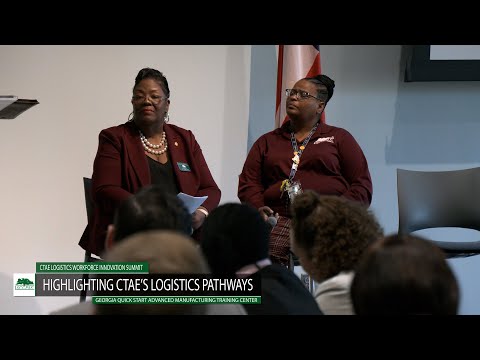
The pathway’s designers include Doctors Gina Smith and Angie Lewis, whom the presentation identified as having developed Savannah-Chatham’s logistics pathway and who were panelists at the Georgia Department of Education’s CTAE Logistics Workforce Innovation Summit. Program staff said the pathway is updated periodically so training matches industry needs.
Student exposure is central to the model, presenters said: field trips, employer site visits and industry guests in classrooms help students see careers as attainable. “When students see, ‘oh, y’all go on a field trip, I need to be a part of this pathway,’” the presenter said, summarizing the program’s outreach approach.
Osiris Franklin, a 2020 Groves High School graduate and an automotive equipment operator at Georgia Ports, described the on-the-job benefit of the pathway: “You learn the way how a job will work. You learn on-site work habits, what do's and what you don'ts. You learn how to operate equipment. And when you start working, you know what to do.”
Program staff highlighted recent training partnerships that expand credentialing. “Just last week, Colonial Group brought two of us in to become hazmat trainers. So now, guess what's coming into my program in the next month? My students will have hazmat. That's eight certifications in one program,” the presenter said, describing immediate instructor training that will allow students to earn additional certificates.
Presenters said the pathway depends on continued employer participation and asked for more business partners to offer one-on-one industry engagement beyond traditional job fairs. The program leaders framed the partnerships as a local workforce pipeline: they said businesses that invest in the program gain a trained entry-level labor pool and pointed to students who secured jobs and early housing as examples of outcomes.
The presentation concluded with a brief signature line: “It's a passion for success and a partnership with unlimited potential. For SCCPSS, I'm Ken Slatz.”
The presentation did not specify program budget, total student enrollment, or the precise list of certifications beyond the hazmat training and the presenter’s statement that the pathway can deliver eight certifications.