Get Full Government Meeting Transcripts, Videos, & Alerts Forever!
Get email alerts on the Speedy Trials topic
No spam. Unsubscribe anytime.
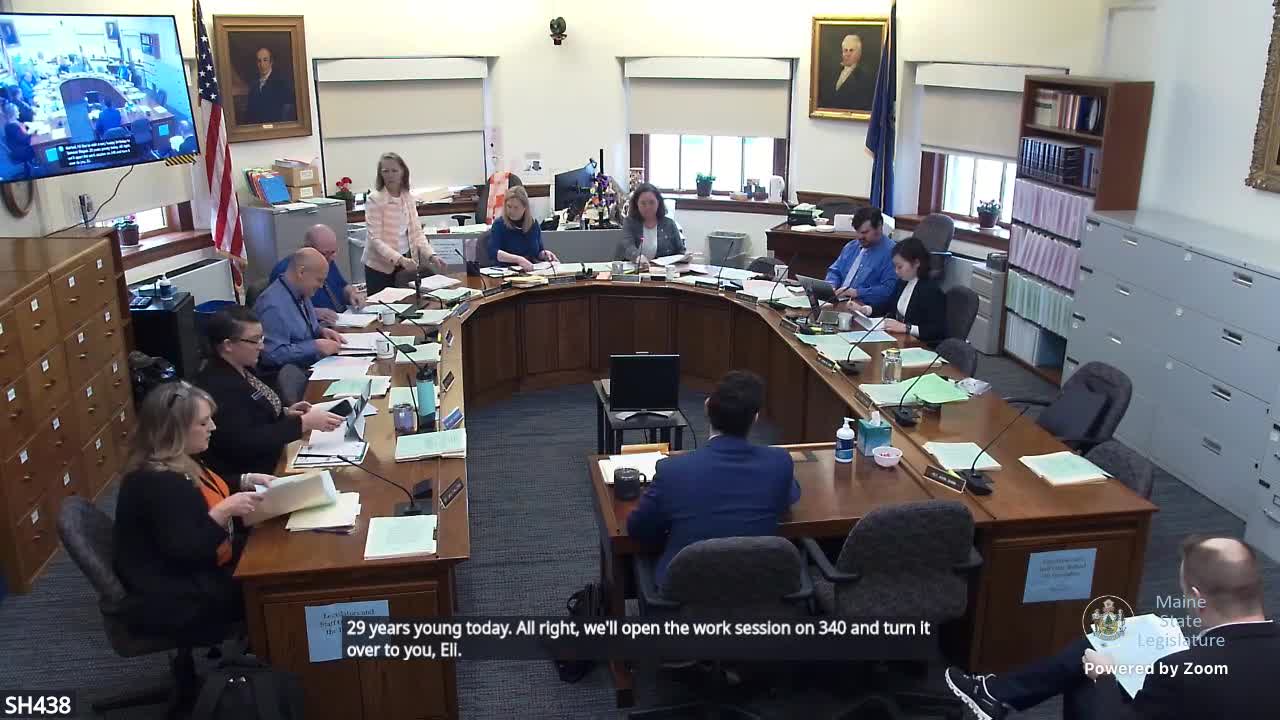
Legislative work session reviews LD 3 40 to create a statewide Speedy Trials Act
Summary
A committee work session considered LD 3 40, which would establish a Speedy Trials Act setting different time limits for starting criminal trials, rules for retrials after mistrials, and grounds for excluding delays from the time calculation.
A legislative committee work session considered LD 3 40, described in the meeting as a bill to establish a statewide Speedy Trials Act that would set time limits for beginning criminal trials based on when charging papers are filed and the class of the alleged offense.
Eli Murphy, an analyst with the Office of Policy and Legal Analysis, told the committee, “LD 3 40 is an act regarding speedy trials. This bill establishes the main Speedy Trials Act.” Murphy said the bill would set different time limits for the commencement of a defendant’s criminal trial depending on when the complaint, indictment, or information was filed and on what class of crime the defendant is charged with. He added the bill “also provides a time limit for the commencement of a new trial following a mistrial or order for a new trial.”
Murphy said the draft would allow a defendant to waive the right to a speedy trial after the court has advised the defendant of the right created by the act. He also said the bill specifies categories of delay that would be excluded when computing the statutory time limits and that it lists factors a court may consider when deciding whether to extend those time limits.
The committee’s presiding chairs opened the work session with brief introductions before the bill presentation. Sen. Anne Carney, Senate chair of the committee, and Amy [last name not specified], House chair of the committee, presided at the start of the session. No formal vote or final action on LD 3 40 was recorded in the provided transcript excerpt; next procedural steps or a committee recommendation were not specified.
The bill, as described in the session, would affect defendants, prosecutors, and trial courts by prescribing statutory timing rules for trials and retrials and by clarifying when delays are excluded from those calculations. The transcript excerpt focused on the bill’s structure and its principal provisions; detailed time limits by offense class, the specific categories of excluded delay, or examples of the listed factors courts may consider were not specified in the excerpt.
A fuller record of committee discussion, any proposed amendments, and the committee’s procedural disposition of LD 3 40 were not included in the provided transcript.