Get Full Government Meeting Transcripts, Videos, & Alerts Forever!
Get email alerts on the Energy Storage topic
No spam. Unsubscribe anytime.
Kerr County subregional planning group presses regulators on battery-storage safety, seeks coordination with ERCOT and LCRA
Summary
The Hill Country Energy Subregional Planning Commission update reported letters to PUC, ERCOT and LCRA and urged studies on battery‑energy storage system (BESS) fire risks and potential aquifer contamination; commissioners and public commenters flagged regulatory gaps and called for state action.
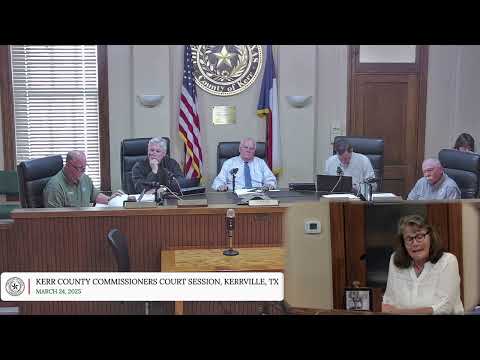
County staff and commissioners updated the court on activity by the Hill Country Energy Subregional Planning Commission (SRPC), which has been actively sending coordination letters and pressing for state agency engagement on proposed battery energy storage projects near Kerr County.
The SRPC has sent coordination letters to the Public Utility Commission and ERCOT and followed up after receiving an initial response from the Lower Colorado River Authority indicating it did not consider itself obligated to coordinate. The commission’s position — discussed at the meeting — is that LCRA is a state agency under the statute that requires coordination and therefore should meet with counties about siting, safety and grid interconnection concerns.
Commissioners and SRPC members described technical and safety questions prompting the outreach. The group is calling for studies and agency engagement to assess the fire risk of large-scale lithium‑ion battery installations — specifically “thermal runaway” events — and potential contamination risks to the Edwards/Trinity aquifer systems from firefighting runoff or burning battery effluent.
Public commenters said developers have proceeded quickly on projects across county lines and asked the SRPC to press regulators for timely oversight. A member of the public attending a symposium in Austin reported the state’s legislative session has produced roughly 20 bills addressing BESS since members of the SRPC’s last meeting.
The SRPC reported it has asked the Texas Commission on Environmental Quality (TCEQ) to meet and explore whether a focused worst‑case‑scenario study of BESS thermal runaway is appropriate, and that TCEQ responded that it is willing to meet but typically does not regulate projects unless an air or water permit is required. Commissioners noted that even absent a statutory permitting trigger, TCEQ expertise could inform local planning.
Commissioner Holt (SRPC participant) and others said the commission will continue outreach to ERCOT, the PUC, LCRA and the TCEQ and encourage state lawmakers to advance bills that impose safety and siting requirements for BESS projects. The SRPC is also collecting and publicizing relevant standards — including NFPA 855 and Underwriters Laboratories battery standards — and seeking clarity about which standards apply and how they are enforced.
Why it matters: large BESS facilities can present complex fire, water‑quality and infrastructure questions that span local, regional and state authorities. The SRPC’s push for coordination seeks to ensure counties are informed and have a seat at the table as projects advance.
What’s next: the SRPC scheduled a follow‑up meeting for the coming week; commissioners asked staff to continue outreach and to share the SRPC letters and responses publicly on the SRPC website.