Get Full Government Meeting Transcripts, Videos, & Alerts Forever!
Get email alerts on the Superintendent Search topic
No spam. Unsubscribe anytime.
Marion County board agrees to pursue interim superintendent; chair to work with HR on timeline
Summary
After an FSBA briefing on superintendent searches, the Marion County School Board reached consensus to seek an interim superintendent, asked the chair to work with HR on a selection timeline and to add the item to next week’s agenda. Board members discussed preferred timing, costs and whether the interim should be internal or external.
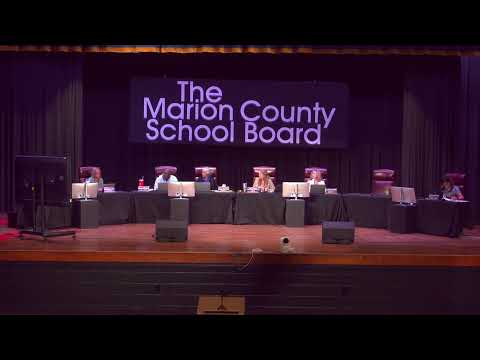
The Marion County School Board agreed on March 24 to pursue naming an interim superintendent and asked the board chair to work with human resources on a process and timeline, the board said after a presentation on superintendent searches by the Florida School Boards Association.
Andrea Messina, chief executive officer of the Florida School Boards Association, told the board that a full superintendent search typically takes six to eight months and that many districts hire an interim to “buy you some additional time.” Messina also advised that much of the search work — advertising, community input and vetting — is public record under Florida’s Sunshine Law and that many districts hire outside consultants to manage the process.
Board members said they want a timely selection of an interim to provide stability for staff and to participate in imminent budget and staffing conversations. Several members suggested a June 1 start for an interim and discussed a February 1 target to have a permanent superintendent in place so the new leader can participate in the next budget cycle. The board did not take a formal roll-call vote but recorded consensus to pursue an interim and to develop the selection process.
Messina told the board that while every search is effectively national now, boards commonly seek candidates with Florida experience because of state education rules and accountability systems. She warned that superintendent hiring pools are smaller than in the past and that compensation expectations have risen. Messina gave an example of an interim contract she had seen: roughly $200,000 for six months plus monthly vehicle and phone stipends.
Several board members said community feedback favors an internal, local interim who can maintain the district’s strategic direction and help staff through spring testing, transfers and the budget cycle. Others cautioned that an external interim can bring useful outside experience and that internal candidates may lack familiarity with reforms the board has been pursuing. Board members emphasized they want an interim who will help maintain continuity through graduations and the fiscal-year transition.
Attorney Powers advised the board that “consensus” is different from a formal vote and that the board must next decide how selection would be governed: who will screen candidates, whether FSBA will assist, and whether the board itself will conduct interviews. The chair was asked to confer with HR (Tamisha/Miss Morant was referenced as HR lead) to prepare timeline and screening materials for an agenda item next Thursday so the board can act publicly and promptly.
Discussion points recorded by board members included: the value of a brief overlap (Messina suggested about a week) between the departing superintendent and an interim, the fiscal cost of hiring retired superintendents as external interims, and the need to hold an interim accountable for decisions they participate in. No formal motion or contract was executed at the meeting.
The board scheduled the topic to be added to the next work-session agenda; staff were directed to assemble screening questions, job qualifications, and a proposed timeline for candidate recruitment and interviews. The board’s near-term objective is to complete selection steps quickly enough to have an interim ready before summer work on staffing and budgets intensifies.