Get Full Government Meeting Transcripts, Videos, & Alerts Forever!
Get email alerts on the Smoke Shops And Tobacco Licensing topic
No spam. Unsubscribe anytime.
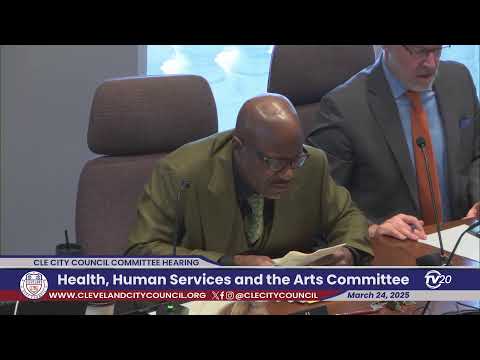
Cleveland committee approves package of ordinances to regulate ‘smoke shops,’ tobacco licensing and window signage
Summary
Cleveland’s Health Committee on (date not specified) voted to advance a package of ordinances designed to regulate so‑called “smoke shops,” tighten rules on storefront window signage, update penalties for illegal distribution of tobacco products and create a new tobacco retail licensing program.
Cleveland’s Health Committee on (date not specified) voted to advance a package of ordinances designed to regulate so‑called “smoke shops,” tighten rules on storefront window signage, update penalties for illegal distribution of tobacco products and create a new tobacco retail licensing program.
The four pieces of legislation — introduced as Ordinance Nos. 1‑88, 1‑89, 1‑86 and 1‑87 (2025) — were read into the record, discussed at length by council members and city staff, and moved forward by the committee. Committee members also approved a narrow drafting amendment to the tobacco licensing ordinance that replaces the phrase “authorized agent” with “agent.”
Shannon Leonard, chief zoning administrator, told the committee the package is intended “to regulate the location of the smoke shops to protect the public health, safety, and welfare of all Clevelanders, to protect neighborhoods from negative externalities and secondary effects created by the concentration and clustering of such businesses, to avoid and reduce over saturation of these types of businesses, as well as to promote the public health, safety, and welfare by encouraging walkability and prohibiting signage that is a % opaque, full window coverage in all business, industrial, and overlay districts.”
Why it matters: City staff and council members said the measures are a response to rapidly rising numbers of retail storefronts selling cannabis‑adjacent and other smoke‑shop products — including delta‑8, kratom and CBD — some of which residents and council members said are operating in ways that confuse consumers and may skirt state law.
Key provisions and details - Definition and scope: The proposed code section would define a smoke shop as any retail establishment where 20% or more of floor, shelf or display area, individually or in the aggregate, is used to sell smoke‑shop products (listed examples include kratom, CBD, delta‑8 and other cannabinoids, tobacco and nicotine products, and electronic smoking devices, plus accessories). - Buffers and siting: New smoke shops would be required to be at least two miles (10,560 feet) from any existing smoke shop and may not be located or relocated within 500 feet of a church, public library, public playground, public park or school. The director of city planning would maintain a map of existing smoke‑shop locations to determine compliance. - Window signage: A separate zoning amendment would limit window sign coverage to a maximum of 25% of window area on any facade (temporary and permanent signs included). City staff said the limit is intended to improve public walkability, sightlines and safety. - Tobacco retail licensing and inspections: The licensing ordinance would require any tobacco retailer (including stores and flea markets selling nicotine or smoke‑shop products) to obtain a city tobacco retail license, be open to inspection by the Department of Public Health’s Division of Environment during regular business hours and be subject to a minimum of two compliance checks per year. Staff estimated the annual license cost would be $300–$500, calculated to cover administrative inspection costs; the exact fee formula will be set administratively. - Penalties and enforcement: Staff outlined a graduated penalty schedule: first violation $500; second violation within 36 months $750; third violation $1,000 plus a 30‑day suspension; fourth violation $1,000 plus revocation of the tobacco retail license. Establishments operating without a license would receive a placard/cease‑and‑desist until they obtain proper licensing. - Phase‑in: Staff said the legislation includes a 180‑day ramp‑up period to give retailers notice and time to apply for licenses, and that the zoning amendments may take effect sooner (the standard 30‑day effective period or immediate effect if enacted as an emergency ordinance).
Debate and staff responses City planning and health staff repeatedly told committee members that the legislation is intended to cover many types of inhalable or cannabinoid products by name and by a catch‑all clause (“including but not limited to”) so the code will not be limited to today’s specific product names. Shannon Leonard said the definition in the draft includes CBD, kratom, delta‑8 and similar substances and “doesn’t limit it to these products or these names.”
Council members pressed staff on enforcement capacity, grandfathering of existing businesses and how the city will distinguish legally permitted state‑licensed dispensaries from unlicensed smoke shops that call themselves “dispensaries.” Committee members voiced particular concern about the effect of dense smoke‑shop clusters near schools, churches and low‑income neighborhoods.
Director (health director) David Margolius (title as referenced in the meeting) said the city will use inspections, cease‑and‑desist orders and placards to shut down unlicensed operations and that staff would coordinate with law enforcement where necessary. He said, “there’s a 180‑day ramp up period,” and added staff would work with Columbus and Cincinnati for technical guidance on product testing and compliance. Staff also noted a possible private contribution from the Preventing Tobacco Addiction Foundation to help fund program implementation.
Numbers and scope cited in committee - Formal use permit applications: staff reported 42 formal permit applications up to a prior planning commission meeting, plus another 35 submitted subsequently (staff later described roughly 75 use‑permit applications since January). - Online estimate: staff said a Google‑based search identified “over 400” smoke shops in the city, a figure staff described as an estimate rather than a final permit count. - Buffer distances: 2 miles (10,560 feet) between new smoke shops; 500 feet from schools, parks, libraries and churches. - Window coverage: 25% maximum of window area on any facade. - License cost estimate: $300–$500 annually (staff said the fee will be tied to the actual cost of administering inspections and will be adjusted annually through the Board of Control). - Inspections: at least two compliance checks per year; licensees must be open for inspection during business hours.
Concerns raised by council members Committee members repeatedly asked how the city will: distinguish hemp/delta‑8 products from state‑regulated cannabis products without laboratory testing; ensure staffing and funding for regular inspections; prevent new operators from “getting in under the wire” before the rules take effect; and limit proliferation of outlets if business owners buy multiple locations. Several members described smoke shops as an equity and public‑health issue for neighborhoods with high concentrations of retailers.
Committee action and next steps Committee members approved all four ordinances as introduced and approved a drafting amendment to the tobacco licensing ordinance (to change the drafting term “authorized agent” to “agent”). Staff said the zoning component must go to the Department of Planning and Development (DPS) with two weeks’ notice; licensing implementation will follow the 180‑day ramp up. The committee directed staff to provide follow‑up information on testing protocols, enforcement authority, licensing fee calculations and whether the city can impose a cap on the number or distribution of licenses.
Votes at a glance (committee disposition) - Ordinance 1‑88‑2025 (enact new section 347.21 — smoke shops): approved by committee (no roll call vote recorded in transcript). - Ordinance 1‑89‑2025 (enact section 350.121 — window sign coverage): approved by committee (no roll call vote recorded). - Ordinance 1‑86‑2025 (amend section 607.15 — illegal distribution of tobacco/alternative nicotine products): approved by committee (no roll call vote recorded). - Ordinance 1‑87‑2025 (enact tobacco retail licensing sections 235a0.01–.11): approved by committee with a drafting amendment; amendment read into record and approved.
What’s next: Staff said they will: (1) finalize text and provide additional materials requested by council (testing options, enforcement plan, fee methodology, and legal analysis on caps/grandfathering), (2) distribute notice and outreach materials to known retailers, (3) begin the licensing roll‑out and inspections program after the ramp‑up period, and (4) coordinate with state counterparts and peer cities for lab testing and enforcement guidance. Committee members signaled interest in additional follow‑up meetings with planning, building and housing, public health and law.
Ending: Committee chair Kevin Conwell closed the hearing after members and staff agreed to continue technical work and return to next committee steps. The exact effective dates and final fee schedule will be set in subsequent implementation materials and Board of Control filings.