Get Full Government Meeting Transcripts, Videos, & Alerts Forever!
Get email alerts on the Occupational Therapy Licensure Compact topic
No spam. Unsubscribe anytime.
Committee advances bill to join Occupational Therapy Licensure Compact
Summary
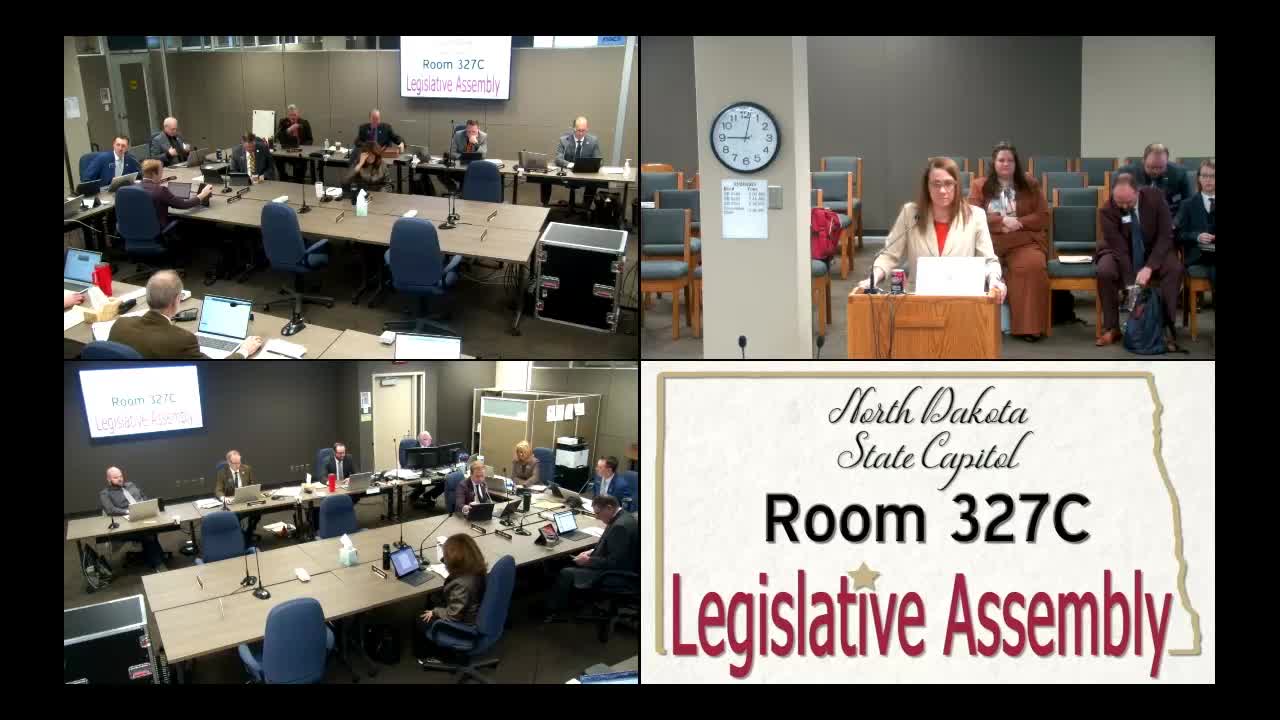
The House Industry, Business and Labor Committee held a hearing on Senate Bill 2146 and voted to give the bill a due pass after testimony from occupational therapy groups, the state military commission and national compact experts on workforce and military spouse mobility benefits.
The House Industry, Business and Labor Committee opened a hearing on Senate Bill 2146 on the Occupational Therapy Licensure Compact and voted to give the bill a due pass after testimony from state and national stakeholders.
The compact would permit occupational therapists (OTs) and certified occupational therapy assistants (COTAs) who are licensed and in good standing in their home state to practice in participating states via a “compact privilege,” rather than obtaining separate state licenses.
Supporters told the committee the compact would ease workforce shortages, help military spouses keep their professions when reassigned, and simplify telehealth and cross‑border practice for rural areas. “North Dakota is experiencing a shortage of occupational therapists and certified occupational therapy assistants,” said Megan Boucher, vice president of legislation and practice for the North Dakota Occupational Therapy Association. She said clinics face “long wait lists, 3 to 6 months” for patients seeking occupational therapy.
Senator Christian Rohrs (District 27) introduced the bill and said the state has been working with the North Dakota Military Commission and licensing boards to close out a list of compacts the Department of Defense monitors. Jay Sheldon, strategy and policy officer for the North Dakota National Guard and administrator of the North Dakota Military Commission, told the committee the commission supports the effort and that compacts help military families. “This type of legislation will support [military spouses] in being able to either maintain or get employment when they arrive in North Dakota, promptly,” Sheldon said.
National and technical testimony described the compact’s current status and implementation requirements. Daniel Markellis, state legislative affairs manager for the American Occupational Therapy Association, said 31 states have joined the compact and that a shared data system is under development; he said compact privileges are expected to be available in the latter half of 2025. Carl Sims of the Council of State Governments described state obligations to connect to the compact data system and noted the commission of compacting states may set fees to support operations. Sims said only two other compacts currently assess a state fee and that the occupational therapy commission has not adopted a state assessment to date.
Hospitals and provider groups urged approval to address staffing shortfalls. “Our number 1 challenge in the hospital world is workforce,” Tim Blassell, president of the North Dakota Hospital Association, testified in support.
Committee members asked about required changes to state law and any loss of state oversight. Supporters said North Dakota’s required changes would be limited; Boucher noted the compact requires a national background check and a state acknowledgement of jurisprudence (understanding of state laws and supervision rules) as part of obtaining compact privileges.
Votes at a glance: Motion — “Move to give SB 2146 a due pass.” Moved by Representative Casper; seconded by Representative Bail. Roll call recorded all members present voting yes. (Committee roll call recorded a unanimous yes among voting members present; committee asked if anyone would carry the bill.)
The committee’s vote advances the bill to further consideration; supporters said joining the compact would reduce licensing burdens for practitioners who work near state borders, streamline renewals and continuing education tracking for clinicians holding multiple state registrations, and expand telehealth supervision options in rural areas.