Get Full Government Meeting Transcripts, Videos, & Alerts Forever!
Get email alerts on the State Education Policy topic
No spam. Unsubscribe anytime.
State Department of Education outlines literacy, math and school‑safety priorities and a $200 million teacher‑pay proposal
Summary
Philip Cease, director of governmental affairs for the South Carolina Department of Education, laid out the department’s one‑four‑one‑four strategic plan, described literacy and math initiatives (LETRS and Palmetto Math Project), summarized Read to Succeed 2 retention impacts and the cell‑phone proviso model policy, and outlined budget requests including a $200 million proposal to raise starting teacher pay to $50,000.
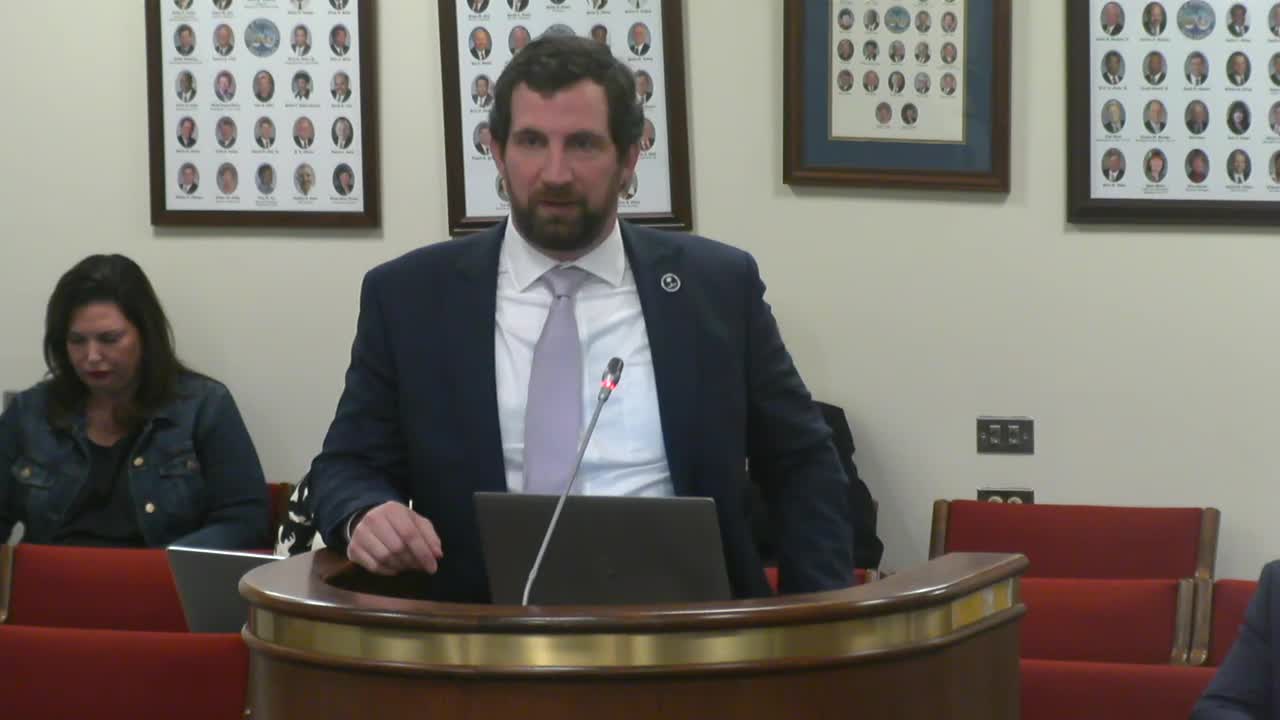
Philip Cease, director of governmental affairs for the South Carolina Department of Education, briefed the House Education and Public Works Committee on the department’s strategic plan and budget priorities.
"The mission of South Carolina Department of Education is to serve students, support teachers, empower parents, engage the community so that every student graduates prepared to reach their full potential," Cease said, summarizing the department’s new mission and its "one‑four‑one‑four" strategic framework and a long‑term "moonshot" goal to have at least 75 percent of students at or above grade level by 2030.
Cease outlined four strategies: advance evidence‑based instruction for foundational skills (including the Science of Reading and LETRS training), expand access to career pathways and work‑based learning, deploy initiatives that address school culture and behavioral and mental health needs, and launch statewide community engagement to increase volunteer support in schools.
On literacy and early grades, Cease said the legislature funded nearly $40 million two years ago for LETRS professional learning. He said about 20,000 teachers are either in the LETRS pipeline or have completed the training and noted a stipend for completion. Cease also described Palmetto Math Project pilots and a separate math material request scheduled for a Ways and Means hearing.
Cease discussed Read to Succeed 2 and retention: he said the statute’s threshold, had it been applied in the most recent school year, would have made 16,238 third graders eligible for retention; promotion after summer reading camps or other interventions remains possible under the law. He described the department’s expanded summer reading camps and other supports tied to the statute.
Cease reviewed a statewide model policy on student cell‑phone access — branded "Free to Focus" in department materials — that the appropriation proviso requires local boards to adopt or risk losing state classroom funding. The model defines the school day as bell to bell, requires a local policy with permitted exceptions, and allows districts to choose how devices are stored during the school day.
On budget priorities, Cease summarized large funding requests the department planned to seek from the General Assembly: a $200 million recurring request to raise starting teacher pay to $50,000 (and additional targeted supports for special schools and strategic compensation); $20 million recurring and $95 million nonrecurring for high‑quality instructional materials (with math materials highlighted); summer reading camps; CTE and rural programming; and a $100 million recurring request for a rural infrastructure bank to help rural school construction and renovation.
Committee members asked about AI tutoring pilots, school resource officers, implementation of the cell‑phone model policy and board training; Cease and the chair said districts have latitude in implementation and that the department is gathering data on implementation outcomes. The presentation did not include formal votes.