Get Full Government Meeting Transcripts, Videos, & Alerts Forever!
Get email alerts on the Coastal Protection topic
No spam. Unsubscribe anytime.
CPRA says Mid‑Barataria diversion funding remains dedicated while legal challenges continue
Summary
CPRA told lawmakers that federal trustee funding — principally NFWF and NRDA dollars — funds much of the Mid‑Barataria diversion work, and that roughly $572 million is currently dedicated to construction, while legal challenges and community concerns are under review.
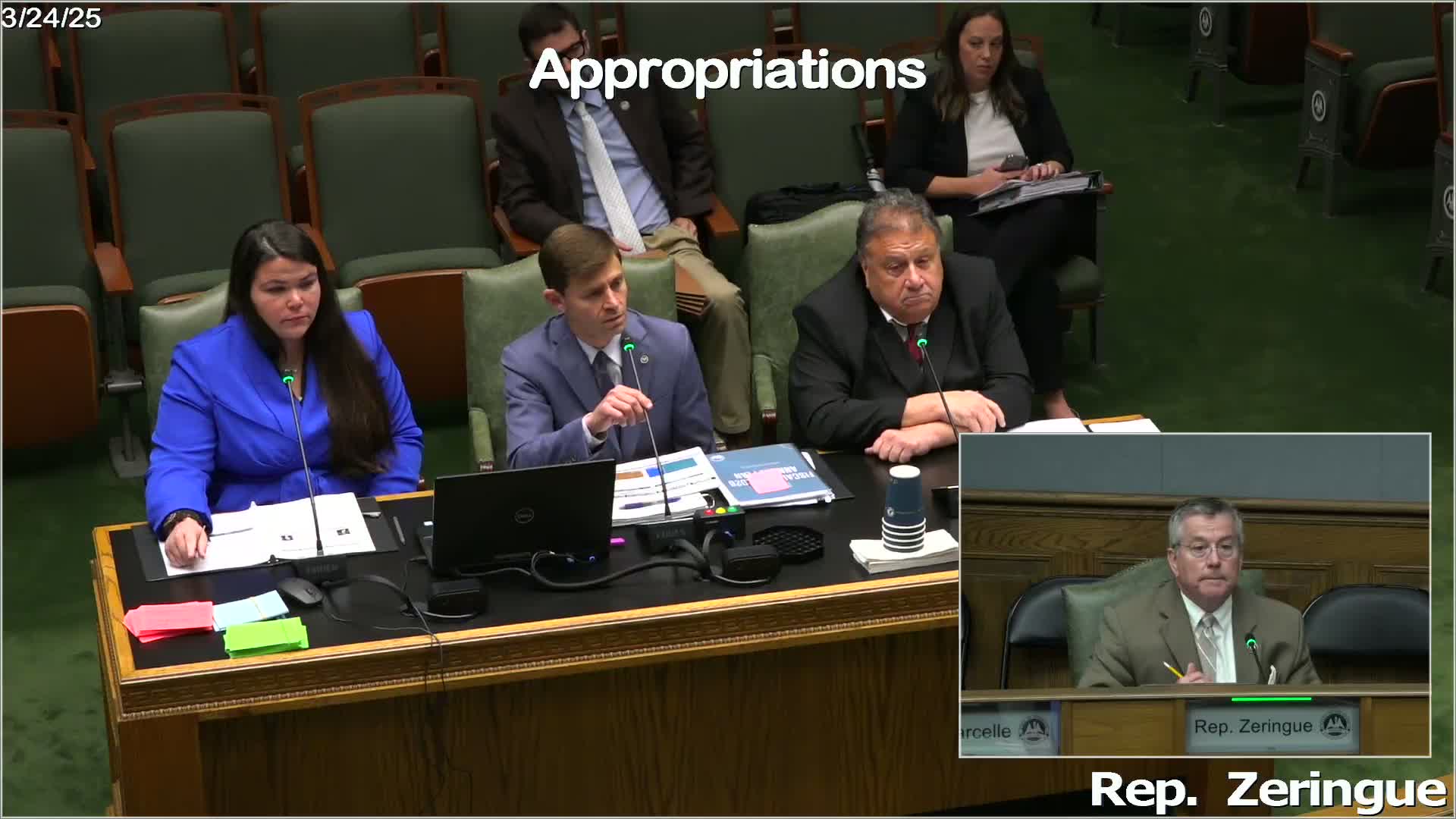
CPRA officials updated the committee on the agency's FY26 request and on the status of the Mid‑Barataria diversion, a major coastal restoration project that has drawn litigation and community attention.
Executive Director Glenn Lade and CPRA staff told lawmakers that, to date, roughly $400–$500 million has been spent on the diversion and that approximately $572 million in federal trustee funding is carried forward and earmarked for construction. They said the majority of funds for the project have come from federal trustee sources — principally National Fish and Wildlife Foundation (NFWF) grants and Natural Resource Damage Assessment (NRDA) funding — rather than direct state general fund appropriations.
On litigation and contracting questions, CPRA said that if a project is modified or halted, unspent federal trustee dollars revert to the corresponding trustee pots (NFWF, NRDA or other settlement funds) for reallocation to other projects consistent with the settlement terms; CPRA staff said they were evaluating the contract language and the options available under the existing construction contract. CPRA and legal advisers are meeting with the contractor and federal trustees to determine whether the contract can be paused, modified or terminated for convenience without exposing the state to avoidable liability; CPRA said it had retained specialized counsel to advise on the contract and permit issues.
Lawmakers asked whether state funds had been used for construction; CPRA said the bulk of expenditures have come from NFWF and NRDA, with relatively modest state dollars used for related activities and administrative functions. CPRA also said the agency is moving forward with other projects in the agency's draft annual plan — including land‑bridge and sediment‑pumping projects in Barataria and other basins — to avoid a full stop in coastal work while the diversion litigation proceeds.
Why this matters: Mid‑Barataria is one of the largest coastal restoration efforts in state history. The project aims to move Mississippi River sediment into barrier islands and marshes to rebuild habitat, but its scale and potential salinity impacts have prompted stakeholder concerns and litigation. The source and control of funds (state vs. federal trustee funding) and contract remedies will affect CPRA's options if the project needs significant redesign or pause.
Ending: CPRA said it will supply the committee with further legal and financial detail as it works with federal trustees and contractors; lawmakers asked CPRA for updated timelines and a clear account of funding sources and contingencies.