Get Full Government Meeting Transcripts, Videos, & Alerts Forever!
Get email alerts on the Gambling Vgm Limits topic
No spam. Unsubscribe anytime.
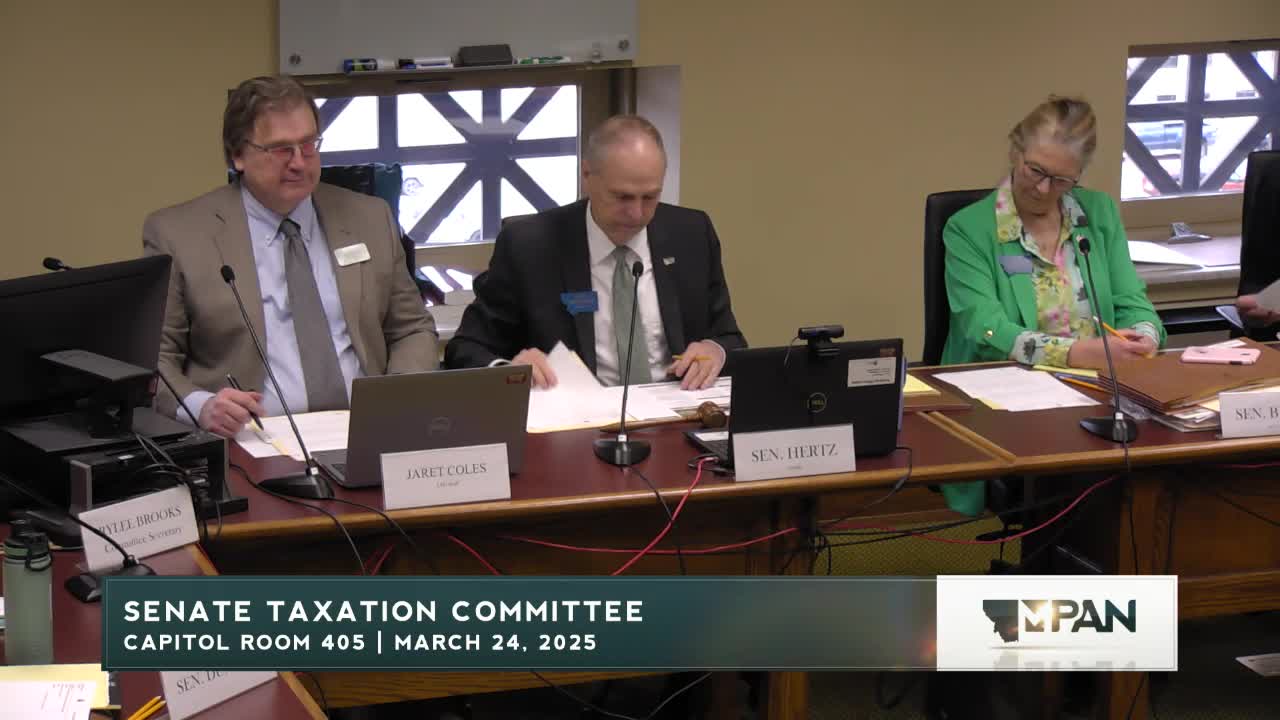
Montana Senate Tax Committee Hears Testimony on Doubling Video‑Gaming Machine Bet Limits
Summary
Senator Wiley Galt, sponsor of Senate Bill 153, told the Senate Tax Committee that the bill would “move the maximum bet from $2 to $4 and the maximum payout from $800 to $11.99.” The committee held a public hearing and heard several hours of testimony for and against the proposal; the committee took no committee vote during the hearing.
Senator Wiley Galt, sponsor of Senate Bill 153, told the Senate Tax Committee that the bill would “move the maximum bet from $2 to $4 and the maximum payout from $800 to $11.99.” The committee held a public hearing and heard several hours of testimony for and against the proposal; the committee took no committee vote during the hearing.
Why it matters: proponents said higher bet limits would let Montana operators add new games, refresh a market that has not had a statutory raise since 1987 and likely boost gross receipts subject to the state’s 15% video‑gaming tax. Opponents said the change amounts to an expansion of gambling that would hurt small taverns, increase volatility in payouts and potentially shift revenue out of Montana.
Proponents included route operators and machine owners who said manufacturers need higher limits to justify updated software and new games. Jesse Luther of Golden Route Operations told the committee, “We rise in strong support of Senate Bill 153.” Witnesses for the industry said a conservative projection would be an 8–10% increase in gaming revenue statewide — roughly $6 million to $8 million by their estimate — but they acknowledged the Legislative Fiscal Division will not provide a dynamic fiscal note and the bill’s net effect is uncertain.
Opponents included the Gaming Industry Association and the Montana Tavern Association. A representative for the Gaming Industry Association said, “We strongly oppose Senate Bill 153 and the expansion of gambling in our state,” and warned that raising the wager would shift risk onto small local businesses. John Iverson of the Montana Tavern Association told senators, “It’s good for route operators, but it is not good for the Montana taverns that we represent,” citing volatility and the ability of large route operators to spread losses across many machines.
Other testimony highlighted the federal tax‑reporting threshold. Several witnesses and committee members noted the $11.99 maximum payout is intentionally set below the $1,200 threshold that generally triggers a W‑2G reporting obligation for large gambling payouts; proponents said that limit is intended to reduce bartender and bar‑owner paperwork, while critics said the design appears intended to avoid federal reporting and expressed concern about transparency.
Several tavern owners and a witness who identified himself as a compulsive gambler urged senators to oppose the bill. Tom Hessler, a bar and casino owner in Great Falls, said operators and manufacturers have not supplied sufficient machine‑level math showing the bill’s effects and asked the committee to delay action until those analyses are available. Gary Rafter, who said he is a compulsive gambler and a member of Gamblers Anonymous, said simply, “I don’t think we ought to be expanding gambling in the state of Montana.”
Committee discussion touched on machine software, payout tables and market differences among states. Several witnesses warned that games designed for larger markets can be more volatile and that route operators with thousands of machines can spread volatility in a way small taverns cannot. Proponents said current lottery and sports‑betting options already allow higher single wagers and that the change would keep Montana competitive for newer machines.
The hearing record shows no formal committee vote on Senate Bill 153 at this session; senators closed the hearing after testimony and moved on to other business. The committee also noted the Legislative Fiscal Division will mark a fiscal note as undetermined when changes to consumer behavior cannot be reliably projected.
What’s next: the bill remains under committee consideration; no committee action was recorded at the hearing. If the committee later votes to advance the bill, it would appear on a committee report for floor consideration.