Get Full Government Meeting Transcripts, Videos, & Alerts Forever!
Get email alerts on the Uniform Commercial Code topic
No spam. Unsubscribe anytime.
Committee hears bill to modernize Montana's Uniform Commercial Code, explicitly bars central bank digital currency
Summary
Lawmakers heard testimony on Senate Bill 426, which would update Montana's Uniform Commercial Code to account for electronic records, create rules for "controllable electronic records" such as cryptocurrencies, and expressly prevent a federal central bank digital currency from being treated as money under Montana's UCC.
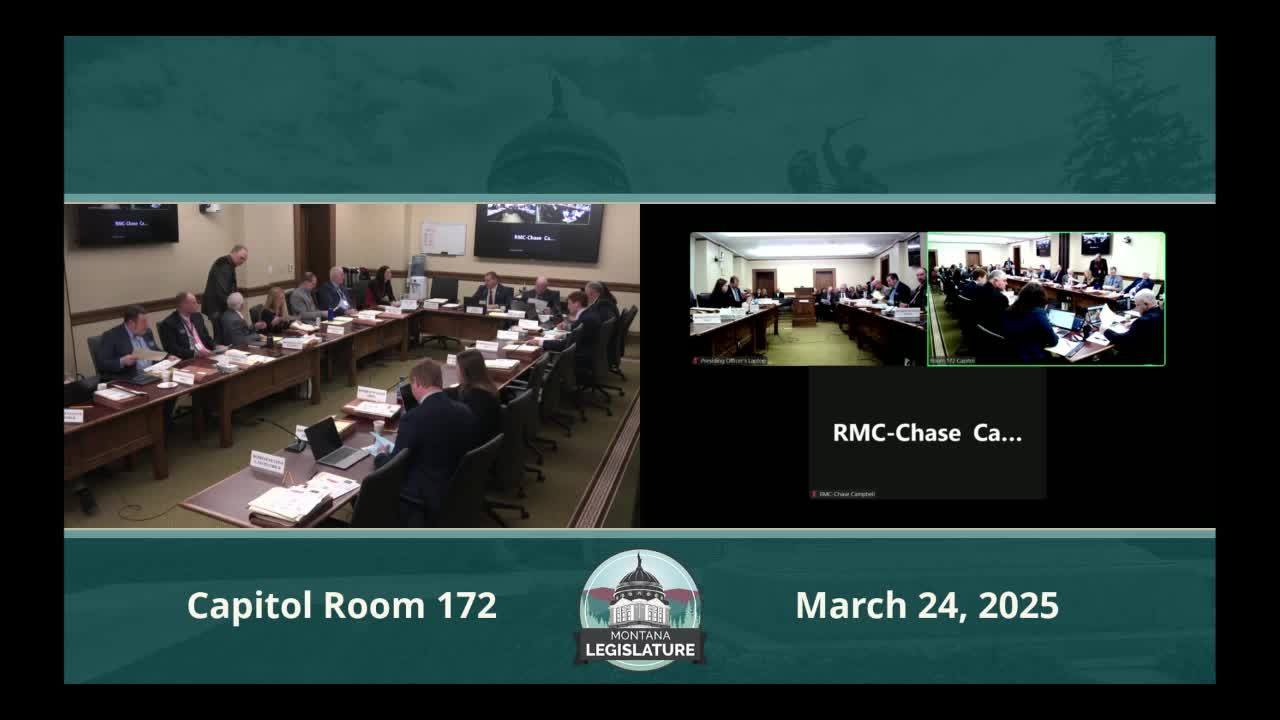
Senate Bill 426, a wide-ranging update to Montana's Uniform Commercial Code, was the subject of a lengthy hearing before the House Business and Labor Committee focused on bringing state commercial law into the digital age.
Proponents said the bill replaces outdated paper-era terms, creates a new category of digital property called a controllable electronic record, and adds secured-lending rules when that property is used as collateral. "On page 2, line 15, it states nothing in the UCC may be construed to support, endorse, create, or implement a national digital currency," testified Jonathan Byington, a law professor and one of Montana's uniform law commissioners. "The definition in the UCC of money states money cannot be in electronic form." Byington and other proponents told the committee the text responds to concerns that sank an earlier UCC update in 2023.
The bill replaces the word "writing" with "record" and broadens the definition of "sign" to include electronic processes. It also creates rules meant to make transfers of controllable electronic records (for example, crypto assets controlled by private keys) more certain for purchasers and lenders, including a "take free" rule and a "no action" rule that proponents said would reduce legal risk for buyers.
Amy Grimollis, an attorney for the Montana Bankers Association, and Jacqueline Lenmark, a uniform law commissioner, said the structure brings Montana in line with other states. "This bill modernizes the Uniform Commercial Code so that it will facilitate our commercial transactions in this digital age," Lenmark said.
One opponent raised concerns that neighboring states had not adopted the same revisions and warned that preamble language could be altered in ways she said might enable a central bank digital currency. Rebecca Schwartz of Whitefish said, "If we just tweak out the preamble by changing one or two words, it turns into, hey, we all adopt this new central bank digital currency. I am opposed to this bill." Proponents noted the bill contains multiple explicit textual provisions that they say exclude any central bank digital currency from the UCC's definition of money.
Committee members asked clarifying questions about how the bill interacts with other areas of law and reiterated that the UCC would not change tax, anti-money-laundering, or securities classifications for digital assets.
The hearing closed after proponents and opponents completed testimony; committee action on the bill was not recorded in the transcript.
Why it matters: The UCC is the statutory framework many states use to govern sales, secured transactions and other commercial activity. Proponents said updating Montana's code will reduce legal uncertainty for businesses and lenders that operate across state lines, and will let parties choose paper or electronic processes without altering legal consequences.
What remains unresolved: Opponents said neighboring states have not uniformly adopted the revisions and that preamble or definition tweaks could alter the bill's effect. Proponents said the current draft includes multiple explicit exclusions for central bank digital currency.