Get Full Government Meeting Transcripts, Videos, & Alerts Forever!
Get email alerts on the Arts And Culture topic
No spam. Unsubscribe anytime.
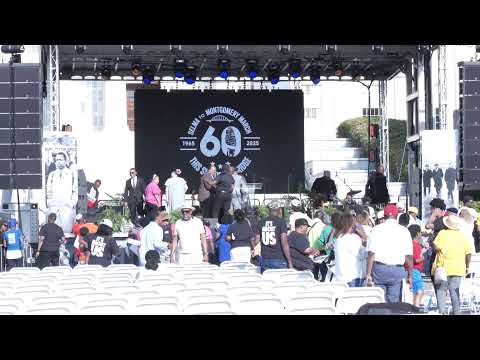
Speakers link art, celebrity and movement-building at Montgomery commemoration
Summary
Speakers at the Selma to Montgomery anniversary program highlighted the role of artists and celebrities in sustaining movements, urging creators to convert visibility into financial and organizing support for social justice.
At the Montgomery City program marking the 60th anniversary of the Selma to Montgomery march, multiple speakers argued that art and celebrities have historically sustained civil-rights movements and should continue to do so.
Gina Belafonte, addressing the crowd, described the "Stars for Freedom" concert the night before the successful march and said her father, Harry Belafonte, used celebrity to provide strategy, funds and protection for activists. "Celebrity is not just a status. It is a tool, a weapon against indifference, a bridge between those with power and those without," she said, urging artists and cultural leaders to move beyond statements to concrete organizing and investment.
Paul Root Wolpe (speaker), reflecting on interfaith solidarity and the moral work of nonviolence, recalled clergy and religious leaders who joined the clergy contingent in 1965 and emphasized the ethical dimensions of pursuing justice repeatedly in each generation.
Speakers asked artists and audiences to translate visibility into donations, bail funds, organizational support and long-term strategy rather than one-off appearances. They argued that cultural work "fuels" movements by sustaining morale and by connecting broader publics to campaigns that demand policy change.
No municipal programs or funding commitments tied to the arts were proposed during the program; remarks were appeals and historical context rather than formal policy actions.