Get Full Government Meeting Transcripts, Videos, & Alerts Forever!
Get email alerts on the Municipal Finance topic
No spam. Unsubscribe anytime.
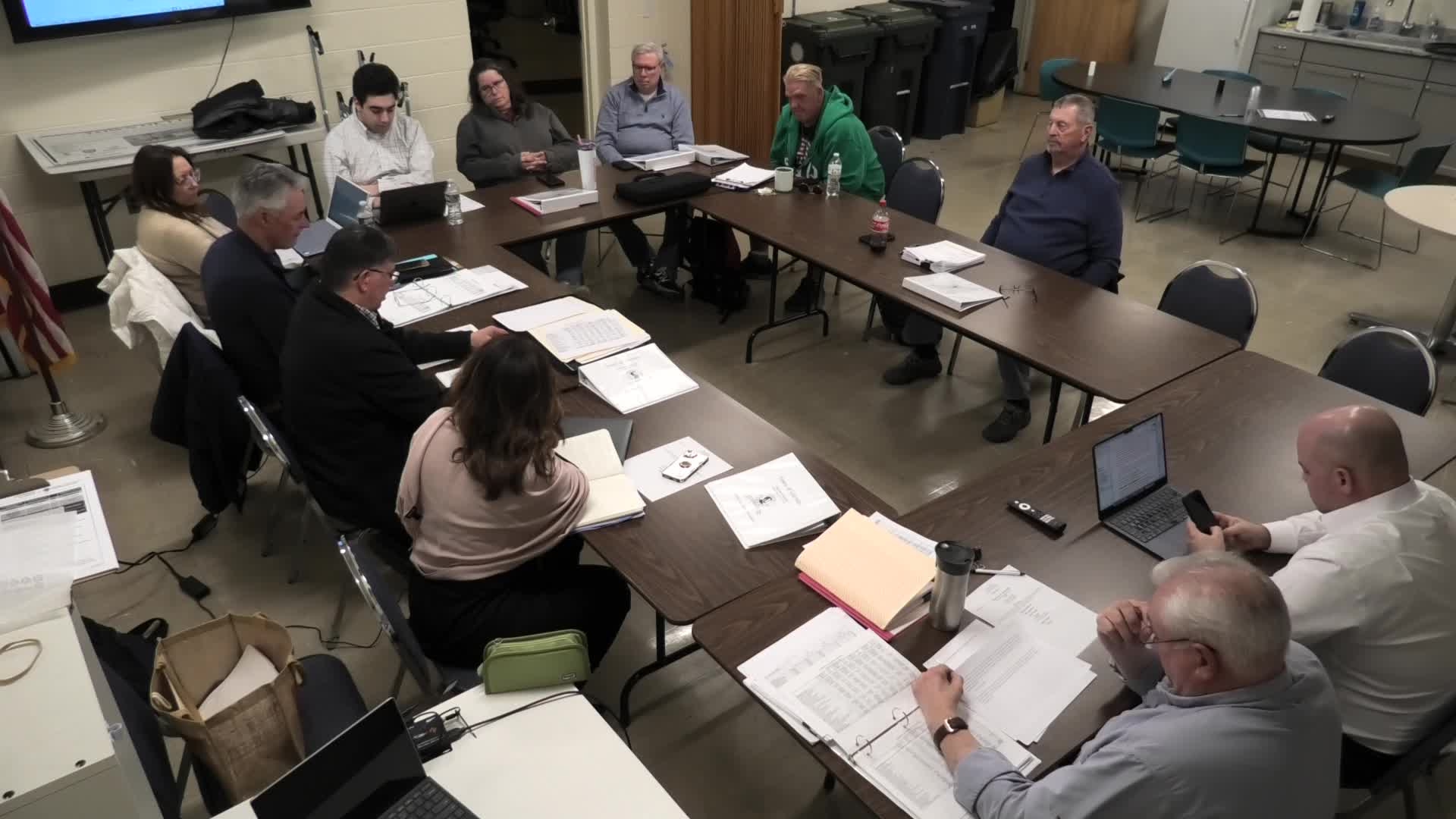
Budget board seeks clarity on revolving-fund resolutions, pavilion funding and upcoming tax sale
Summary
Board members reviewed FY23 surplus allocations, questioned wording on a proposed state-aid anticipation note for the school revolving fund (including a Ferguson Field pavilion listing) and discussed a planned tax sale and collection strategy.
The budget board discussed several interlocking municipal finance items: fund balances from the FY23 audit, a resolution authorizing state-aid anticipation notes of up to $5 million to support projects in the school building revolving fund (the packet included a resolution that specifically named the Ferguson Field pavilion), and a proposed tax sale to recover delinquent taxes and sewer accounts.
Fund balances and gaming revenue: board members heard a briefing that the FY23 audit generated approximately $1.8 million in surplus that should be split between Fund 11 (open space) and Fund 12 (capital improvements) and that additional gaming and surplus funds may be available once the FY24 audit is complete. Staff estimated roughly $1.8 million could be available from gaming-related collections next year but said the FY24 audit timing (expected in April/May) will determine the final totals.
Revolving fund and pavilion language: the town administrator circulated draft resolutions to authorize state-aid anticipation notes payable from the school building revolving fund. One draft resolution explicitly listed “Ferguson Field Pavilion” as an approved project and stated the projects had been submitted to and approved by the state Department of Education. Multiple board members questioned that wording and raised two concerns: (1) the pavilion reference could mislead voters if the resolution is presented as a single, specific project rather than a bucket of approved, prioritized projects; and (2) the packet language appeared to suggest the pavilion already had RIDE approval when staff said the pavilion was intended to be considered for the Stage 2 application and that the final Stage 2 project list would be refined over months.
Board members and staff discussed process and roles: the revolving fund committee reviews and prioritizes approved projects and then recommends appropriations to the town council; the town council then approves appropriations. Several members asked staff to reword resolutions to clearly list all projects that could be funded or otherwise specify the intended flexibility, so voters are not misled at the financial town meeting.
Tax sale and collections: staff reported work to resume tax-sale activity (the last local tax sale had been run in 2019) with initial notification letters planned to encourage payoffs before any sale. Tentative timing discussed was late summer or early fall (a multi-step legal process beginning with notices that can take three to four months). Staff estimated about 200 properties could be delinquent across taxes and sewer accounts, with a gross delinquency total in the $1.5–$1.6 million range; prior tax-sale processes historically reduced the number of properties by the time of sale because many taxpayers cure delinquencies once contacted. The board reiterated the town’s practice to work with residents who show mitigating circumstances but also noted the need to enforce collections to protect other taxpayers.
Other items and next steps: board members asked staff to (a) rework the revolving-fund resolutions to enumerate projects or otherwise clarify voter intent, (b) confirm which projects have formal state approvals and which are intended for Stage 2 consideration, and (c) publish an outreach plan and timeline for the planned tax sale, including early-notice letters. No formal votes were taken at the meeting on these items.
Ending: board members said they would continue to probe the revolving fund wording and schedule follow-up meetings before the financial town meeting so that voters receive transparent, itemized information about projects and funding sources.