Get Full Government Meeting Transcripts, Videos, & Alerts Forever!
Get email alerts on the Tax Stabilization Ordinance topic
No spam. Unsubscribe anytime.
Smithfield council adopts tax-stabilization ordinance allowing agreements up to 20 years; 15-year cap fails
Summary
After public comment and council debate, the Smithfield Town Council voted to adopt an amended tax-stabilization ordinance that allows tax stabilization agreements of up to 20 years, with a $2,000,000 eligibility threshold. A proposed amendment to cap maximum agreements at 15 years (with possible five-year extension) failed.
The Smithfield Town Council voted to adopt changes to Chapter 3.21, Article 6 (Taxation: Exempting and Stabilization of Taxes on Qualifying Commercial or Manufacturing Property) that permit tax-stabilization agreements of up to 20 years, with a $2,000,000 investment threshold to qualify.
The measure passed after the council rejected a motion to limit the maximum term to 15 years with a possible five-year extension. The final recorded roll call on passage of the ordinance was: Yes — Deborah Winfield, Vice President Gorgen, President Toccioli; No — Member Tovian, Member Ainai. The motion passed 3–2.
The ordinance as adopted retains language allowing agreements “up to 20 years,” and sets a $2,000,000 minimum investment threshold that an applicant must meet to be eligible for any stabilization agreement. Tax Assessor Crystal West told the council that the $2,000,000 figure is the threshold “to enter into an agreement up to 20 years” and that the ordinance does not require a 20‑year agreement for that level of investment.
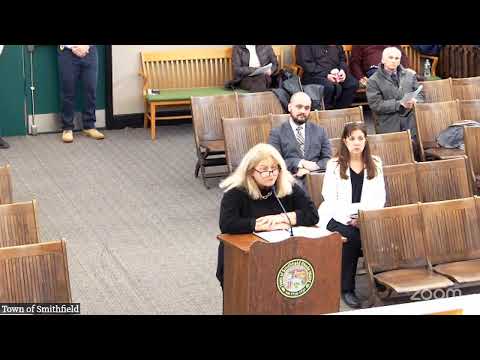
Members of the public urged greater specificity in the ordinance. Tom Hodgkins, of Farnham Pike, said the draft presented to the public differed in scope from the changes described at an earlier meeting and suggested the council set clearer parameters for when longer agreements would be awarded. Kenneth Souza, speaking during public comment and identifying concerns relating to budget review, urged the council to give volunteer budget boards adequate time to analyze proposed agreements before decisions were finalized.
Council debate focused on balancing competitiveness with other municipalities against limiting expectations that very long tax-stabilization terms would become routine. A council member who proposed the 15-year cap said shorter terms are appropriate because most capital investment occurs in the first five to 10 years and long agreements should be rare. The motion to retain the “up to 20 years” language was described by another council member as necessary to remain competitive with other municipalities that use similar maximum terms.
The ordinance also includes process language establishing that an application for any five-year extension must be received by the tax assessor by Jan. 31 of the fifteenth fiscal year of the original agreement. The council opened a public hearing on the ordinance prior to acting on the proposed amendments, and the hearing record is part of the council packet.
Next steps: the ordinance as adopted becomes part of the town code (Chapter 3.21, Article 6); the council directed that applications be processed under the terms in the adopted text. The Budget Board’s review and written recommendation (required within 30 days under the draft language) remains part of the process as described in the ordinance.