Get Full Government Meeting Transcripts, Videos, & Alerts Forever!
Get email alerts on the Tax Stabilization topic
No spam. Unsubscribe anytime.
Smithfield council moves to clarify March 6 tax-stabilization action for Organogenesis, schedules public hearings
Summary
Council members accepted solicitor's communication explaining conflicting versions of a tax-stabilization agreement tied to Organogenesis and approved a resolution to confirm legislative intent; public hearings to align the agreement and town ordinance were scheduled for April.
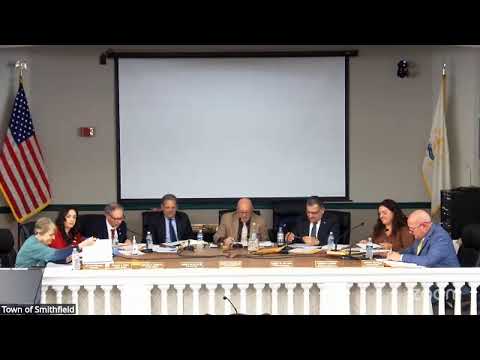
The Smithfield Town Council on March 18 accepted a solicitor's communication explaining conflicting versions of a tax-stabilization agreement tied to Organogenesis Holdings Inc. and approved a resolution intended to confirm the council's legislative intent. Council members scheduled two public hearings to align the company's agreement and the town's tax-stabilization ordinance before the ordinance's April 6 effective date.
The communication, read by the town solicitor, described two different versions of the Organogenesis agreement that emerged from the council's March 6 meeting: one version was the tax-stabilization agreement contained in Organogenesis's original application to the Financial and Budget Board of Review; a second version reflected amendments that the council read into the record and then adopted as an ordinance. The solicitor said the March 6 votes created confusion because the ordinance adopted by the council incorporated language that differed from the agreement as originally submitted.
"There were two agreements that the council approved on March 6'...we need clarity so we have an effective date of April 6 of that ordinance so we can sign this agreement," the solicitor said during the meeting, explaining why the resolution was recommended.
The council voted to accept the communication and then adopted a resolution "conforming the terms and the legislative intent" of the tax-stabilization order adopted March 6. Council members then voted to schedule two public hearings for April 1: one to amend the Organogenesis tax-stabilization agreement to conform to the ordinance and another to amend the town's enabling tax-stabilization ordinance to address inconsistencies and incorporate necessary language.
Council members and staff said the two hearings are intended to produce a single, consistent ordinance and agreement before the April 6 effective date so the town and Organogenesis know which terms govern. The solicitor and town staff said amendments under consideration include changes proposed by the tax assessor, the interim town manager and other council members.
Organogenesis, identified in meeting materials as Organogenesis Holdings, Inc. and related entities, had brought an application that was vetted by the Financial and Budget Board of Review. The solicitor said the ordinance adopted March 6 in effect incorporated the agreement in Organogenesis's initial application but that the council must now correct inconsistencies and update the enabling ordinance to reflect the adopted text.
Council members discussed how to proceed; one councilor said the resolution alone would not fix the underlying inconsistency but the public hearings would. The council approved the resolution and the schedule by voice vote.
The council packet and the solicitor's communication state the town will hold the two hearings on April 1; additional hearings to amend the enabling ordinance were scheduled for later (advertisement dates were listed during the meeting). The council's action does not itself amend the agreement or ordinance; it set the process to do so and adopted a resolution clarifying the council's intent.
The council did not vote at the March 18 meeting to finalize any tax-stabilization agreement with Organogenesis. Those final actions will depend on the advertised public hearings and subsequent council votes.