Get Full Government Meeting Transcripts, Videos, & Alerts Forever!
Get email alerts on the Short Term Rentals topic
No spam. Unsubscribe anytime.
Washingtonville trustees continue study of short‑term rental rules after neighboring towns’ experience
Summary
Trustees discussed enforcement, public-safety and revenue implications of short‑term rentals on Feb. 18; staff reported mixed experiences from nearby municipalities and recommended further research and community input.
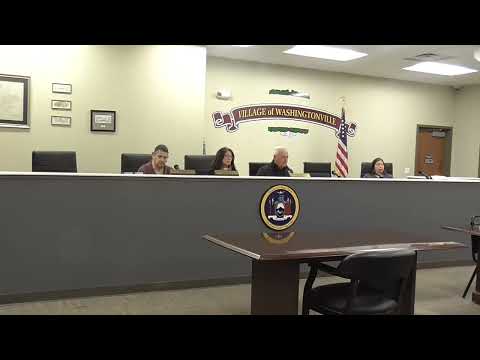
At the Village of Washingtonville’s Feb. 18 work session trustees reviewed research into short‑term rental rules and enforcement from neighboring municipalities and agreed to continue studying the issue before adopting any regulations.
Staff member Tiffany reported outreach to several nearby towns, noting that Clarkstown had once regulated short‑term rentals but discontinued the practice after a series of enforcement burdens and high‑profile safety incidents. Tiffany said Clarkstown officials described increased police and fire responses, parking and noise complaints — including large parties — and difficulties maintaining compliance. That example, she said, was one factor in Clarkstown’s decision not to renew its short‑term rental program.
Trustees and residents discussed enforcement challenges in Washingtonville, which officials described as a compact, 2.5‑square‑mile village with residences close together. Concerns included tracking and registering properties listed on platforms such as Airbnb and VRBO, compliance with noise and occupancy rules, additional calls for police and fire services, and impacts on neighbors when units are rented continuously. Several speakers recommended a per‑stay tax or percentage‑of‑gross approach tied to platform collection, rather than a low flat annual fee; staff noted Orange County currently collects a 5% county occupancy tax and that municipalities may impose additional tax or licensing structures.
No regulatory action was taken. Trustees instructed staff to continue gathering information from municipalities that have adopted or considered short‑term rental regulations, to check whether those towns collected occupancy or lodging taxes, and to consider public outreach or a hearing to gauge resident preferences. Staff also said they would report back with revenue estimates and enforcement models before the board considers any local law.
Discussion included multiple examples and tradeoffs: tighter rules can reduce nuisance calls but require enforcement resources from police and building departments; looser rules can produce revenue but may increase complaints. Trustees emphasized they did not intend to preemptively prohibit short‑term rentals, but wanted a measured approach that addresses public‑safety and neighbor impacts if the village moves forward with licensing or taxation.