Get Full Government Meeting Transcripts, Videos, & Alerts Forever!
Get email alerts on the Crop Insurance topic
No spam. Unsubscribe anytime.
Witnesses tell Senate committee crop insurance must remain affordable and actuarially sound
Summary
Crop insurance providers, lenders and farmers told the Senate Agriculture Committee that federal crop insurance is the primary risk-management tool for U.S. agriculture and urged Congress to improve affordability, expand coverage options and preserve the public–private delivery model.
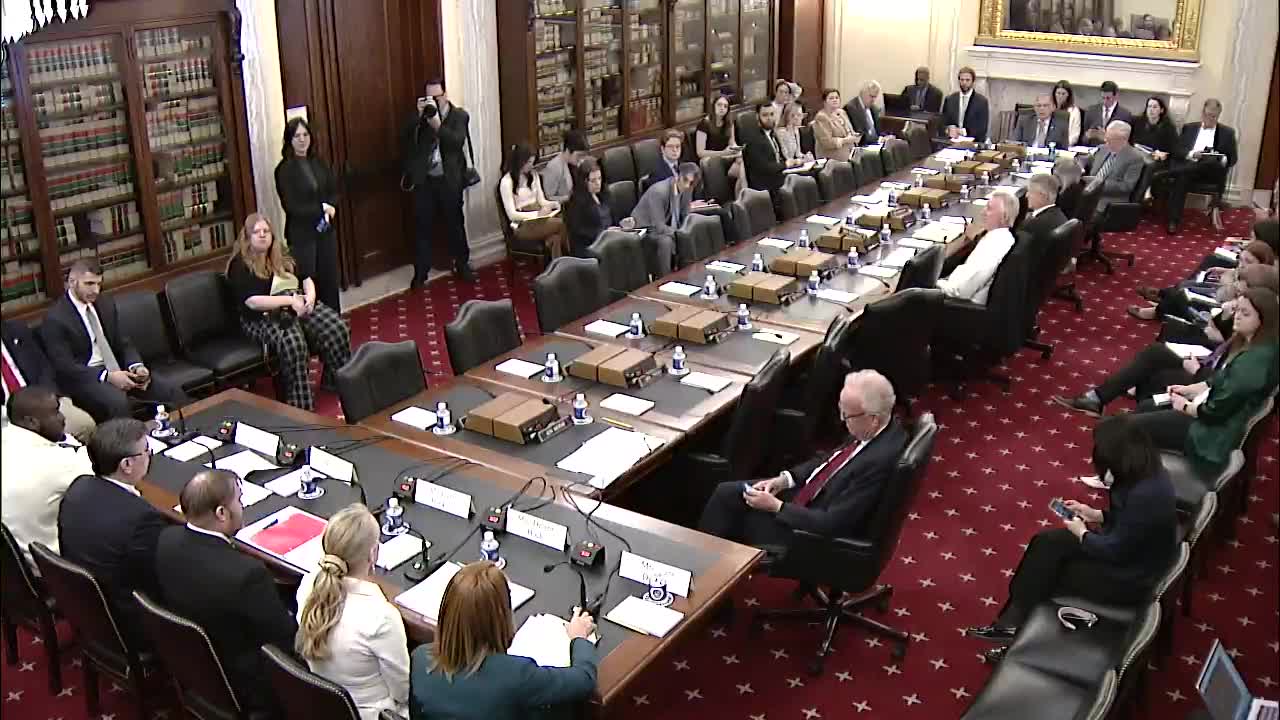
Witnesses at the Senate Agriculture Committee hearing described federal crop insurance as the cornerstone of the farm safety net and urged lawmakers to preserve affordability and feasibility for private insurers to deliver policies nationwide.
Dylin Hoke, head of RCIS, told senators that crop insurance "is an economic driver in rural America" and that the program must remain affordable, widely available and actuarially sound if private providers are to continue investing capital and personnel in delivery. Hoke said administrative and operating payments to insurers have not kept pace with inflation and program complexity, and she noted that "the inflation factor adjustment that was built into a and o calculations was unfortunately removed in 02/2015."
Why it matters: Committee members and witnesses tied crop insurance to loan availability and rural economic stability. Lenders said crop insurance is their principal tool for assessing loan renewals, and insurers warned that ad hoc disaster payments can undermine long-term risk sharing unless they are designed to complement, not replace, insurance.
Key points and proposals: Witnesses discussed area-based plans and indexed products, the USDA’s 508(h) product-development pathway for new products, and layered coverage such as ECO plans. Dylin Hoke said she opposes disaster packages that would be funded by cuts to crop insurance, arguing such moves would reduce private-sector capacity. Caleb Hopkins, representing agricultural bankers, said "Crop insurance is the number 1 risk management tool in the belt for ag lenders," and called for enhancements that keep the product affordable for producers.
Additional details: RCIS and others noted rising delivery costs—marketing, claims adjustment, education and technology—while insurers’ administrative payments have not kept pace. Witnesses urged Congress to support premium assistance for beginning farmers and to pursue product development that remains actuarially sound.