Get Full Government Meeting Transcripts, Videos, & Alerts Forever!
Get email alerts on the Zoning Nonconforming Lots topic
No spam. Unsubscribe anytime.
North Smithfield planning board recommends state-mandated changes to rules for substandard lots
Summary
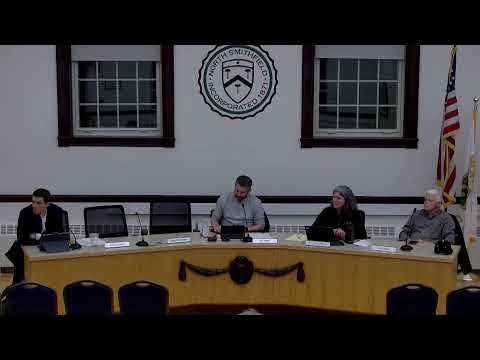
On Feb. 27 the Planning Board voted to send a favorable recommendation to the Town Council to adopt amendments to the zoning ordinance that change how nonconforming (substandard) lots are measured and when lots may be unmerged, aligning local code with recent amendments to Rhode Island law.
On Feb. 27, 2025, the North Smithfield Planning Board voted to send a favorable recommendation to the Town Council for a zoning amendment that changes how the town treats substandard (nonconforming) lots of record, a planning staff member said.
The proposed amendments implement changes from the Rhode Island General Law and give owners of nonconforming lots three automatic options to make a lot developable: use the dimensional requirements of another zoning district in which the lot would conform; reduce setbacks and frontage proportionally to how much the lot’s area falls short; or allow increased building coverage inversely proportional to the degree of nonconformity. The draft also modifies the town’s merger rules so some abutting lots may be unmerged if certain historic lot-size conditions are met and requires professional certification for unmerging.
Planning staff introduced the proposal, saying the changes are intended to bring the ordinance into compliance with amendments enacted by the General Assembly. “We’re in the process of updating our zoning regulations to comply with the Rhode Island General Law,” a planning staff member said. Supriya, a planning consultant from Innis Associates, summarized the new automatic relief options and the unmerging process: “So these adjustments to the nonconforming lots are designed to make it more feasible for the owners of properties of lots which are nonconforming to make the property actually usable and developable.” She added that where a lot’s area meets only 40% of the minimum, the required setbacks would be reduced by 40% and that the change “gives you more space to actually develop on it.”
The draft also inserts a professional-review requirement: an engineer or licensed surveyor must certify plans and the building/zoning official must confirm the historic lot-size analysis before an unmerging can proceed. Planning staff said that step was added to ensure accurate review of deeds and record cards because town building staff have limited capacity to do that research.
Board members and members of the public raised practical concerns. One member asked whether a side-yard setback that shrank from 10 feet to 4 feet under the proportional rule would create fire-safety or building-code issues; planning staff and board members noted that such cases could require fire-rated walls and would increase construction costs. Staff also flagged environmental concerns: the consultant and planning staff discussed limited public water and sewer service in parts of town and said more small-lot development could increase reliance on septic systems, which could affect the town’s aquifer over time.
A member of the public, Darlene Machado of Douglas Pike, asked whether the amendment applied only to substandard lots of record or also to nonconforming uses. Planning staff clarified that the item under discussion addresses substandard lots of record and that nonconforming uses are handled in a separate section of the ordinance; nonconforming uses may continue in their current state but typically cannot be expanded without relief from the Zoning Board.
After discussion and public comment, a planning board member moved to send a favorable recommendation to the Town Council to adopt the zoning ordinance as proposed; another member seconded. The board voted in favor. Board members recorded voting “yes” included Dr. Benoit, Dr. Roberts, Mr. Rozier and the vice chair. The motion passed and the favorable recommendation will be forwarded to the Town Council; no council hearing date was specified.
The amendment package also contains editorial cleanups and language removals that planning staff said were intended to eliminate superfluous or potentially inappropriate sections and to consolidate rules (for example, general rules on abandonment of nonconforming uses were moved to a single section). Planning staff said the changes are part of a broader effort to implement state law changes that town planners and the General Assembly have described as intended to increase housing production by making some previously unbuildable lots developable.
The Planning Board’s recommendation is advisory; the Town Council must consider and adopt the ordinance change before it becomes local law. Planning staff said applicants who still cannot make a lot conforming under the automatic options would need to apply for modification or a dimensional variance through the Zoning Board of Review.