Get Full Government Meeting Transcripts, Videos, & Alerts Forever!
Get email alerts on the School Budget topic
No spam. Unsubscribe anytime.
North Smithfield schools propose no local tax increase after $1.5M state aid boost; capital needs flagged
Summary
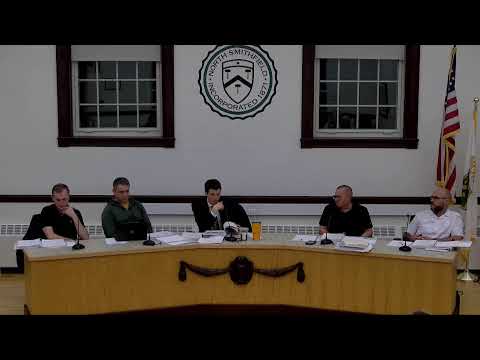
North Smithfield school department representatives told the town budget subcommittee on March 20 that a large, unexpected increase in state aid lets them propose no increase in the local operational appropriation for fiscal 2026, while flagging several continuing cost pressures and multi‑year capital needs.
North Smithfield school department representatives told the town budget subcommittee on March 20 that a large, unexpected increase in state aid lets them propose no increase in the local operational appropriation for fiscal 2026, while flagging several continuing cost pressures and multi‑year capital needs.
A school department representative told the committee the district had “received the largest increase in state aid that we’ve ever had,” and that, on the basis of the January calculations and the governor’s proposed budget, “we’re not going to ask for an increase for the local appropriation from the town” for the operational budget. The representative added a caution: the figure depends on the final actions of the General Assembly.
The school representative and staff outlined why uncertainty remains. Enrollment is shifting: multilingual‑learner (MLL) counts rose from single digits nine years ago to 57 students this school year; special‑education caseloads and students requiring out‑of‑district placements also increased. The district reported 14 students in specialized out‑of‑district placements; the representative said those placements can cost “over a million dollars” for tuition and transportation and that single cases can approach six figures annually.
The presentation summarized other enrollment trends the district said affect funding: after a year‑to‑year decline of about 24 students the district had regained six by mid‑March; homeschool numbers rose to 59 students (about 38 families); and 38 external students attend North Smithfield High School’s CTE programs under the Northwest School Consortium arrangement.
On capital, school staff listed near‑term and multi‑year projects. The primary items described were: widening the single egress at North Smithfield Elementary School (NSES) to ease morning pick‑up and evening events; replacement or major repair of roofs at the elementary, middle and high schools within a five‑year window; and potential air conditioning/HVAC work at the middle school. The school provided preliminary cost ranges for the middle‑school HVAC options: corridor cooling estimates at about $400,000–$800,000; targeting a single floor at roughly $1.2 million–$3 million; and whole‑building work described as “prohibitive,” with a preliminary range the presenters placed between about $4 million and $10 million.
School staff explained how capital work is funded and why some projects do not come from the annual operating request. The district said it asks annually to place at least $200,000 into a jointly operated revolving fund that finances repairs and projects eligible for a 35% state reimbursement; the district also reported it has used its school fund balance and grants for some projects (high school windows, library renovation, auditorium upgrades, security cameras, a generator at NSES, and athletic field work).
Alicia, the school finance/administrator, told the committee the district’s year‑end fund balance was roughly $2,700,000 but said much of that is already assigned or prepaid and that the amount immediately available for large capital work is smaller: “we are down to about $800,000 of spendable funds,” she said.
Committee members asked how the district would respond if some or all of the $1.5 million did not materialize in the final state budget. The school representative said the administration has an initial round of cuts to return to immediately, and that in the short term they plan to keep the operational ask at $0 while maintaining contingency plans should state aid be reduced.
Other items discussed included the district’s regional purchasing and consortium arrangements — the Northwest School Consortium uses a $5,000 flat charge for CTE students among member districts to limit tuition exposure — and the state‑level “unfunded mandates” the presenters said are increasing staffing and training costs, including a referenced legislative proposal that would require MLL endorsements for content teachers by 2030. Presenters said those mandates currently lack accompanying funding and could force the district to reallocate federal Title and other funds.
The meeting included three procedural votes to approve prior meeting minutes (February and March items) and a final motion to adjourn; the votes were taken by voice and recorded as approved.
The school department representatives asked for continued collaboration with the town on capital planning and for an opportunity to provide updated state aid figures to the committee before the budget goes to the full town council. The subcommittee closed with a request to reconvene if state figures change before formal submission.
The committee adjourned at 7:18 p.m.