Get Full Government Meeting Transcripts, Videos, & Alerts Forever!
Get email alerts on the Education Funding Accountability topic
No spam. Unsubscribe anytime.
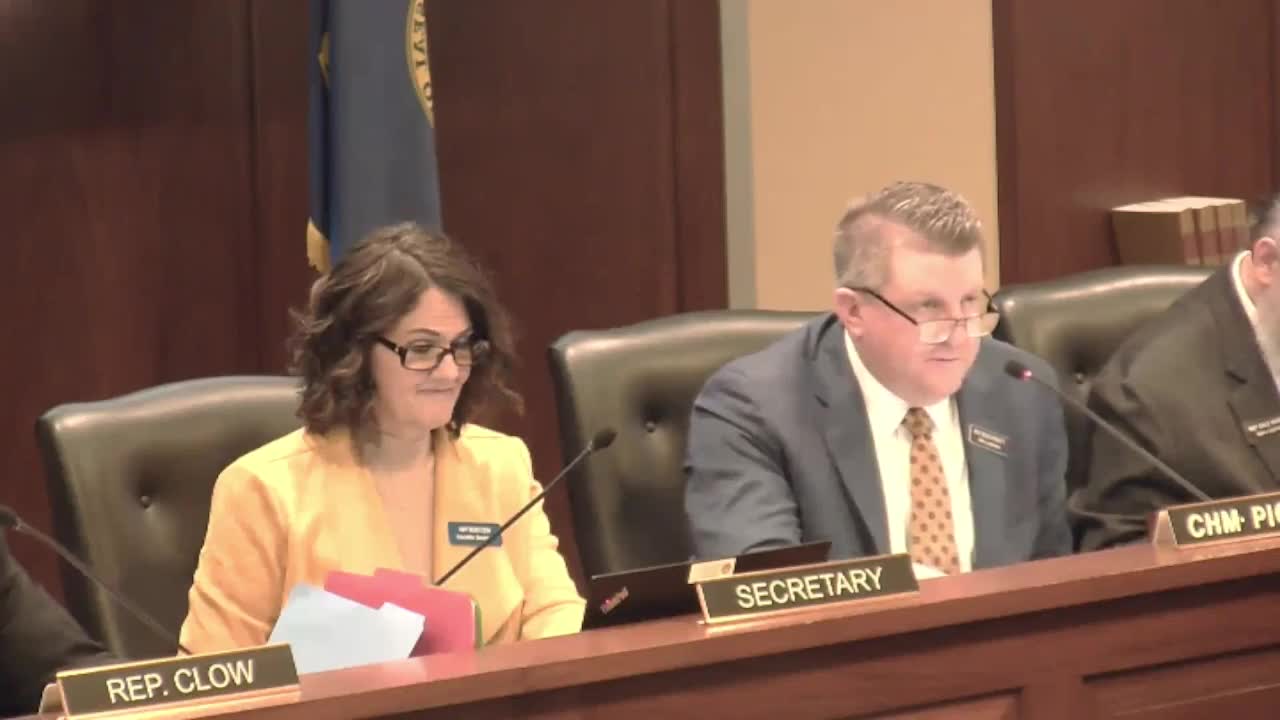
Idaho House education committee hears debate on bill to enforce use of earmarked education dollars
Summary
Representative Kyle Harris, District 7, told the House Committee on Education that House Bill 350 is “an accountability bill” intended to ensure money the Legislature earmarks for specific education purposes is spent for those purposes.
Representative Kyle Harris, District 7, told the House Committee on Education that House Bill 350 is “an accountability bill” intended to ensure money the Legislature earmarks for specific education purposes is spent for those purposes. “If we do allocate money and the State Department of Education gets that money and they send it out to teachers or math and science or special education or maintenance or anything along those lines, that money would have to be used for those purposes that we allocate that money for,” Harris said.
The bill would require funds distributed for a specified purpose to be used for that purpose, require repayment if the money is used otherwise, and give the Joint Finance-Appropriations Committee authority to reduce future appropriations if funds are not returned.
Why it matters: Harris and some committee members framed the issue as one of legislative intent and accountability after multiple audits flagged problems. Opponents — including school finance and administration representatives — said the rules and audit mechanisms already exist and warned the bill could add costly, redundant compliance work for districts.
Caddo Joint School District fiscal director Chris James testified in opposition and said the bill would duplicate existing rules. “These allocations are already governed by Idaho code or IDAPA ensuring that they are used as intended,” James said, adding that districts already post monthly expenditures and are audited by independent firms.
Jonathan Gillen, president of the Idaho Association of School Business Officials, said external audits and existing reporting create transparency but questioned how compliance would be determined and who would bear additional costs. “How does the process occur whereby money is taken back or identified as spent inappropriately?” Gillen asked, saying the identification and remediation process would likely add costs for districts or require additional state staff.
Heather Williams of the Idaho Rural Schools Association and Andy Grover, executive director of the Idaho Association of School Administrators, also opposed the bill, saying local boards, external auditors and the Department of Education provide multiple existing oversight layers and that the bill risks creating harmful restrictions for districts that need flexibility.
Representative Harris and several committee members pointed to audit findings at the Department of Education and said the bill would give enforcement “teeth.” Gideon Tullman of the Department of Education said the department had audit findings related to review of district-submitted data and that the agency hired an auditor last fall as a corrective action step.
After public testimony and committee questions, the committee took two actions tied to the item. The committee voted to hold House Bill 350 in committee on a voice vote after a motion from Representative Marmon. The committee separately moved to introduce a revised draft, RS32683, and send that RS to the second-reading calendar with a due-pass recommendation; that motion passed on a roll call vote, 9-5.
What remains: The committee did not advance the original House Bill 350 out of committee. RS32683 (the revised language that narrows enforcement responsibility to the State Department of Education) was ordered to the floor with a due-pass recommendation in a 9-5 vote; any further legislative action will occur on the second-reading calendar.
Ending: Committee members expressed differing views about local control, auditing capacity and the risk of unintended consequences if narrowly written intent language is enforced statewide. The committee record shows both a push for added enforcement powers and repeated concerns from school finance professionals about implementation costs and the mechanics of determining misuse.