Get Full Government Meeting Transcripts, Videos, & Alerts Forever!
Get email alerts on the Child Welfare topic
No spam. Unsubscribe anytime.
JFAC approves $14.1M supplemental for child-welfare costs and a FY2026 package to expand prevention, foster services and licensing staff
Summary
The committee approved a $14.13 million FY2025 supplemental for foster-care trustee and benefit payments and a larger FY2026 package adding 63 FTE and funds aimed at prevention, foster-clinic staffing, licensing and continued use of leased assessment capacity.
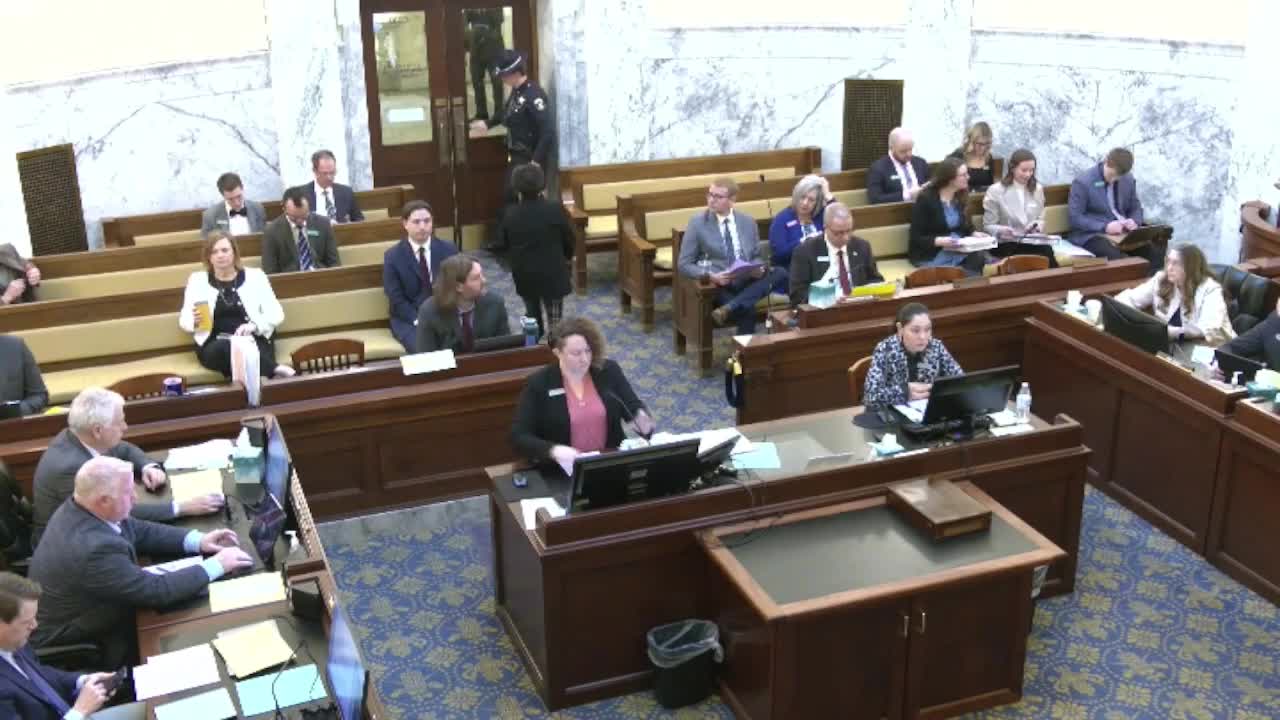
The Joint Finance-Appropriations Committee approved two major actions on March 14 for the Department of Health and Welfares Division of Youth Safety and Permanency. The committee approved a $14,126,900 supplemental for FY2025 to cover foster-care trustee and benefit payment shortfalls and passed a FY2026 enhancement package that adds staff intended to expand prevention services, clinical foster-care supports and licensing capacity.
Alex Williamson, budget and policy analyst with Legislative Services, described the FY2025 supplemental as covering anticipated trustee and benefit payment shortages arising from congregate-care costs. Senator Wintrow moved the FY2025 supplemental: “I move for the fiscal year 2025 for the Department of Health and Welfare and the youth safety and permanency division the 1 time addition of $8,868,200 from the general fund and $5,258,700 from federal funds for a total of 14,126,900 for population forecast adjustments.” The motion passed on a combined committee vote of 18 ayes, 1 nay and 1 absent/excused and will carry a due-pass recommendation.
The committee also considered FY2026 enhancements proposed by the agency that would add 63 FTE and $21,245,700 total funds (13,774,600 General Fund; 7,471,100 federal). Representative Tanner moved the FY2026 package; Senator Cook seconded. The package includes a large prevention specialist team (36 FTP requested by the agency), clinical staff for the foster program, licensing staff and operational costs for assessment capacity the department continues to lease. The committee attached performance language to eight of the positions tied to foster licensing that requires progress toward a one-to-one ratio of foster families to foster children by Jan. 1, 2026, with status reports; that language was adopted with the motion.
Committee members repeatedly emphasized the cost differences between in-home prevention, foster care and congregate care during debate. Multiple members cited figures used in the hearing: in-home prevention at about $1.80 per day, foster care at about $16 per day, and congregate care averaging about $380 per day. Several speakers urged that increasing prevention and foster-family capacity could reduce higher-cost congregate placements over time.
The FY2026 package passed with a combined vote of 18 ayes, 1 nay and 1 absent/excused and will be sent to the floor with a due-pass recommendation. Committee members said they would monitor implementation and required reports to evaluate outcomes tied to the hired staff.