Get Full Government Meeting Transcripts, Videos, & Alerts Forever!
Get email alerts on the Education Funding topic
No spam. Unsubscribe anytime.
House Education chair urges continued funding for rural schools, CTE and teacher pay
Summary
Representative Doug Pickett told the Joint Finance-Appropriations Committee that Idaho has substantially increased K‑12 funding over the past decade and urged continued support for rural schools, career and technical education and teacher compensation.
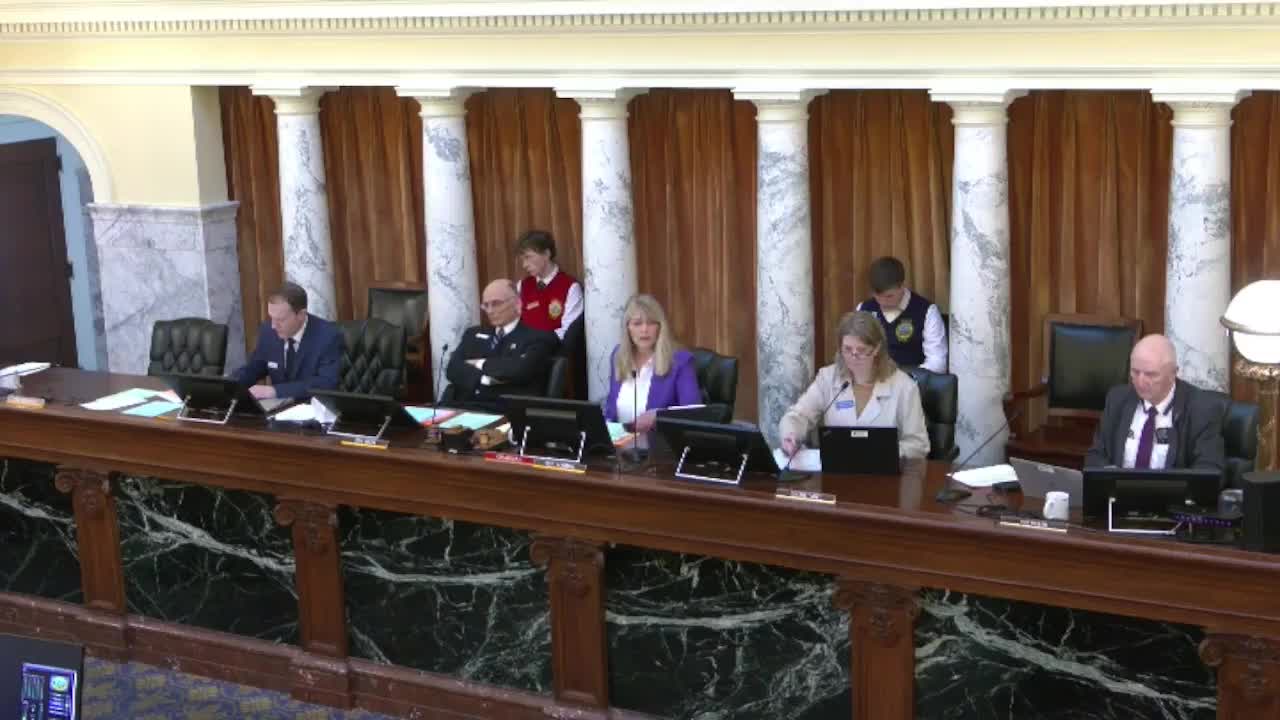
Representative Doug Pickett, House Education chairman, told the Joint Finance‑Appropriations Committee on March 7 that Idaho must sustain recent investments in public education while addressing rural school needs and career‑technical training.
Pickett said Idaho’s K‑12 public education budget has doubled over the past decade, from about $1.4 billion to about $2.8 billion, while student counts rose by “less than 9%.” He also said average K‑12 teacher pay has risen “to nearly $63,000 this school year,” a figure he described as a 42% increase over the past decade. “I thank you,” Pickett told JFAC, acknowledging the committee’s role in recent pay increases and in an additional $83 million the committee approved this year for teacher salaries.
Pickett framed future funding decisions around two priorities: preserving a foundational “classical” curriculum in math, science, history and communication, and expanding career and technical education (CTE) pathways tied to in‑demand careers such as HVAC, plumbing and electrical trades. “CTE programs, particularly in our community colleges, are significantly oversubscribed and are dealing with significant capacity limitations,” Pickett said, and he warned that community colleges face competition from the private sector to hire instructors.
He emphasized the particular needs of rural districts, which he described as the “backbone of the entire community” across much of Idaho’s geography. Using Idaho’s statutory definition of rural schools, Pickett said many districts in his own District 27 qualify as rural and that those districts face higher per‑student costs for transportation, special education, facilities and teacher recruitment. He said estimates discussed in the hearing included a statewide facilities funding gap of nearly $3 billion, an $83 million gap for special education, $5 million to retool teachers on phonics‑based early literacy instruction and $35 million for outcome‑based funding.
Pickett also noted a recent policy change allowing districts to enroll teachers in the state health plan, which he said has produced an approximate $4,000 annual benefit per teacher, and he spoke positively about teachers’ confidence in the state retirement system (referred to in the transcript as “Percy,” corrected in this article to the Public Employee Retirement System of Idaho). He urged the committee to guard federal education dollars that may arrive as block grants so the funds “continue to go toward their intended purposes.”
Pickett’s remarks preceded budget questions and committee votes on several education‑related items, including community college enrollment workload adjustments and a directive to the State Board of Education to develop an outcome‑based funding model for K‑12 distribution.