Get Full Government Meeting Transcripts, Videos, & Alerts Forever!
Get email alerts on the Chickens In Hoas topic
No spam. Unsubscribe anytime.
Idaho committee deadlocks on bill to allow backyard chickens in HOAs
Summary
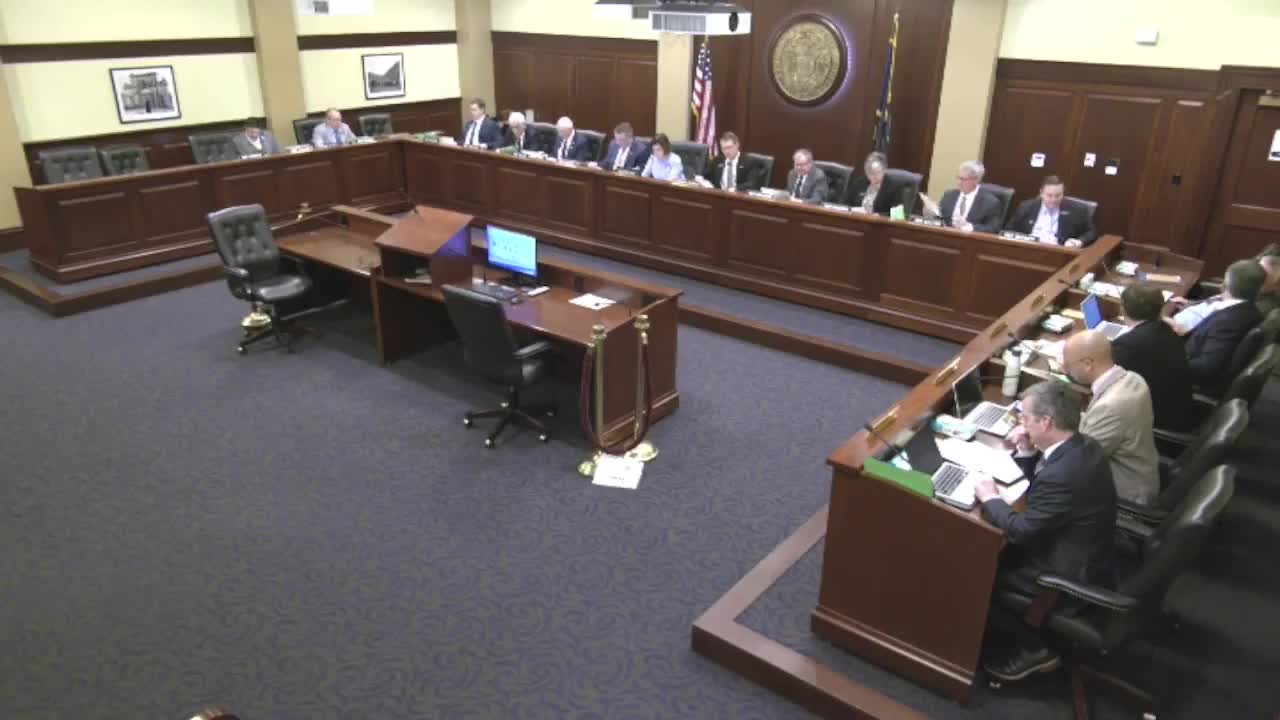
The House Agriculture Affairs Committee heard hours of testimony for and against House Bill 404 — which would protect homeowners’ ability to keep chickens in homeowners associations (HOAs) — but failed to advance the measure after tied roll-call votes.
Representative Steve Tanner, sponsor of House Bill 404, asked the House Agriculture Affairs Committee on March 18 to send the bill to the House floor with a “do pass” recommendation to allow homeowners in subdivisions governed by homeowners associations to keep chickens.
Tanner said the bill would apply only to chickens (genus Gallus), would not cover commercial or agricultural operations, and would allow HOAs to retain the ability to set “reasonable rules” such as banning roosters and addressing manure and odor. “This is a true chicken bill,” Representative Steve Tanner said, and he told the committee the proposal removes a previous per‑acre cap and instead prevents HOAs from outright prohibiting chickens while preserving local ordinances and a minimum lot size of one quarter acre.
The bill’s sponsor said local ordinances will “always take first place” and that the measure excludes agricultural zones, hobby farms, and commercial operations. He cited existing Idaho statutes that similarly limit HOA control over specific matters, saying examples include provisions for solar panels, political signs and flags.
Why it matters: The committee heard more than an hour of testimony from homeowners, HOA officials, attorneys and property managers. Supporters said limited backyard chickens boost household food security, teach children animal husbandry, and are difficult for affected residents to secure by amending existing HOA covenants. Opponents said CC&Rs (covenants, conditions and restrictions) are contracts homeowners rely on when purchasing property and that overriding them would infringe owners’ expectations and invite litigation.
Homeowners and HOA representatives debated several practical concerns. Bill Schultz, a former president of Kingsbridge Homeowners Association, said CC&Rs were a primary reason his neighborhood became desirable and warned of odor, predators and runoff that could affect neighbors. “They are covenants, they are a signed contract,” Schultz said, arguing the state should not eliminate protections buyers relied on. John Osmond, representing himself and using the acronym STAR in testimony, told the committee, “Solar panels don’t screech in the middle of the night at 3 a.m. … Political flags don’t smell.”
Attorneys and HOA professionals testified that CC&Rs are contractual, typically disclosed at purchase, and can be amended by the HOA per their governing documents — though thresholds vary and often require supermajority votes. Attorney Noel Rauchendorfer, who represents community associations and the Community Associations Institute, told the committee quorum and amendment rules vary by HOA document and that changing governing documents can require votes ranging from a simple majority up to 75% or higher depending on the CC&Rs. Property manager Sherry Thomas warned that chickens create responsibilities and potential health or legal claims if coops or eggs are contaminated through neighboring pesticide or fertilizer drift.
Committee action and outcome: The committee considered multiple procedural motions. A motion to lay House Bill 404 on the table failed on a roll call that resulted in an 8–8 tie. A later roll call on the original motion to send HB 404 to the House floor with a do‑pass recommendation likewise failed on an 8–8 tie. A substitute motion to send the bill to the second‑reading calendar with a do‑pass recommendation was made but not separately adopted; the chair noted that a do‑pass recommendation would put the bill on second reading. Because the committee split evenly on the substantive motion, the bill did not advance out of committee at this hearing.
Key points from testimony and staff clarifications - Scope: Sponsor Tanner said the bill applies only to chickens (genus Gallus) and excludes agricultural zones, hobby farms, and commercial operations. - Local law precedence: Tanner said city and county ordinances would “take first place” and that HOAs could still adopt “reasonable rules” (for example, bans on roosters, coop location, manure management). Several HOA attorneys warned that the phrasing could create ambiguity between a local ordinance that permits chickens and CC&Rs that are more restrictive. - Lot size: The bill, as presented to the committee, includes a 0.25‑acre minimum lot size for applicability. - Supporters and opponents: Written and in‑person supporters included individuals who cited food security and education benefits; opponents included HOA leaders, attorneys for community associations and property managers who cited contract rights and potential for nuisance or litigation.
What the committee did not decide: The committee did not adopt an amendment to change voting thresholds for CC&R amendments, nor did it settle legal questions about how an express local ordinance that permits limited chickens would interact with an HOA’s restrictive covenants. The committee also did not set any follow‑up assignments or referral for legal drafting to clarify the relationship between local ordinances and CC&Rs.
Next steps: Because both substantive roll calls in committee resulted in ties, the bill did not advance at this hearing. The sponsor or other members may reintroduce the bill at a future hearing or seek amendments to address concerns raised about CC&R preemption, quorum and amendment thresholds, and specific definitions of “reasonable rules.”