Get Full Government Meeting Transcripts, Videos, & Alerts Forever!
Get email alerts on the Digital Identification topic
No spam. Unsubscribe anytime.
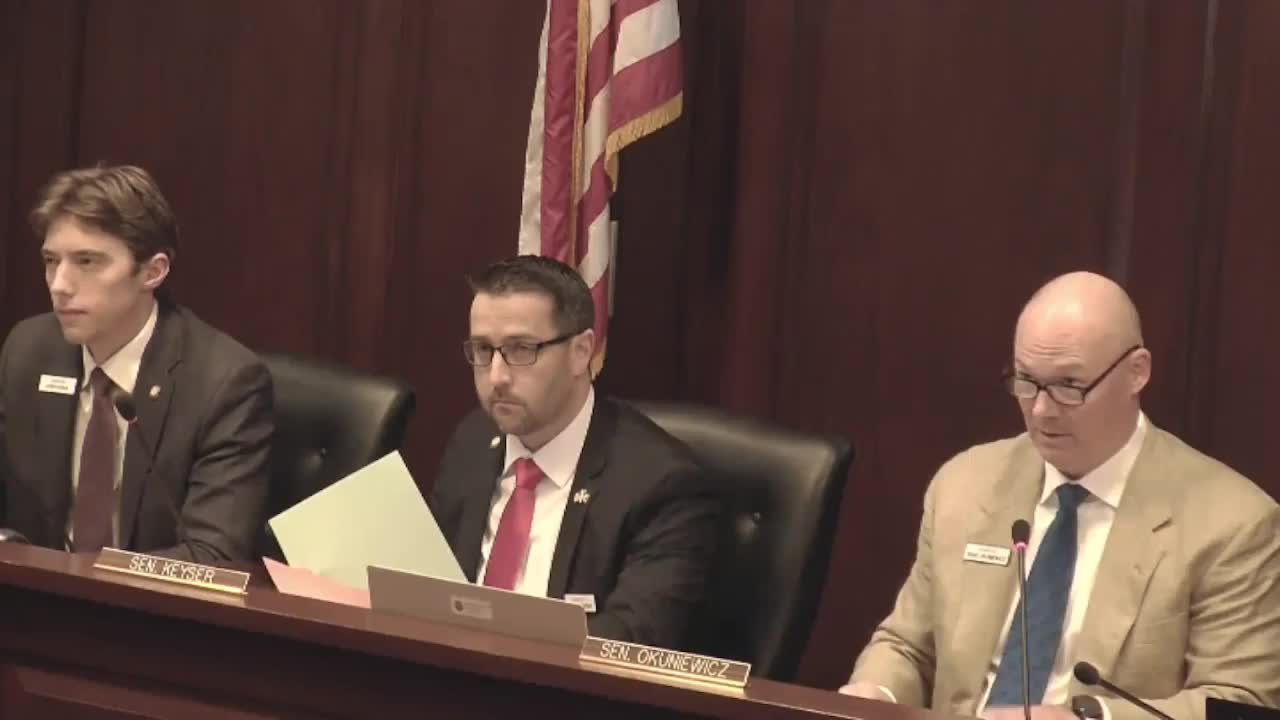
Senate transportation committee holds bill to authorize mobile driver’s licenses amid privacy, security questions
Summary
The Senate Transportation Committee heard testimony for House Bill 78 (as amended), a bill to allow Idaho to issue a mobile driver’s license (MDL). Lawmakers and outside witnesses praised convenience and fraud-reduction potential but raised privacy and technical-security concerns. The committee voted to hold the bill in committee.
The Senate Transportation Committee heard extended testimony on House Bill 78, as amended, a measure that would authorize the Idaho Department of Motor Vehicles to provision an electronic or mobile driver’s license and to participate in a digital trust service.
Supporters, including Representative Stephanie Mickelson (R–District 32) and Lisa McClellan, DMV Administrator for the Idaho Transportation Department, said the mobile credential would be voluntary, interoperable with national standards and could reduce certain forms of fraud. "Including an electronic driver's license" in the statute would permit Idaho to offer a mobile credential that customers may choose to use, Mickelson said during her presentation.
The bill’s sponsors and business witnesses described multiple practical uses for a mobile credential. Mickelson said the mobile wallet could eventually hold a driver’s license, insurance card, vehicle registration, hunting and fishing licenses and public-benefit credentials such as Medicaid and SNAP; she said those changes could reduce fraud and save the state an estimated $2 million to $4 million. Lisa McClellan told the committee that the American Association of Motor Vehicle Administrators (AAMVA) acts as a trust hub for states and does not itself store drivers’ databases: "AAMVA does not have any data in their databases. The DMVs of each state have that information in their databases," she said.
Private-sector witnesses and industry users described technical approaches. Sean Kelly, founder and CEO of Credibility, described MDLs as a form of "verifiable credential" and said the system uses public-private key cryptography and decentralized identifiers to give consumers control over which relying parties can see their data.
But multiple committee members and callers raised privacy and security concerns. Theresa Roth, an electrical engineer who phoned in, said she did not believe the systems could be made secure against high-level insiders: "You cannot secure an electronic system from a high level administrator with a secure passcode," she testified. Senator Hart warned the committee that geofencing and device-tracking technologies could allow parties to infer who is in a vehicle or where people are located, calling the idea "very uncomfortable" and saying he thought it bordered on a search without a warrant. McClellan and witnesses repeatedly said the user retains control over what is shared and that relying parties must use an approved reader app to authenticate a digital credential instead of accepting a photo or screenshot.
Law-enforcement and business testimony supported limited uses. Andy Creech, Sheriff of Payette County, testifying for the Sheriffs' Association, said the bill would not remove the current requirement for drivers to carry their physical license and that a digital credential would be an optional method to present identity. Retail and healthcare witnesses, including Josh Hawks of Good to Go convenience stores and Sammy Evans of Sterling Urgent Care, said a digital credential could reduce data-entry errors and speed verification at point of sale or patient check-in.
Committee debate centered on how broadly the mobile credential could be used and on implementation safeguards, including who would hold cryptographic keys and how relying parties would be vetted. Committee members also questioned which states are already live or connected to the so-called Digital Trust Service and whether the AAMVA-managed approach concentrates too much power in a private association that acts as a trust broker for state DMVs.
After roughly an hour of testimony and questioning, the committee considered competing motions: one to send House Bill 78 as amended to the Senate floor with a "do pass" recommendation, and another to hold the bill in committee. The committee voted to hold the bill in committee. The roll-call recorded the following votes: Senator Keiser — aye; Senator Birch Shaw — nay; Senator Hart — aye; Senator Adams — aye; Senator Galloway — nay; Senator Cole — aye; Senator Bair — nay; Senator Sanllebrough — nay; Chairman O'Connor — aye. The chair announced the bill would be held in committee.