Get Full Government Meeting Transcripts, Videos, & Alerts Forever!
Get email alerts on the Reproductive Health Statute Clarity topic
No spam. Unsubscribe anytime.
Senate prints bill to clarify reproductive‑health protections; sponsors cite doctor exodus in northern Idaho
Summary
The Senate State Affairs Committee voted to print RS32699, a draft intended to clarify Idaho law on care for complicated pregnancies and lethal fetal anomalies; sponsors said the change aims to retain physicians after closures and exits in northern Idaho.
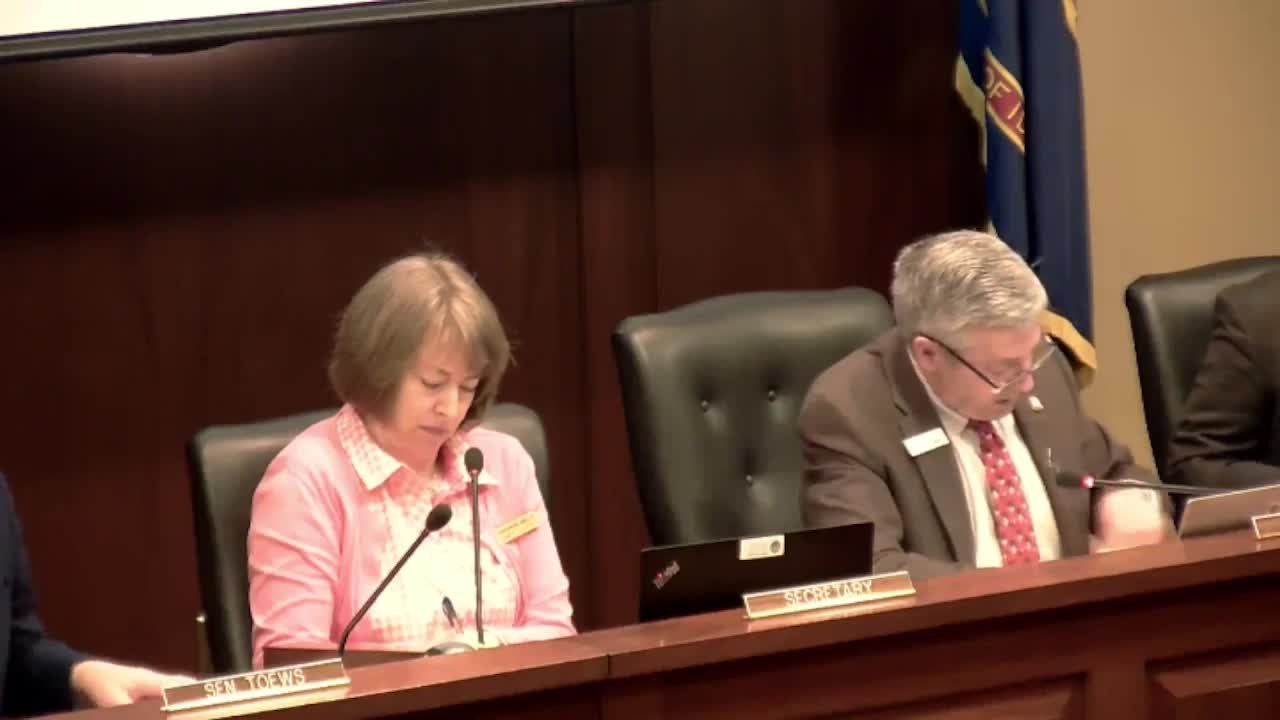
Representative Mark Sauter and State Sen. Jim Woodward presented RS32699 to the Senate State Affairs Committee Friday for a print hearing. The committee voted to introduce the routing slip for print; the motion carried.
Representative Mark Sauter, who represents Sandpoint, told the committee that local health care capacity has declined since March 2023 when a labor‑and‑delivery unit closed. “Since that time we’ve had three OBGYN doctors leave town,” Sauter said, and he added that a maternal‑fetal specialist and her emergency‑room‑physician husband also left, a departure he described as five physicians lost from the region. He said women in Sandpoint now must “drive for over an hour to the Coeur D’Alene area” for normal obstetric care and that Bonners Ferry residents face even longer trips.
Dr. John Wardell, a Boise OBGYN who served as medical director for women’s services at St. Luke’s Health System, told the committee that the draft would clarify how to care for complicated pregnancies and lethal fetal anomalies so more patients could be treated in state rather than referred out of state. “Physicians really don’t feel safe providing reproductive health care in Idaho,” Wardell said, citing concern that existing law leaves providers exposed to criminal or civil risk when they manage high‑risk pregnancies. He described the proposed changes as clarifying maternal health risk definitions, adding a requirement for two‑physician case review in lethal‑anomaly situations, and documenting consent and palliative/hospice care options for families.
Committee members discussed the print hearing format and the bill’s intent; several members said printing the proposal would allow broader public discussion of nuanced policy choices. Senator Den Hartog moved to introduce RS32699 to print; the motion was seconded by Senator Taves and carried without recorded opposition.
The print hearing does not carry an expectation of immediate committee action this session, but sponsors said they sought to begin the statutory conversation now to address physician retention and patient access concerns in parts of northern Idaho. The paper routing slip will be printed for public review.