Get Full Government Meeting Transcripts, Videos, & Alerts Forever!
Get email alerts on the Medical Education topic
No spam. Unsubscribe anytime.
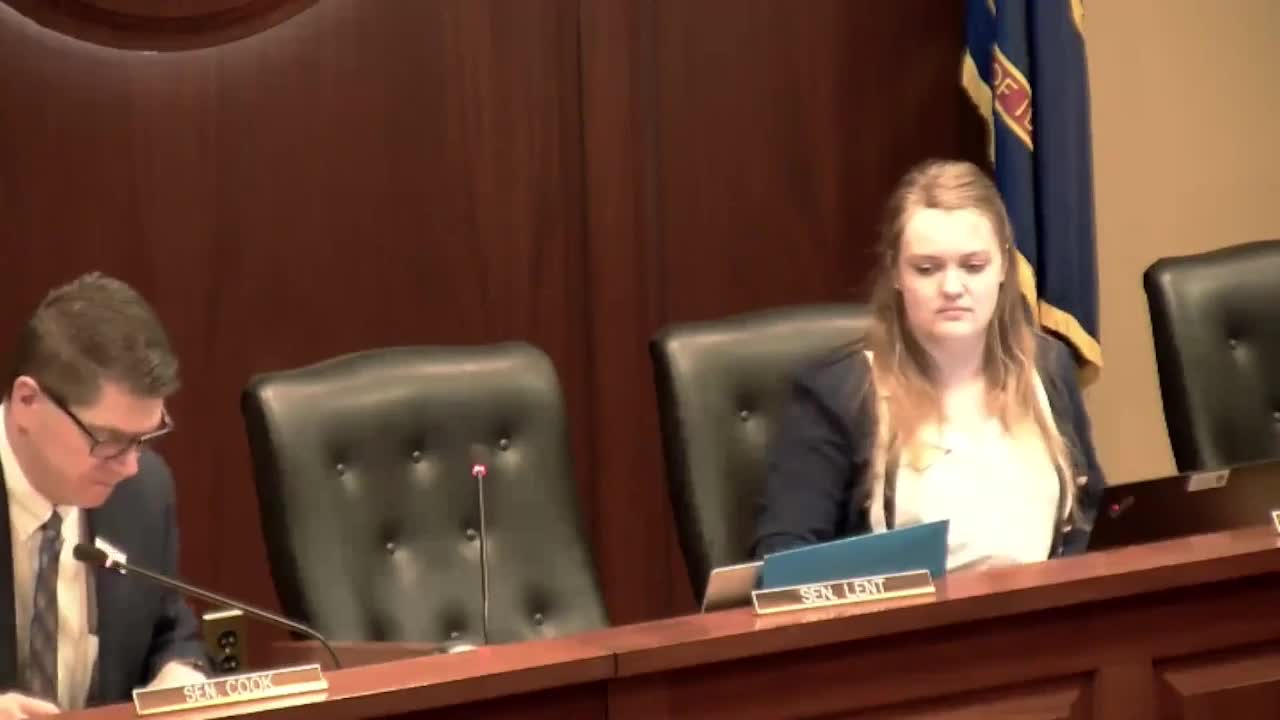
Senate Education Committee advances amended HB 368 to study, plan expansion of Idaho medical education
Summary
The Senate Education Committee voted 8-0, 1 absent to send House Bill 368 to the fourteenth order for possible amendment after testimony supporting a work group to evaluate WWAMI and other medical education partners and concerns about residency capacity and funding.
BOISE, Idaho — The Senate Education Committee voted unanimously with one absence to advance House Bill 368 on medical education, sending the bill to the fourteenth order of business for possible amendment after hours of testimony from university representatives, practicing physicians, residents and medical students.
The bill directs the State Board of Education to form a work group to develop an undergraduate medical education expansion plan for Idaho; the amendment the committee discussed would change a mandatory reduction in WWAMI-funded seats to a discretionary reduction and add legislative and Idaho-institution representatives to the work group.
Ian Goodhue, who identified himself as representing the University of Washington School of Medicine and the WWAMI medical education program, told the committee that WWAMI has a five-decade partnership with Idaho and urged support for the amended bill. “For over 50 years, the Idaho legislature, through the state board and the University of Idaho, have partnered with the University of Washington to educate Idaho medical students in Idaho for Idaho patients,” Goodhue said. He added that Idaho still ranks fiftieth in physicians per capita and that “we know that we can be part of the solution.”
State Rep. Dustin Manwaring, the bill sponsor, outlined the amendment that would change language on page 5 from a requirement that state-funded WWAMI seats “shall be decreased by at least 10 students” beginning in the 2027–28 academic year to language that the seats “may be decreased by at least 10 students.” The amendment also would add two legislators (one from each chamber) and three representatives from Idaho institutions — ICOM, Idaho State University and the University of Idaho — to the work group, with other seats appointed by the State Board of Education.
Committee members and witnesses repeatedly raised the shortage of residency slots in Idaho as a key bottleneck to retaining medical graduates. Representative Manwaring said the work group should consider factors including the state’s physician shortage, the quality of programs, use of state funds in Idaho, the number of clinical placements in-state and the number of residency placements located in Idaho.
Dr. Moe Hagman, chair of the State Board of Education’s Graduate Medical Education Committee, described the seven-year effort to grow residency positions in Idaho. “We’ve been able to increase the number of seats with your guys’ help from a hundred and 34 7 years ago to 262 this year,” Hagman said, and added the growth represented one of the fastest increases nationally.
Witnesses who trained in WWAMI or currently teach in the program told the committee WWAMI has been effective at producing Idaho physicians and that clinical training sites — not just classroom seats — are the limiting factor. Mary Baranaga, an Idaho WWAMI graduate and family physician in Boise, said the difficulty is “finding practicing doctors to host WWAMI students in Idaho clinics and hospitals during their second, third and fourth years,” calling clinical training sites “the biggest challenge that we face to growing medical education in Idaho.”
Several speakers pressed the committee not to cut existing WWAMI positions while the work group studies expansion options. Third-year UW medical student Joshua Kostanzic said his WWAMI training helped him decide to remain and practice in Idaho. Resident Dr. Derek Southwick testified he supports amended language and that “we can’t afford any decrease in any type of medical education program on any level.”
Committee members also discussed fiscal implications. A witness stated that the incremental state cost for each additional student has been characterized as approximately $60,000 per student ongoing; another committee member noted a broader figure of roughly $180,000 per student with hospitals and other partners absorbing part of the cost, meaning the state share has been about one-third of the total. Representative Manwaring reminded the committee that Idaho has an existing loan-repayment statute enacted in 2022 that can require repayment if state-supported trainees do not return to practice in Idaho.
After testimony, the committee considered the amendment language and approved a motion to send HB 368 forward for possible amendment. Senator Woodward moved to “send House Bill 368 to the fourteenth order of business for possible amendment”; the motion carried on roll call, 8 in favor, 1 absent.
The vote advances the bill to the next stage where floor amendments may be offered; the work group the bill would establish is to develop recommendations for expanding undergraduate medical education options in the state and how state funds are allocated among program partners such as WWAMI, the University of Utah and ICOM.
The committee record includes multiple requests that the work group address residency capacity, clinical training sites, program quality and how state funding is optimized for in-state training. The committee did not adopt a specific plan to add the extra seats during this hearing; instead members directed further work via the bill’s work group and possible amendments on the floor.
The committee adjourned and expects to reconvene on Monday to continue business related to the legislative session.