Get Full Government Meeting Transcripts, Videos, & Alerts Forever!
Get email alerts on the Agriculture Protection Areas topic
No spam. Unsubscribe anytime.
House committee advances bill clarifying agricultural protection areas after Canyon County disputes
Summary
Lawmakers advanced Senate Bill 1133, a cleanup to the state's agricultural protection area (APA) law that clarifies application fees, mapping, appeals and continued agricultural use; a proposed amendment to limit APA applications inside city areas of impact failed 3'12 and the committee sent the bill to the floor with a do-pass recommendation.
A House legislative committee voted to send Senate Bill 1133 as amended to the full House with a do-pass recommendation after a daylong hearing on clarifying Idaho's agricultural protection area (APA) law.
The bill sponsor, Representative Kevin Andrus, said the measure is "just a a minor little cleanup from the from the bill that we passed last year," and described changes that: cap administrative application fees at actual administrative expenses; require a separate APA map so counties need not rezone or amend comprehensive plans when APAs are created; clarify appeal procedures and allow judicial review; and state that residential, commercial, manufacturing, industrial, solar or wind structures do not automatically disqualify a parcel so long as the parcel still has an agricultural use.
The measure is intended to fix implementation issues that emerged after last year's House Bill 608 established the APA framework. Testimony from agricultural groups and growers focused on Canyon County, where local zoning language had been interpreted to bar many landowners inside certain city "areas of impact" from applying for APAs. Roger Batt, who identified himself to the committee as executive director of the Bridal Eastern Oregon Seed Association, said the county's ordinance prevented otherwise eligible farmers from applying and that the bill would restore the original legislative intent. "We have about a hundred seed companies and affiliate businesses within the seed trade that belong to our association, and our association is in full support of senate bill 11 33 as amended by the senate," Batt told the committee.
Growers and industry groups described the value of APAs for long-term planning and for preserving land needed for specialized seed production. John Hoadley, representing the Coalition for AGS Future, said APAs "put something in our toolbox" to keep producers from being displaced by development and to protect crop isolation distances that seed certification requires. Samantha Parrott of the Snake River Sugar Beet Growers Association told lawmakers that sugar beet production in Idaho is a "billion dollar industry" and urged support to protect working acreage near processing facilities.
Cities'side concerns were raised during testimony. Jonathan Wheatley of the Association of Idaho Cities described a separate 2024 law that requires cities to redraw areas of impact by the end of the calendar year, limits areas of impact to no more than two miles from city limits and to locations where "there's expected future growth within the next 5 years." Wheatley proposed an amendment to require any APA application for land inside an existing area of impact to be submitted by Dec. 31, 2026, to avoid frustrating infrastructure investments tied to planned growth; he said counties would still have final approval authority over APA applications.
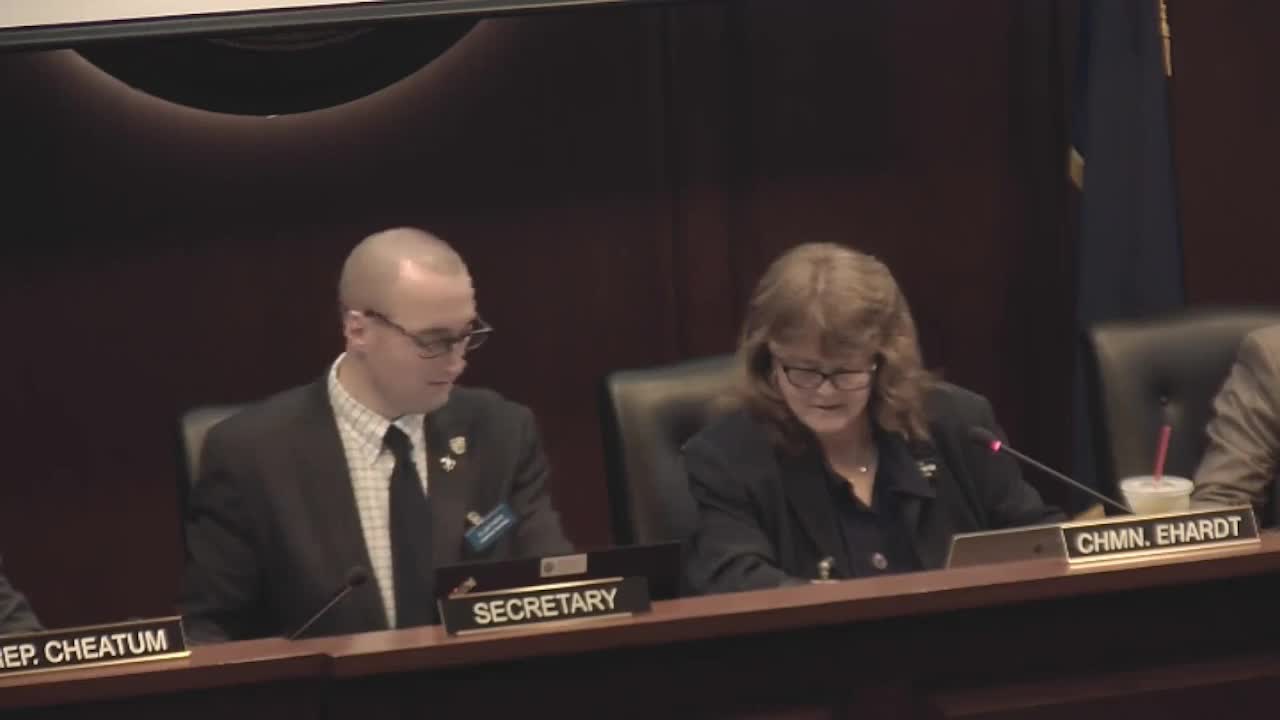
Committee members debated that compromise. A substitute motion to send the bill to general orders (to allow time for the proposed amendment) failed on a roll call recorded by the secretary with a 3'12 vote. The committee then approved the sponsor's original motion to send the bill to the House floor with a do-pass recommendation by voice vote.
The bill remains subject to final floor action and, if passed, would modify how APAs are applied for and processed at the county level. Supporters said the changes restore what they described as the original legislative intent and give landowners a clarified voluntary tool to preserve agricultural production; opponents and some committee members urged caution because of potential consequences for city planning and infrastructure investments.
Votes at a glance: - Substitute motion (send SB 1133 as amended to general orders with proposed deadline amendment): roll-call recorded; failed 3 yes, 12 no (roll call recorded by the committee secretary). Yes votes recorded explicitly in the roll call transcript: Representative Cheatham; Representative Birch; plus one yes recorded implicitly in the final tally. No votes recorded explicitly: Jeremy Hart; Representative Cornelius; Representative Erickson; Representative Scott; Representative Weber; Representative Alfieri; Representative Hawkins; Representative Healy; Representative Price; Representative Keeler; Representative Razor; Representative Wheeler (as listed in the committee roll call portion of the record). - Final motion (send SB 1133 as amended to the House floor with do-pass recommendation): moved by Representative Price; second not specified in the record; passed by voice vote (aye recorded).