Get Full Government Meeting Transcripts, Videos, & Alerts Forever!
Get email alerts on the Libraries Digital Access topic
No spam. Unsubscribe anytime.
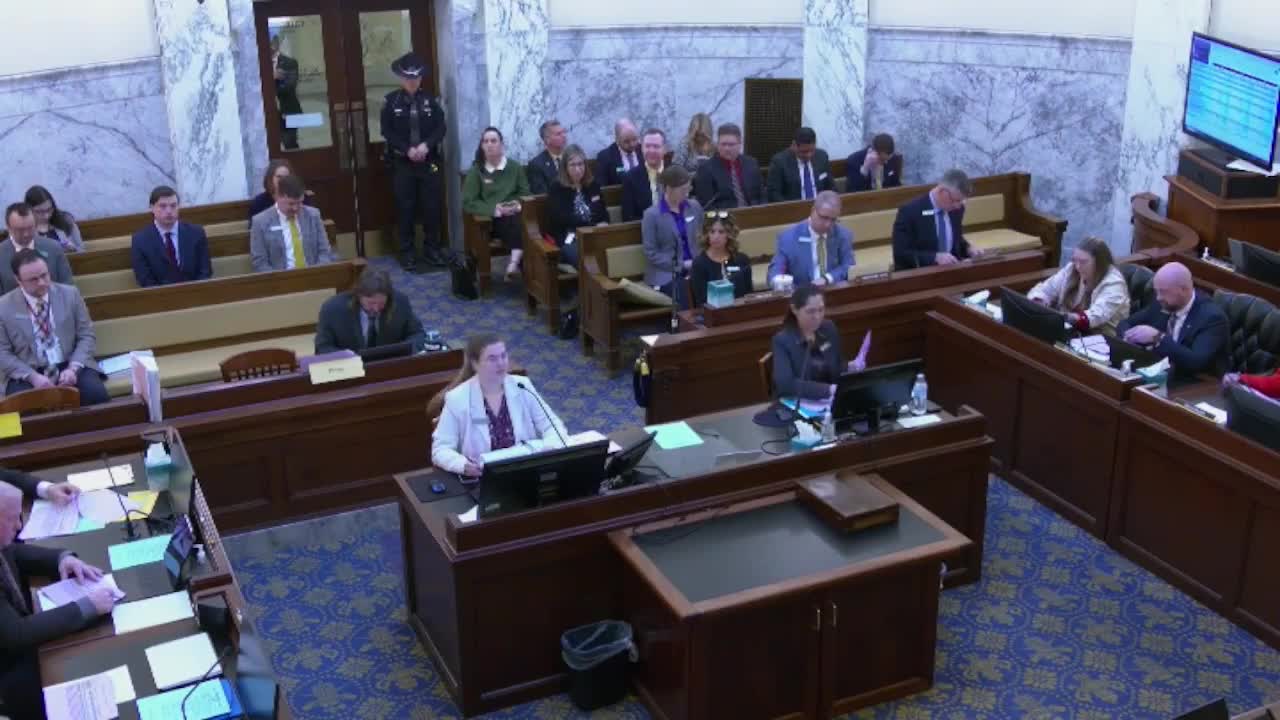
Committee approves digital-access grants for Idaho libraries and adopts restrictions on certain state-funded programming
Summary
JFAC approved federal digital-access grants and state funding for library broadband reimbursements, and separately adopted language restricting the use of state-appropriated funds for activities described as supporting diversity, equity or inclusion ideology; committee members debated scope and enforcement.
The Joint Finance-Appropriations Committee on March 20 approved federal and state funding to expand digital access through Idaho libraries and separately approved language restricting use of state appropriations for activities the motion described as supporting "diversity, equity, inclusion or social justice ideology" in library-sponsored activities.
The committee ultimately adopted a funding motion for the Idaho Commission for Libraries that included $42,300 from the general fund for broadband reimbursement and $2,540,000 in federal funds (digital-access grants) after the substitute motion failed and the original motion received majority support. The funding motion carried a combined committee vote of 17 ayes, 3 nays, 0 absent excused and will carry a due-pass recommendation.
Why it matters: The grants are intended to support computer access, telehealth rooms, digital literacy programs for seniors, veterans and rural residents and other local library services. At the same time, the committee adopted language directing how state funds may be used and requiring reporting and compliance checks; that language drew objections and questions about scope and whether protected populations would still be served.
Debate and agency context: Budget analyst Brooke Dupree summarized the commission's requests: a $42,400 broadband reimbursement enhancement, $30,000 for federal sub-grants to local libraries (stemming from a federal grant), and a $2.5 million federal request for the Digital Access for All Idahoans grant to implement statewide digital-access plans. Representative Gallavese pressed to restore the larger federal grant amount and offered a motion that eventually replaced the initial motion; his motion emphasized requests from local libraries in communities including Moscow, Troy, Potlatch and others describing digital-literacy classes, telehealth rooms and basic computer access.
Several language items were considered and adopted in separate roll-call votes: reappropriation authority from ARPA for telehealth construction, a requirement that state-appropriated funds not be used to support "diversity, equity, inclusion or social justice ideology" in library-sponsored activities and a directive requiring the Commission to designate an employee to confirm library adherence to a specified Idaho Code provision and to coordinate with the Department of Education. Those language votes had varying margins: the DEI restriction language passed 15 ayes, 4 nays, 1 absent excused; the reappropriation and other administrative language passed with either unanimous or substantial support; the required compliance/coordination language passed 17 ayes, 2 nays, 1 absent excused.
Commissioners, library advocates and members of the committee emphasized differing priorities: some members framed the restriction language as enforcing state statute and limiting ideology in government-funded activities; others raised concerns that the language could unintentionally exclude populations identified as priorities in the digital-access grant guidance (used terms included seniors, veterans, incarcerated individuals, non-English-language speakers, racial/ethnic minority groups and rural residents). Senator Wintrow specifically noted the committee may be asking the Commission to collect data or enforce definitions that do not exist centrally and warned the report "may come back with nothing because the data doesn't even exist."
Action and next steps: Funding and several language directives were adopted; the ARPA reappropriation language authorizes telehealth facility work already underway. Several items include reporting deadlines (commonly Dec. 1 or Dec. 15, 2025). Libraries seeking grant funding are expected to follow statutorily required processes the committee referenced; the Commission was directed to designate an employee to confirm compliance and coordinate with the Department of Education.
Ending: The votes concluded a contentious set of discussions balancing expanded digital services for underserved Idahoans with statutory language limiting how state funds may be used in programming.